
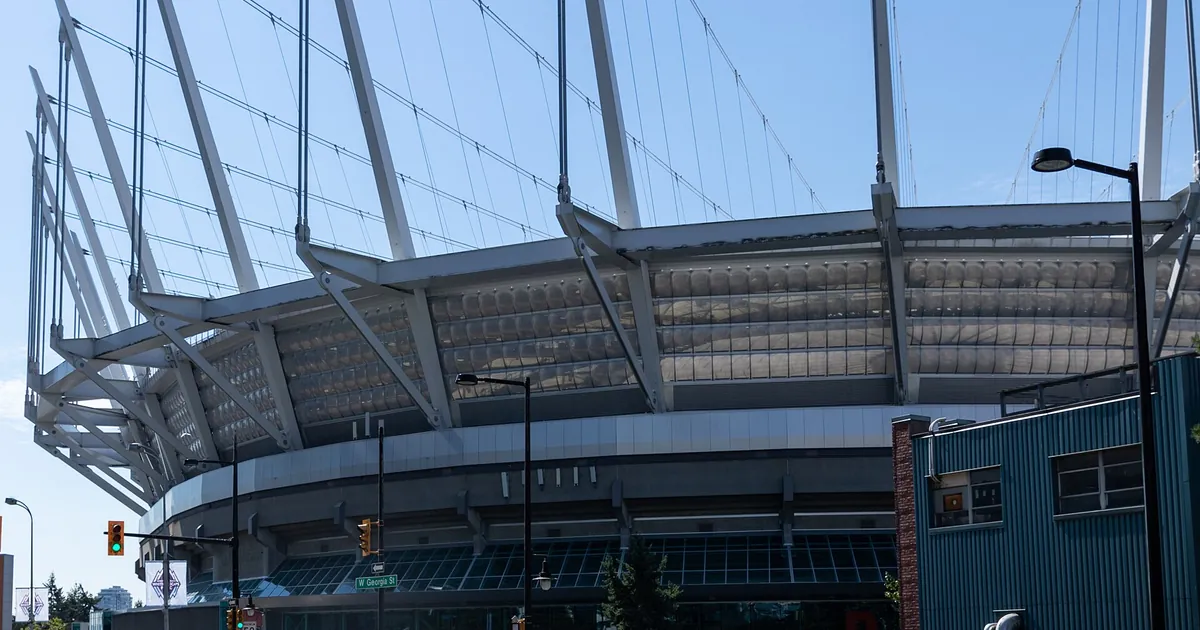
BC Place Stadium, Vancouver — 2026 World Cup host venue. Photo: dronepicr / Wikimedia Commons, CC BY 2.0
6 min read · 1,168 words
Vancouver has the most integrated transit network of any 2026 World Cup host city. SkyTrain runs from the airport, the ferry terminal and deep into the suburbs. On paper, BC Place looks like the easiest venue to reach in the tournament. The station nearest the front door sits two minutes from the gates. It is also closed for every match.
Stadium-Chinatown station on the Expo Line sits roughly 200 metres from BC Place’s Beatty Street entrance. If you know this venue from a BC Lions or Whitecaps game, that is the station you have always used. On World Cup match days, the station still runs trains, but pedestrian access to the stadium precinct is shut. The block around Beatty Street between Smithe and West Georgia is closed to foot traffic. Signs redirect you. Volunteers point you further east. You will walk further than expected, and if you did not know this in advance, it is a disorienting experience outside a 48,821-seat stadium.
TransLink and the Vancouver World Cup host committee have designated Main Street-Science World station, roughly 900 metres from the stadium’s main entrance at Carrall Street and Pacific Boulevard, as the official fan funnel for all match days. That is where the marked walking routes (called “game trails”) begin, staffed by volunteer guides. It is not a disaster. It is not what the venue map implies, either.
For the full breakdown of transport at every 2026 World Cup venue, see the FootyGazette World Cup 2026 guide.
Getting There by SkyTrain
The Expo Line is your primary route. Main Street-Science World is the destination, not the closer downtown stops.
From central Vancouver, you are probably starting from Waterfront, Granville or Burrard. All three connect to the Expo or Millennium Line and reach Main Street-Science World in under ten minutes. TransLink has boosted peak service to trains every 2 to 2.5 minutes during match periods and will hold empty trains at the station post-match to manage the outbound crowd.
If you’re arriving via Canada Line, from YVR airport, Richmond or Oakridge, transfer at Vancouver City Centre or Waterfront onto the Expo Line and continue east to Main Street-Science World. Yaletown-Roundhouse stays open on match days but pedestrian access to the stadium zone from there is limited. The transfer via downtown is the cleaner route.
TransLink is running around 600 extra bus trips per day across the tournament, and SeaBus crossings at 10-minute intervals before and after matches. From North Vancouver, the chain is SeaBus to Waterfront and then SkyTrain east. For the late-evening matches on June 26 and July 2 (and the earlier June 13 fixture), service runs one hour later than normal. You will not be stranded after the final whistle because the last train left at 11pm. That is more than most venues in this series can offer.

Driving and Parking
There is no general spectator parking at BC Place for the World Cup. That will not surprise regular visitors, but the restrictions are more extensive than usual.
Pacific Boulevard runs directly alongside the stadium and has been closed from the Cambie Street Bridge off-ramp to Carrall Street since May 23, remaining shut through the end of July (per Vancouver FWC26 road closures). The northbound off-ramp from the Cambie Bridge onto Pacific Boulevard eastbound is also blocked for the full tournament window, June 11 through July 19. Drivers approaching from the south into downtown will find their normal route into this part of the city cut off.
Park-and-ride is the sensible car option. TransLink recommends Metrotown station (free parking, 18 minutes by SkyTrain) or Bridgeport (free, 20 minutes), on the Expo and Canada Lines respectively. Budget 30-40 minutes for post-match delays at those stations as other fans converge.
For paid downtown parking, EasyPark lots east of BC Place charge $15-30. The Impark at International Village is about a 12-minute walk. Rideshare drop-off is designated at 1510 Quebec Street near Science World, not at the venue itself. Expect surge pricing and queues immediately post-match.
The Gated Transit Paradox
BC Place is the final entry in a series covering all sixteen 2026 World Cup venues, and each city has produced a recognisable failure mode. Kansas City built a temporary transit system for a venue seven miles from downtown with no rail. Gillette in Foxborough offers 14 $80 trains and almost nothing else for a crowd of 48,000. MetLife in New Jersey gated every sanctioned transport mode behind a ticket scan and advance purchase. Miami’s shuttle-only system left fans stranded a mile out when Uruguay played Saudi Arabia.
Vancouver looks like the corrective: a transit-first city that built its World Cup plan around infrastructure that actually exists. The Canada Line from YVR opened in 2009. SeaBus has run since 1977. The SkyTrain network covers the region properly. TransLink committed $21.6 million of host committee funding to tournament transit services (per the March 2026 TransLink announcement). None of this is pretend.
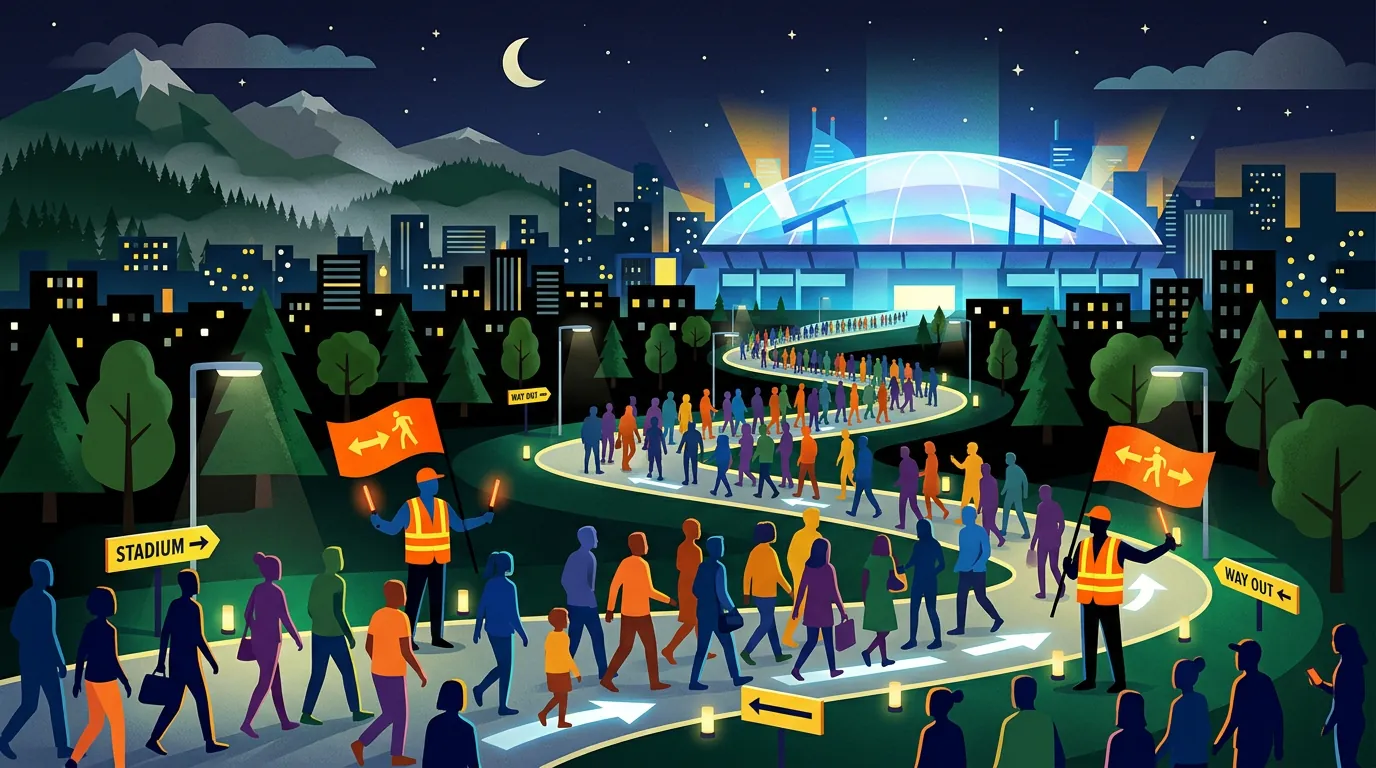
The closure of Stadium-Chinatown pedestrian access still creates a longer-than-expected walk and a wayfinding dependency on volunteers and marked routes holding up under 48,821 fans heading the same direction. Regular BC Place attendees will be the most disoriented: they know exactly which station to use and it will not be available. Concentrating arrival flow at Main Street-Science World rather than splitting it across two stations is probably the right call at this scale. It still changes the experience in ways the official transport map does not communicate.
Seattle’s Lumen Field is the nearest comparison: a downtown venue with genuine rail access and a deliberate pedestrian zone. Atlanta’s Mercedes-Benz Stadium has SEC District station essentially at the door with a different failure mode, MARTA crush on a single downtown spine during a commuter-collision window. Vancouver’s failure mode is none of those things. It is unexpected walking distance plus wayfinding friction in the city where you would least expect to need a volunteer pointing you in the right direction.
On climate: BC Place’s retractable dome will almost certainly be closed for matches in late June and early July. That matters if you’re travelling from a hot-weather venue on this itinerary. Vancouver’s average June high sits around 21°C, and a closed roof means the arena is comfortable regardless of conditions outside. It is a materially different situation to the open-air thermal exposure facing fans in Miami, Dallas or Kansas City.
Remaining Match Days at BC Place
Vancouver’s remaining fixtures are June 24, June 26, July 2 and July 7.
Use SkyTrain. Alight at Main Street-Science World. Follow the marked game trails east to the Carrall Street entrance. Do not try Stadium-Chinatown. Give yourself an extra 20 minutes you would not have needed at a BC Lions playoff game.
Quick Reference: BC Place Transport
- Main station (match days): Main Street-Science World (Expo Line)
- Closed to stadium pedestrians on match days: Stadium-Chinatown, Yaletown-Roundhouse (limited)
- From YVR airport: Canada Line to Vancouver City Centre, transfer to Expo Line east
- From North Vancouver: SeaBus to Waterfront, then SkyTrain east
- Park-and-ride: Metrotown (free, 18 min) or Bridgeport (free, 20 min)
- Rideshare drop-off: 1510 Quebec Street (not at the venue)
- No spectator parking at BC Place on match days
- World Cup capacity: 48,821
- TransLink investment: $21.6 million
