
8 min read · 1,704 words
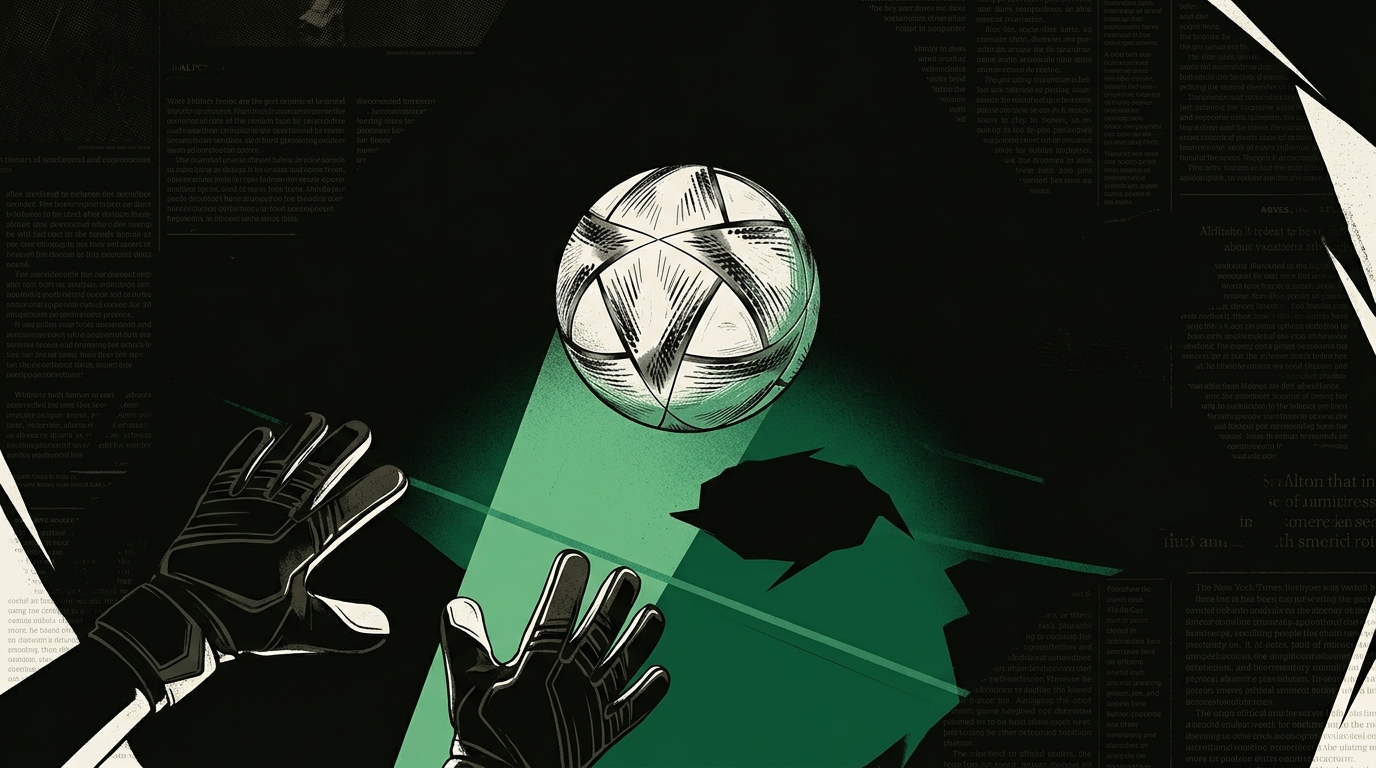
Every four years, without fail, the football finds a way to become the story. Not the goals, not the tactics, not even the referee. The ball. At the 2010 World Cup in South Africa it was the Jabulani, a sphere so aerodynamically unpredictable that goalkeepers across the globe spent the group stage looking as though they had never seen a football before. Sixteen years on, and with the tournament now sprawling across the United States, Canada and Mexico in its bloated 48-team format, the Trionda is generating a very similar conversation.
The question being asked with increasing urgency, as The Independent has reported, is a straightforward one: is there something structurally wrong with this year’s official match ball? The evidence, at least anecdotally, is beginning to stack up.
What Is the Trionda and Why Does It Matter?
Adidas have supplied the official World Cup ball since 1970, and each iteration arrives with its own design philosophy and, increasingly, its own aerodynamic quirks. The Trionda, named with a nod to the triangular panel construction that replaces the traditional hexagonal layout, was unveiled to considerable fanfare in the months before the tournament. Adidas claimed improved consistency in flight trajectory. Goalkeepers, based on what we have seen across the opening thirteen days of the competition, appear to disagree.
The specific pattern of error is worth noting because it is not random. Shots struck with moderate pace from distance, particularly those with any degree of lateral spin, appear to move late in their trajectory in a manner that is proving difficult to read. Jordan Pickford, one of the more technically accomplished shot-stoppers in the tournament, has been among those caught out. Kylian Mbappé, whose delivery from set pieces and distance has always had a whip to it, has benefited from the phenomenon on more than one occasion according to tournament tracking data referenced by The Independent’s report.
The Jabulani Comparison: Fair or Lazy?
The Jabulani comparison is irresistible, and also slightly unfair, which is precisely the kind of nuance that tends to get lost in tournament coverage. The 2010 ball was a genuine outlier. Its eight thermally bonded panels created a surface so smooth that it produced a knuckleball effect at certain velocities, a phenomenon that aerodynamicists at NASA subsequently studied and confirmed. Goalkeepers were not imagining it. Robert Green was not simply having a bad day against the United States.
The Trionda is a different problem, if it is a problem at all. The panel construction is more conventional than the Jabulani, and the seam depth appears designed to create more predictable airflow. What the early tournament evidence suggests, however, is that the ball’s behaviour at lower speeds, the kind of pace you get from a thirty-yard effort rather than a thunderbolt, may be less stable than Adidas’s pre-tournament testing indicated. Whether that is a design flaw or simply the reality of playing in varying humidity and altitude conditions across three different countries is a question that deserves more rigorous analysis than it is currently receiving.
It is also worth noting that goalkeepers tend to complain about the ball more than outfield players do, for the obvious reason that they are the ones picking it out of the net. A striker whose shot swerves unexpectedly into the top corner rarely files a formal objection.
What the Tournament Data Suggests
The Guardian’s live coverage of day thirteen captured a tournament in which goals are flowing at a rate that has surprised even optimistic observers. Lionel Messi, characteristically, has been at the centre of it, with Argentina’s head coach Lionel Scaloni noting that his forward’s ability to activate the team remains undiminished. Erling Haaland and Mbappé have both registered multiple goals. The attacking returns across the tournament are, by any reasonable measure, high.
That does not automatically implicate the ball. Tournaments played in warm conditions, on pitches that tend to be quicker than club football surfaces, with players who have had a full pre-season to prepare, typically produce more goals than the average league campaign. The 48-team format has also introduced a wider quality gap between the elite sides and the tournament’s smaller nations, which inflates scoring figures in the group stage. Still, the xG-to-actual-goals conversion rate across the first thirteen days merits attention. If teams are consistently outperforming their expected goals figures by a meaningful margin, and particularly if that overperformance is concentrated in long-range efforts, the ball becomes a legitimate variable rather than a convenient excuse.
The difficulty is that granular shot-by-shot data of that kind takes time to compile and verify. What we have at present is a collection of high-profile goalkeeping errors, a pattern of late movement on certain types of delivery, and a growing chorus of concern from within the goalkeeping community. That is suggestive rather than conclusive.
England, Ghana and the Boston Context
England face Ghana in Boston on day thirteen, a fixture that carries its own set of variables entirely separate from the ball question. The Gillette Stadium surface, the humidity of a New England summer evening, and the tactical specifics of Gareth Southgate’s approach to a side Ghana will set up defensively will all matter more to the outcome than any aerodynamic quirk.
That said, if England are going to benefit from or be victimised by the Trionda’s alleged unpredictability, long-range efforts are the mechanism. Ghana’s defensive structure, based on their group stage performances, is compact and organised. England may find themselves attempting more shots from outside the penalty area than they would prefer, which puts the ball question back in the frame.
The logistical backdrop to the fixture is worth a brief mention. Scottish supporters who have already navigated Boston’s post-match transport situation have warned England fans to expect significant delays after the final whistle. The city’s infrastructure, charming as it is, was not designed with 60,000 football supporters trying to leave simultaneously in mind. It is the kind of logistical detail that tends to colour a fan’s memory of a tournament more than any tactical nuance.
The referee for the fixture will be Said Martinez of Honduras, who makes World Cup history as the first Honduran official to take charge of a match at this level. A notable appointment, and one that adds a small footnote of historical interest to what is, on paper, a relatively straightforward group stage contest for England.
What Happens Next
FIFA’s response to ball controversies has historically been slow and defensive. After the Jabulani debacle, the governing body took several months to acknowledge that goalkeepers’ concerns had any basis in physics, by which point the tournament was over and the conversation had moved on. There is no realistic prospect of the Trionda being replaced mid-tournament. What FIFA could do, and what would be useful, is commission an independent aerodynamic analysis and publish the findings before the knockout rounds begin.
That would require a level of institutional transparency that FIFA does not have a strong track record of delivering. More likely, the conversation will continue to be driven by individual incidents, by the next goalkeeper who is beaten by a shot that appears to move in two directions simultaneously, and by the accumulating weight of anecdotal evidence from players and coaches who have no particular incentive to lie.
For a fuller picture of how the tournament is unfolding tactically, the FootyGazette World Cup 2026 guide has ongoing coverage of the major tactical themes. The 48-team format analysis is also worth revisiting in light of how the group stage has played out, given that the quality differential between groups has been more pronounced than many predicted. And for those following England’s campaign specifically, the England national team hub has match-by-match breakdowns through the tournament.
The Trionda may or may not be broken. What is certain is that the question will not go away until either the data resolves it or the tournament ends. Given the pace at which goals are going in, and the frequency with which goalkeepers are being made to look foolish, the smart money is on the conversation running at least until the quarter-finals.
FAQ
What is the Trionda ball used at the 2026 World Cup?
The Trionda is the official Adidas match ball for the 2026 World Cup. It features a triangular panel construction, replacing the traditional hexagonal design, and was marketed by Adidas as offering improved flight consistency. Early tournament evidence has prompted questions about its aerodynamic behaviour at moderate shot speeds.
Why are goalkeepers struggling with the World Cup 2026 ball?
The primary concern is that the Trionda appears to move late in its flight path on certain types of delivery, particularly shots struck with lateral spin from outside the penalty area. This late movement makes it harder for goalkeepers to track and position correctly. The pattern is similar to, though not identical to, the issues caused by the Jabulani ball at the 2010 World Cup.
Is the Trionda worse than the Jabulani?
That comparison is difficult to make without controlled aerodynamic testing. The Jabulani’s problems were subsequently confirmed by independent scientific analysis. The Trionda’s issues are, at this stage, based on observational evidence from the tournament rather than verified data. It may prove to be a less severe problem, or it may be a different kind of problem affecting a narrower range of shot types.
Will FIFA change the ball during the tournament?
No. There is no precedent for FIFA replacing the official match ball mid-tournament, and no indication that the governing body is considering doing so. The more realistic outcome is that FIFA may commission independent analysis after the tournament concludes, as happened following the Jabulani controversy in 2010.
How does the ball controversy affect England’s match against Ghana?
If Ghana defend compactly, as their group stage performances suggest they will, England may attempt more long-range efforts than they would in an ideal tactical scenario. That increases the relevance of the ball’s flight characteristics. Whether England benefit from or are hindered by the Trionda’s alleged unpredictability will depend partly on which end of those long-range efforts they find themselves on.
Where can I watch England vs Ghana at the 2026 World Cup?
The match is being broadcast on ITV and BBC in the United Kingdom, with extensive pundit coverage across both channels. For viewing options beyond free-to-air television, see the FootyGazette watch guide.
