
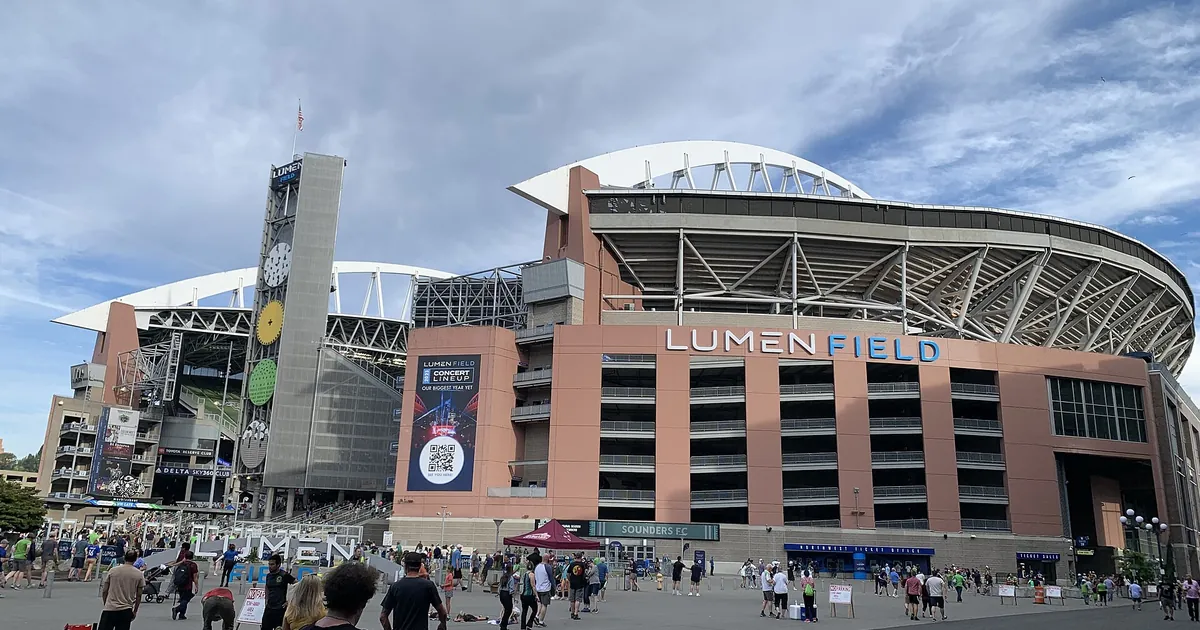
Lumen Field, Seattle. Photo: PCN02WPS / Wikimedia Commons, CC BY-SA 4.0
6 min read · 1,141 words
While fans in New Jersey spent the World Cup’s opening week arguing about $98 trains and a 1.3-mile walk from the nearest rideshare lot, Seattle quietly did the thing almost no other 2026 host city even attempted: it told people to leave the car at home, and built a plan that makes that realistic. Seattle’s World Cup 2026 car-free zone around Lumen Field is the clearest evidence yet that the last-mile chaos elsewhere was a choice, not an inevitability.
This is the get-there explainer for Seattle’s six matches, and the uncomfortable comparison it forces on the rest of the tournament.
The Seattle World Cup 2026 car-free zone, explained
Seattle is one of the only FWC26 venues with its stadium in the heart of downtown rather than marooned in a suburban parking sea, and the city has leaned into that geography hard. According to the city’s official FIFA World Cup 26 transportation guide fans can “walk, bike, hop on a bus, streetcar or even a ferry to get to the match without ever needing a car.”
On match days, the Seattle Department of Transportation turns the Pioneer Square and stadium district into a pedestrian zone:
- A large car-free area runs from James Street south to South Atlantic Street, wrapping both Lumen Field and T-Mobile Park.
- Street closures begin roughly four hours before kickoff and stay up until clean-up is finished.
- Parking restrictions inside the zone kick in at 2 a.m. on every match day, not four hours before, the whole day.
- Bikes and scooters are capped at 8 mph inside the pedestrian zone.
- Construction was paused across the area from June 8 to July 6 to clear the sidewalks of work zones.
The rail spine is the part other cities can only envy. Per Seattle’s official match-day transit plan Link light rail runs every eight minutes all day until 1 a.m. on match days, tightening to a train every four minutes through the downtown core, with three stations, International District/Chinatown, Pioneer Square and Stadium, all within a short walk of the gates. Sounder commuter rail adds extra game trains for all six matches; Tacoma’s T Line runs every 12 minutes; and a free Match Day Shuttle loops every three to seven minutes for eight hours, alongside a free Waterfront Shuttle linking the Space Needle, Pike Place Market and the stadium.
The city’s stated ambition is for roughly four in five fans to arrive without driving, and transportation officials are, in their own words, “strongly urging all travelers to avoid driving on match days.”
Why this is the control case for the whole tournament
Here is the original point worth making, because no national outlet will: Seattle is the experiment that proves the other host cities failed by design.
Every last-mile disaster FootyGazette has documented this month shares one root cause, a stadium built car-first for the NFL, then retrofitted for a transit crowd it was never meant to handle. As our earlier reporting found, Kansas City has no rail to Arrowhead at all and parking gutted to a few thousand spaces; at Levi’s Stadium in Santa Clara the VTA light-rail line tops out around 15,000 riders a match, a hard ceiling for a 70,000-seat bowl; at MetLife every sanctioned way in is gated behind an advance non-transferable ticket, and the one open mode strands you more than a mile from the turnstiles; and at Gillette in Foxborough the only direct link is a fleet of $80 trains.
Seattle has none of those problems, and the reason is not luck. It is location plus a transit agency willing to surge capacity, plus a city government willing to take road space away from cars rather than ration access to fans. The same FIFA, the same tournament, the same security mandates, and a completely different fan experience, because the host built around people instead of parking.
That comparison matters beyond Seattle. It demolishes the excuse other cities have leaned on all month: that crowding, surge pricing and stranded fans are simply what a World Cup does to a city. They aren’t. They are what happens when a stadium is in the wrong place and nobody chooses to fix the access. Seattle chose. The others, mostly, did not.
There is one honest caveat. Seattle’s plan succeeds precisely because it concentrates everyone onto a handful of rail lines and a compact downtown, so its failure mode is the opposite of MetLife’s: not abandonment, but crush. The risk in Seattle is a packed platform at Stadium station after a late finish, not a two-mile hike to a dark parking lot. That is a far better problem to have, but it is still a problem, and it means arriving early and not all trying to leave in the same ten minutes.
The practical plan for a Seattle match
- Default to Link light rail. Three stations sit within a short walk; trains run every four to eight minutes until 1 a.m. It is the single most reliable way in and out.
- Coming from the south? Use the extra Sounder game trains laid on for all six matches, or Tacoma’s T Line.
- Don’t fight the car-free zone. Streets close about four hours pre-match and parking restrictions start at 2 a.m., driving in is the slow option by design.
- Build in buffer time leaving. The crush, not the commute, is Seattle’s weak point. Linger, eat, let the first wave clear the platforms.
- Use the free shuttles. The Match Day and Waterfront loops connect the big downtown landmarks to the stadium at no cost.
For the full tournament picture, venues, tickets, transport and fan rules across all 16 cities, see our World Cup 2026 guide.
Frequently asked questions
Is there really a car-free zone in Seattle for the World Cup?
Yes. The city designates Pioneer Square and the stadium district, from James Street to South Atlantic Street, as a pedestrian zone on match days, with street closures beginning about four hours before kickoff and parking restrictions starting at 2 a.m.
What is the best way to get to Seattle Stadium (Lumen Field) for a match?
Link light rail is the most reliable option, with three stations a short walk from the gates and trains every four to eight minutes until 1 a.m. on match days. Sounder, the T Line and free match-day shuttles supplement it.
Should I drive to a Seattle World Cup match?
The city is actively discouraging it. With a downtown car-free zone, all-day parking restrictions and a stated ambition for the large majority of fans to arrive without driving, driving is designed to be the slowest and most expensive way in.
What is the catch with Seattle’s transit plan?
Concentration. Because almost everyone funnels onto the same rail lines and a compact downtown, the risk is crowding and a post-match platform crush rather than the long, stranded walks seen at car-first venues like MetLife or Arrowhead. Arrive early and stagger your exit.
