
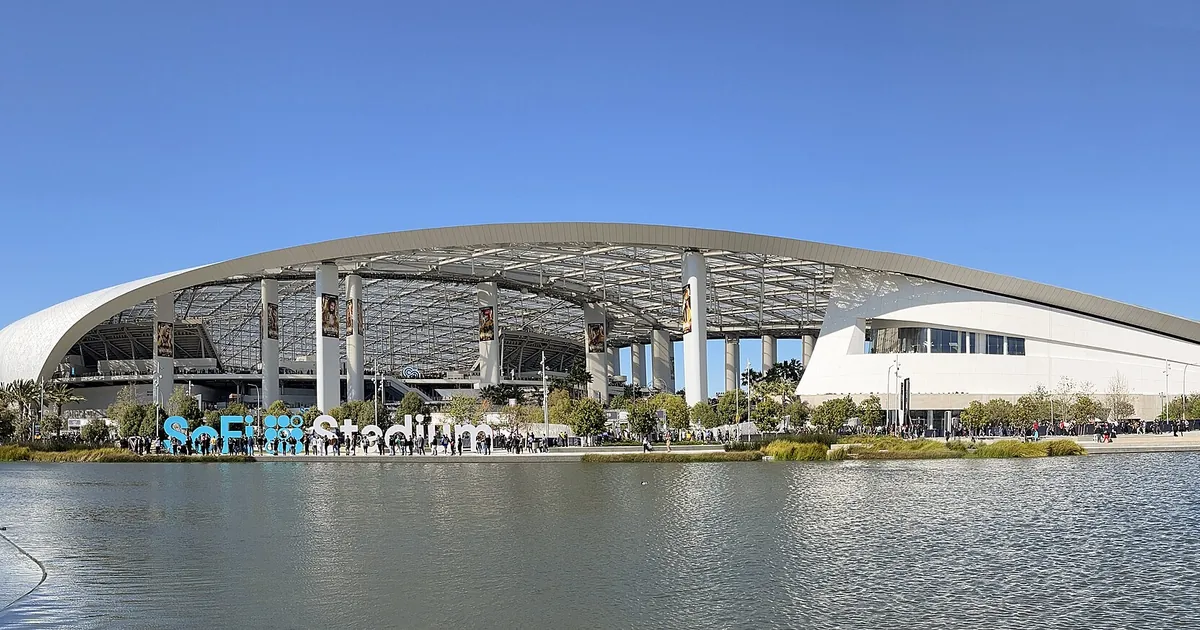
SoFi Stadium, host of the US opener. Photo: Troutfarm27 / Wikimedia Commons, CC BY-SA 4.0
5 min read · 1,053 words
Four days before the United States opens its home World Cup, the US opener tickets for World Cup 2026 still have not sold out, and the way FIFA has priced this tournament means that is not an accident of weak interest so much as a confession written into the algorithm. As of June 8, FIFA’s own ticketing site showed just 132 seats left to sell for the June 12 match at SoFi Stadium in Inglewood. That sounds like near-sell-out scarcity. It isn’t. On StubHub, SeatGeek and FIFA’s own resale marketplace, thousands of tickets for the same game were sitting unsold. Hold those two numbers next to each other and you can see exactly how FIFA’s pricing machine works, and what it is quietly admitting.
What FIFA’s dynamic pricing is doing to the US opener tickets for World Cup 2026
This is the first men’s World Cup sold under fully dynamic, demand-led pricing, the airline-and-concert model, where the sticker price floats with appetite rather than sitting fixed on a printed ticket. FIFA started group-stage seats as low as $60 for supporter tiers and let the ceiling run far higher, betting that demand for a North American World Cup would push prices up and keep them there.
For the marquee fixtures, that bet is holding. For a lot of the tournament, it is not. Across the resale market, more than half of group-stage matches have seen prices fall by 20% or more. The average “get-in” price for a group-stage seat has dropped to around $560, down from roughly $720 a month earlier, a 24% slide in four weeks, with about 8% of that coming in the final week alone. There are now 13 group matches with get-in prices under $300. The cheapest ticket in the whole group stage, Cape Verde versus Saudi Arabia in Houston on June 26, can be had for about $157.
The US opener is caught in the same downdraft. A home World Cup opener is supposed to be the single hottest non-final ticket of the group stage. Instead it is being discounted in real time, days before kickoff, while the host nation’s own fans decline to pay what the model first asked.
Why “132 tickets left” is the wrong number to watch
Here is the part the headline figure hides. The “132 left” on FIFA’s primary site is not a measure of how close the game is to selling out, it is a measure of how much inventory FIFA has chosen to release at that moment. Dynamic-pricing operators drip-feed primary stock precisely to manufacture the look of scarcity: a low “tickets remaining” counter nudges hesitant buyers to act. The honest signal is the resale market, because that is where real, unsubsidised demand sets the clearing price. And the resale market for this game is deep and softening, thousands of seats, prices easing, which is the opposite of scarcity.
So the two numbers are not in tension; they are telling the same story from different ends. A near-empty primary counter plus a flooded, falling resale market is the textbook signature of a price set above what the crowd will bear. The algorithm aimed high, the host nation’s fans flinched, and now the same algorithm is walking the number back one markdown at a time.
The risk transfer nobody voted for
Strip away the technology and dynamic pricing is, at its core, a risk-transfer engine. Under the old fixed-price model, FIFA carried the risk of mispricing: set a face value too high and you ate the empty seats. Under dynamic pricing, that risk is pushed onto the buyer. The fan who paid $720 for a get-in seat a month ago now watches the same category clear at $560, with no refund of the difference, while the fan who waited is rewarded. The federation captures the upside on the hot games and offloads the downside of the cold ones onto whoever bought earliest and most loyally. For a tournament that markets itself on universal access to “the people’s game,” that is a meaningful inversion: the most devoted buyers, the ones who committed first, are the ones the model penalises.
It also explains the regulatory heat. We covered the dynamic-pricing row and the state attorney-general scrutiny when it first broke; the undersold US opener is the clearest evidence yet of what that fight was actually about. A pricing system that can quietly discount a host nation’s flagship match is also one that can quietly inflate it, with no published rulebook for either move. The softening prices vindicate the fans who pushed back, but they do not answer the underlying objection, which is that nobody outside FIFA can see how the dial is being turned.
What it means if you still want to go
For fans, the read is straightforward and, for once, in your favour: with prices falling this close to kickoff, patience is cheaper than panic. The neutral, lower-demand group games are where the value is, get-in seats for several fixtures now sit in the $150–$250 range, a fraction of the marquee matches. If your goal is simply to be inside a World Cup stadium in 2026, the data says wait, watch the resale market, and let the algorithm keep cutting. The one place that logic breaks is the genuine blockbuster, a host opener, a Mexico fixture at the Estadio Azteca, a knockout tie, where demand is real and the discounts won’t come.
The deeper lesson sits with FIFA. It built a pricing system designed to extract maximum revenue from a continent’s worth of demand, and the system is now publicly marking down the United States’ own opening night. The technology did exactly what it was told to do. The question FIFA has not answered is whether a tournament that calls itself the people’s game should be run on a dial only it can see.
For more on how the money side of this tournament keeps misfiring, read our look at the Airbnb demand bust the free-ticket refund fiasco and our full World Cup 2026 guide.
Sources
- NPR, “With just days left, the U.S. opening match at the World Cup is still not sold out” (npr.org, June 8, 2026)
- NBC News, “World Cup ticket prices are starting to come down on the resale markets” (nbcnews.com)
- Yahoo Sports, “Over half of 2026 World Cup tickets on the secondary market have seen significant price decreases” (sports.yahoo.com)
- Goal.com, “Are 2026 World Cup tickets getting cheaper?” (goal.com)
