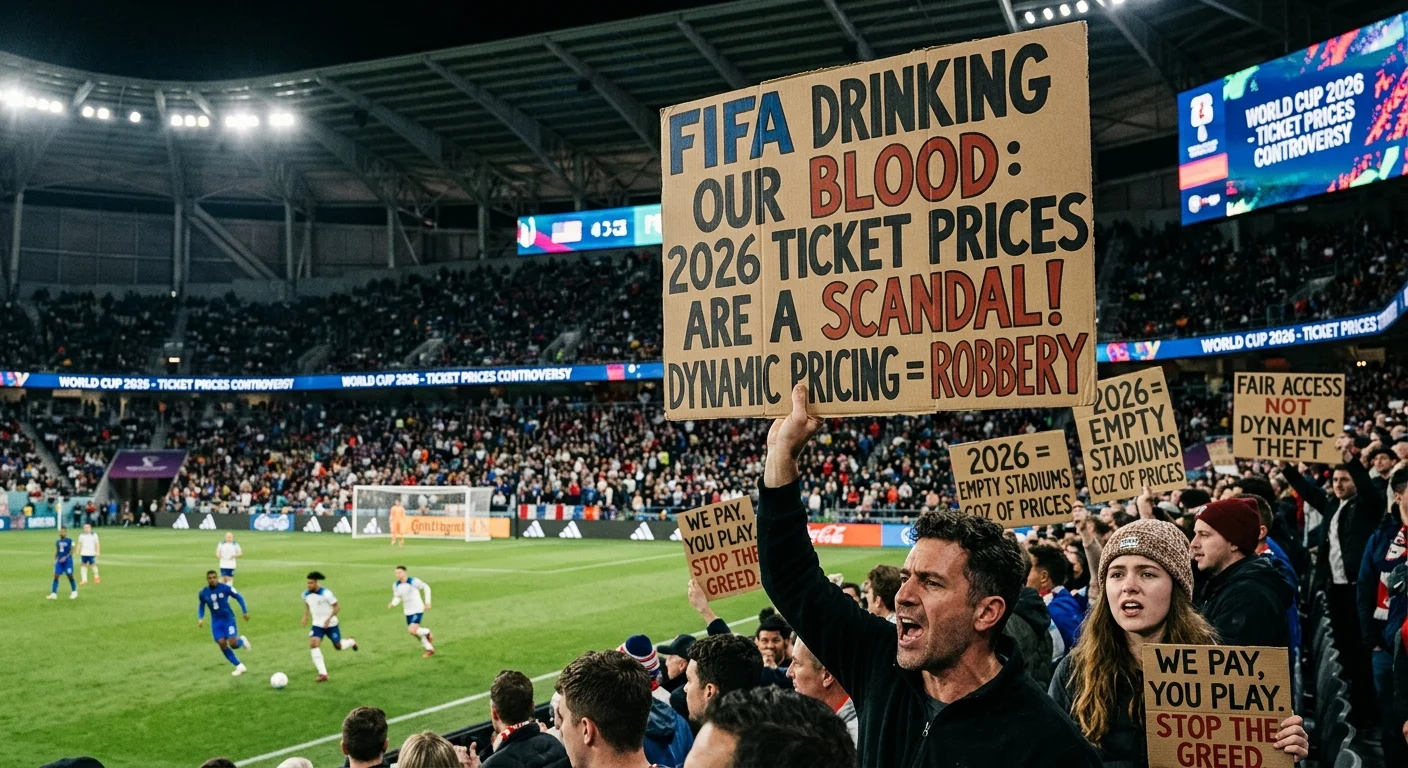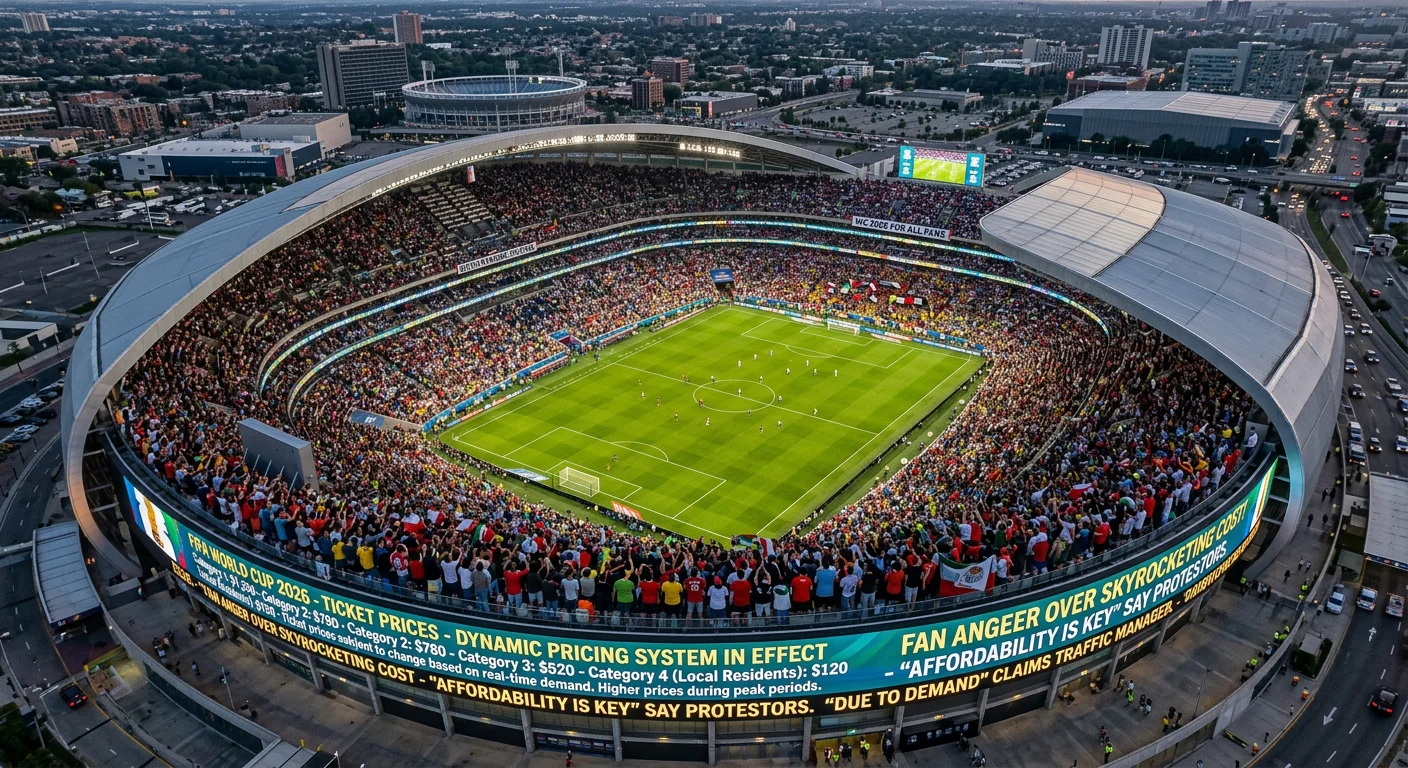
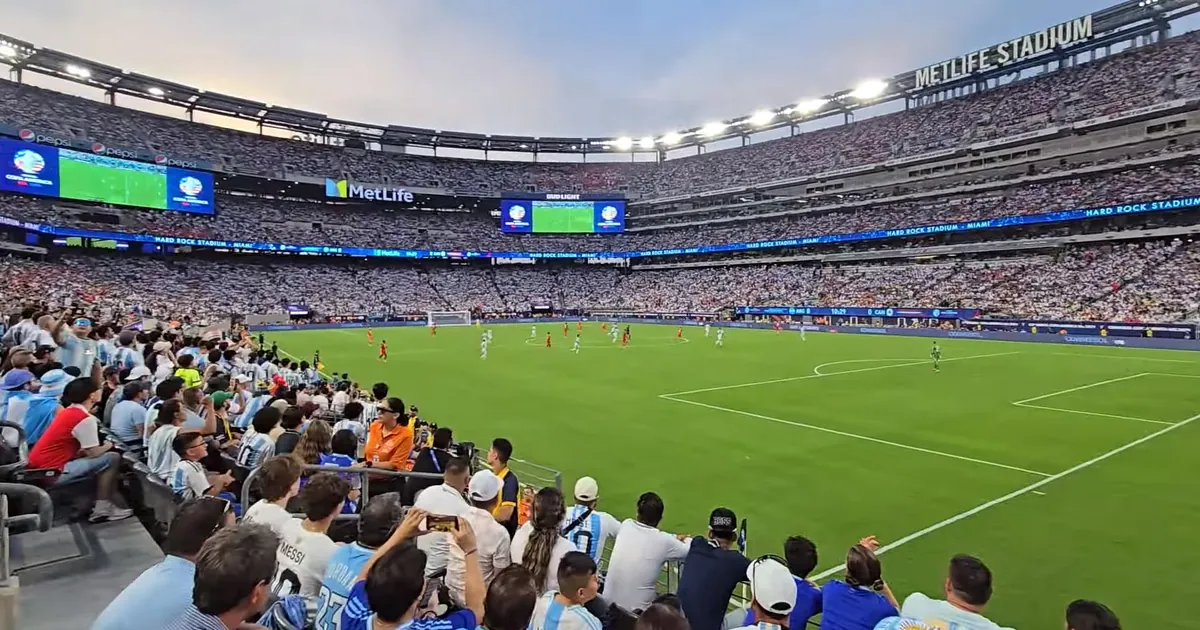
Inside MetLife Stadium, host of the 2026 World Cup final. Photo: Sebas / Wikimedia Commons, CC BY 3.0
12 min read · 2,446 words
The Short Version
For the first time, FIFA priced World Cup tickets dynamically, letting them float with demand like airline seats. Group-stage tickets that started near $60 climbed into four figures, MetLife matches now average around $2,800, and the resale market has produced $90 tickets relisted for over $2,000. The result: two state attorneys general have subpoenaed FIFA, and the World Cup ticket has become a case study in what happens when a governing body treats its fans as a yield-management problem.
The story of World Cup 2026 ticket prices is no longer just a fan grievance, it is a legal matter. On 28 May, the attorneys general of New York and New Jersey opened a joint investigation into FIFA’s ticketing, subpoenaing the governing body for documents on how it priced matches. The trigger was simple: the prices, and the way they moved, made fans feel they had been had. To understand the controversy, you have to understand the one decision underneath all of it, FIFA’s switch to dynamic pricing.
What Dynamic Pricing Actually Changed
Dynamic pricing means a ticket has no fixed face value. Instead, the price floats with demand, the way an airline seat or a concert ticket does, rising as interest climbs and (in theory) falling when it cools. FIFA had never used it for a World Cup before. In 2026 it did, and the effect was immediate: matches that opened at accessible group-stage prices climbed steeply, and the marquee fixtures detached from anything resembling a fixed tariff.
The numbers are stark. According to NPR’s reporting tickets for matches at MetLife Stadium, which hosts the final, now average around $2,800. Gothamist reported that New York Attorney General Letitia James and New Jersey Attorney General Jennifer Davenport said they had subpoenaed FIFA for pricing documents, prompted by news reports of fan anger and complaints that some buyers were not receiving the tickets they had paid for as advertised.
It is not only the two states. California Attorney General Rob Bonta confirmed his office had written to FIFA raising concerns about “potentially misleading ticketing practices,” and several federal lawmakers have sent their own letters. For an organisation that spent years selling 2026 as the people’s World Cup, that is a remarkable amount of legal attention before a ball has been kicked.
How a Floating Price Is Set
It helps to see what is actually happening under the hood, because “dynamic pricing” can sound like a mysterious black box when it is really a set of rules reacting to signals. The same machinery that prices a concert seat or a baseball ticket reads how fast inventory is moving, how much time is left before the event, the day and hour people are shopping, and the relative appeal of the fixture. A semi-final draws harder than a group game between lower-ranked sides, so the model values it higher. Seat quality and scarcity feed in too: as a section empties, the remaining seats in it can be repriced upward because they are now rarer.
In ordinary commercial use, those movements happen inside guardrails, a published floor and ceiling that keep the price from running away in either direction. The whole logic rests on one idea: a ticket is perishable inventory. Once kickoff arrives, an empty seat is worth nothing, so sellers chase the highest price the market will bear for as long as the clock allows. That framing came into sport from airlines and ride-hailing, and for routine events most fans barely noticed it. A World Cup is not a routine event, and that is where the model and the moment collide.
The Resale Market FIFA Built
Dynamic pricing did not stop at the primary sale. FIFA also runs the official resale marketplace, and set the incentives on it. Fans quickly noticed that the structure seemed designed to feed, not curb, speculation. One Ireland supporter documented a listing on r/WorldCup2026Tickets showing a ticket “originally bought for 90usd and is being sold on resale for 2044usd, almost 2k markup,” on top of “the $300+ reselling fee FIFA are putting on the ticket.” FIFA collects a fee on every resale, which means the governing body earns more each time a ticket changes hands at an inflated price.
That has fuelled a widely shared suspicion among buyers: that under-pricing some lottery allocations and then enabling a frictionless, fee-bearing resale market is not a bug. As one fan put it, “I suspect they are trying to make a mint from the resale market. This method will boost resales.” Whether or not that was the intent, it is plainly the effect, and it is exactly the kind of structural incentive a subpoena is designed to examine.
There is a structural layer beneath the headline prices, too. Fans studying the seat maps noticed that many of the best midfield, lower-tier seats, the ones a dynamic price would value most highly, were not on general sale at all. As one buyer observed “a huge chunk of the midfield lower levels are reserved for hospitality tickets.” So the supporter paying a dynamically inflated price for a standard seat is often doing so for inventory that has already been thinned by hospitality packages sold separately and at a premium. Dynamic pricing sets the rate; the allocation decides how little is left to bid on.
How This Compares to Past Tournaments and Other Events
What makes 2026 feel different is the break with how World Cups used to sell. For decades, FIFA published fixed price categories. You knew before you entered the ballot which tier you were chasing and roughly what a winning entry would cost, and that figure did not move between the draw and the day you paid. Categories still existed, but the price attached to each one was a known quantity rather than a number the system would later decide. Fans planning a trip could budget against a fixed line.
The dynamic approach FIFA adopted in 2026 is closer to what concertgoers have seen elsewhere. The most cited cautionary tale comes from outside football: when a major reunion tour went on sale, advertised prices reportedly more than doubled within minutes as demand surged, leaving fans who had queued for hours staring at numbers far above what they expected. That episode put dynamic pricing on the front pages and taught a generation of buyers to distrust a price that can change while they are checking out. The mechanics FIFA used are the same family of tools, applied for the first time to the single most demand-saturated event in sport, where there is no rival match to walk to and no second seller to undercut the price.
The comparison matters because it shows the controversy is not really about FIFA inventing something new. It is about FIFA importing a model that was already contentious in concerts and theatre, then dropping it onto an audience with no alternative and a decades-old expectation of fixed, fair pricing. Specific figures from past World Cups vary by source and category, so treat any single number with caution and check FIFA’s official pricing pages for the authoritative tiers. The structural shift, from fixed to floating, is the part that is not in dispute.
The Analysis: Dynamic Pricing Broke the Lottery’s Social Contract
Here is what the official explanations miss. A World Cup ticket lottery is not just a sales channel, it is a promise. The implicit deal FIFA has offered fans for decades is: enter the ballot, accept the odds, and if you win you pay a known, fixed, broadly fair price. That fixed price is the entire point. It is what makes a global lottery feel legitimate rather than predatory, and it is what lets an ordinary supporter in Lagos or Lima believe the tournament is theirs too.
Dynamic pricing quietly tore that contract up. The moment the price floats, winning the ballot no longer guarantees affordability, it guarantees only the right to pay whatever the algorithm decides the match is worth that week. The fan has taken on all the uncertainty and FIFA has taken all the upside. That is a fundamentally different product from the one fans thought they were entering a lottery for, and it is why the anger has a different quality this time: people do not merely feel that tickets are expensive, they feel that the rules were changed after they committed.
The investigations also mark a regulatory turn that will outlast this tournament. Dynamic pricing migrated into sport from airlines and ride-hailing almost entirely unexamined, on the assumption that a ticket is just another perishable unit of inventory. What the New York and New Jersey subpoenas establish is that, for a monopoly event, the model is now a consumer-protection question rather than a private commercial choice. Once an attorney general asks how an algorithm set a price, every input to that algorithm — the demand signals, the floor and ceiling, the treatment of the resale fee — becomes discoverable, and “the market decided” stops being an answer. The frustrating part is that FIFA had cheaper, duller alternatives: published fixed tiers, a face-value ceiling, capped official resale. It chose none of them, and the probes are simply the bill for that choice arriving earlier than its lawyers expected. Whatever the legal outcome, the next mega-event that prices this way will do so knowing regulators are no longer watching from the stands.
It also interacts badly with everything else about a tri-nation tournament. A fan who wins a ballot for a match in a distant host city has already committed to flights and accommodation before the dynamic price settles, a cost trap we examined in our piece on which host cities are getting fan costs right. Layer opaque, floating ticket prices on top of non-refundable travel and you have engineered maximum financial exposure for the ordinary supporter. The logistics of following a team across a continent, which we cover in our look at the tournament’s logistics and politics only sharpen the problem.
What Fans Can Actually Do
None of this leaves supporters powerless, even if it leaves them frustrated. The single most useful habit is to anchor every decision to the official channel. Prices shift with demand, so a figure you see one evening may not hold the next morning, and screenshots of older prices are not a guide to what you will pay. Check the official FIFA ticketing and resale pages for the current number before you commit, and treat any third-party site quoting a “better” deal with suspicion.
- Buy only through official platforms. The primary sale and the official resale marketplace are the routes FIFA actually recognises. Tickets bought elsewhere can be invalid, and the safest path is also the one least likely to leave you stranded at the gate.
- Set a hard budget before you shop. A floating price is designed to nudge you upward in the moment. Decide your ceiling in advance and walk away when the number crosses it, the way you would with any surge-priced purchase.
- Do not commit to travel before you hold a ticket. Non-refundable flights and hotels booked around a ticket you have not yet secured are how a dynamic price turns into a financial trap. Lock the seat first, then book the trip.
- Watch the resale fee, not just the headline price. A resale listing can carry a substantial fee on top of the markup. Read the full breakdown so the all-in cost is what you are judging.
- Consider patience on non-marquee matches. In ordinary dynamic-pricing markets, prices for less-hyped events can soften closer to the date as sellers clear inventory. This is no guarantee, and the biggest fixtures rarely cool, but for a lower-demand group game waiting can sometimes help rather than hurt.
- Keep your records. Save confirmations, prices paid, and any advertised terms. If your purchase does not match what was promised, that paper trail is what gives a complaint weight, and it is exactly the kind of mismatch regulators are now examining.
What Happens Next
The investigations will take time, and a subpoena is not a verdict. The central legal question, as the attorneys general have framed it, is whether FIFA used a monopoly position over the only World Cup in town to set prices in a way that misled or harmed consumers. That is hard to prove and slow to litigate, the tournament will be long over before any finding lands.
But the reputational verdict is already in. FIFA has demonstrated that it can extract record ticket revenue from a captive global audience, and it has discovered the cost of doing so: a World Cup that opens under legal scrutiny, with its own fans cast as plaintiffs. If you want to understand how seat tiers and pricing categories fit together, our breakdown of Category 1 vs Category 2 seats is a useful companion. For the full picture of the tournament and how to navigate it, see our complete guide to the 2026 World Cup.
Frequently Asked Questions
Why are World Cup 2026 tickets so expensive?
For the first time, FIFA used dynamic pricing, letting ticket prices float with demand rather than holding a fixed face value. Demand for a 48-team home-soil World Cup is enormous, so prices for marquee matches climbed sharply, matches at MetLife Stadium now average around $2,800.
Is FIFA being investigated over ticket prices?
Yes. The attorneys general of New York and New Jersey opened a joint investigation in May 2026 and subpoenaed FIFA for pricing documents. California’s attorney general has also written to FIFA, and several federal lawmakers have sought answers about its ticketing practices.
Does FIFA profit from ticket resales?
FIFA operates the official resale marketplace and charges a fee on each resale, reported by some fans at over $300 per ticket. Because that fee is collected every time a ticket is resold at an inflated price, critics argue the structure rewards speculation rather than restraining it.
How is dynamic pricing different from how World Cup tickets used to be sold?
In the past, FIFA published fixed price categories, so a winning ballot entry meant paying a known, set figure that did not move before the event. With dynamic pricing the number floats with demand, which means winning the ballot no longer locks in an affordable, predictable price. The shift from fixed to floating is the structural change at the heart of the controversy.
How can I avoid overpaying for a World Cup 2026 ticket?
Buy only through FIFA’s official primary sale or official resale marketplace, check the current price there before committing because figures change with demand, set a firm budget and stick to it, factor in any resale fee rather than just the headline price, and avoid booking non-refundable travel until you actually hold a valid ticket.