
8 min read · 1,541 words
There is a particular kind of institutional awkwardness that only football can produce. On 26 June, in a city that has spent twelve months planning rainbow flags, community events, and Pride-themed matchday activations, two nations with criminal laws against homosexuality will take to the pitch. Egypt versus Iran at Seattle’s Lumen Field is, on paper, a perfectly ordinary group-stage fixture. Off it, it has become one of the more revealing fault lines of the 2026 World Cup.
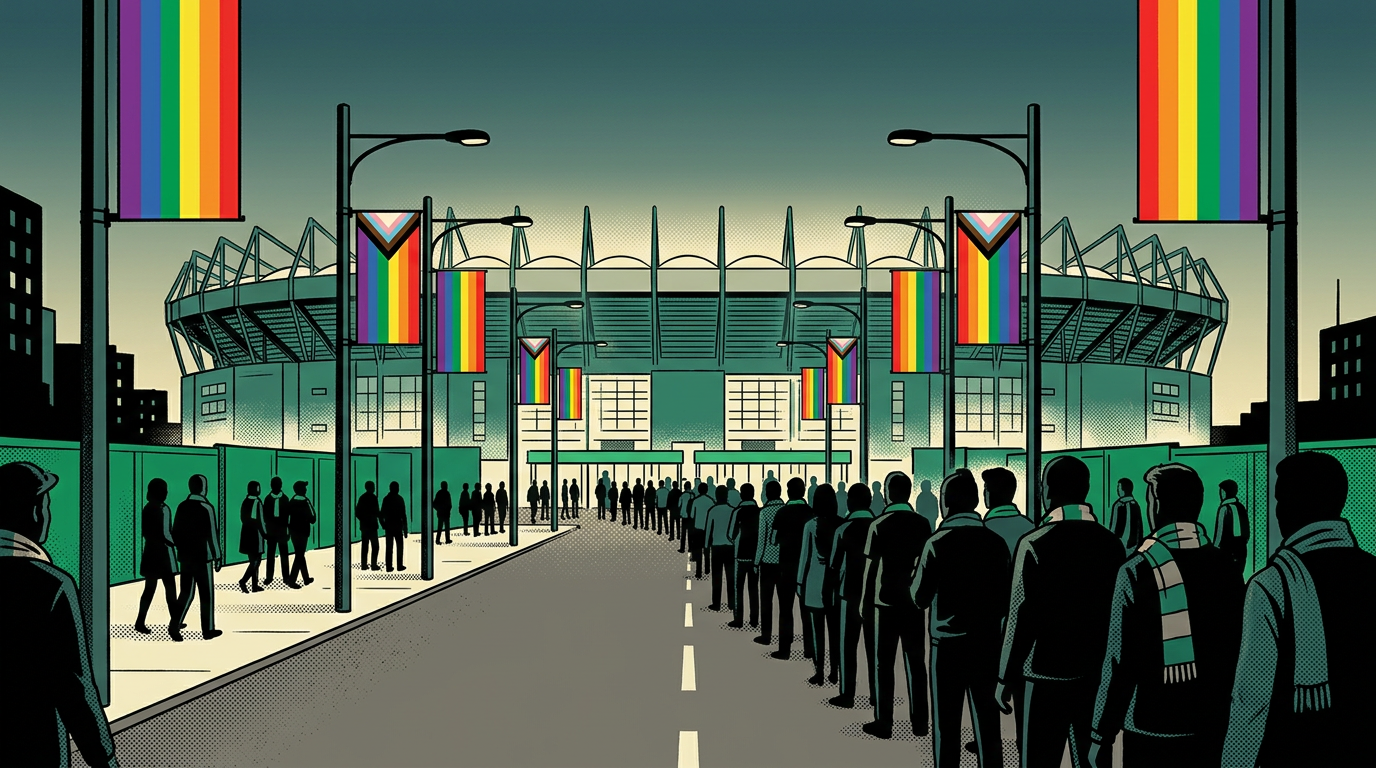
The situation is not especially complicated to describe, though it is genuinely difficult to resolve. Seattle’s local organising committee, which operates independently of FIFA, scheduled 26 June as a Pride-themed matchday more than a year ago, timed deliberately to coincide with the city’s annual Pride weekend. Both Egypt and Iran have since called for those celebrations to be cancelled. The committee is pressing ahead regardless. FIFA, characteristically, has said very little of substance.
What Is Actually Happening in Seattle
The distinction between FIFA’s authority and that of a host city’s local organising committee matters here. As the Guardian reports, the Pride Match branding and surrounding festivities were conceived and planned by Seattle’s committee, not mandated from Zurich. That structural separation gives FIFA a degree of plausible deniability it will almost certainly exploit. It also means the committee has no obvious obligation to comply with the objections of the two competing nations.
Egypt and Iran’s position is straightforward, if uncomfortable to state plainly: both countries criminalise same-sex relationships, and their football associations have framed the Pride celebrations as an imposition on their delegations and supporters. The request to cancel is not a negotiating position. It is a flat objection rooted in state policy.
Seattle’s response, equally plain, is that the city’s values are not subject to veto by visiting football associations. The committee has not, as of writing, indicated any intention to scale back the programme. Whether that holds once the diplomatic pressure intensifies in the 48 hours before kick-off remains to be seen.
FIFA’s Familiar Silence
It would be unfair to say FIFA has no record on LGBTQ+ issues at major tournaments. It would also be generous to describe that record as consistent. The 2022 Qatar World Cup produced the armband controversy, the last-minute prohibition on rainbow symbols in stadiums, and a series of press conference non-answers that became something of a genre in themselves. The 2026 edition, spread across three countries and 16 host cities with wildly varying local cultures, was always going to generate similar friction.
What is notable about the Seattle situation is that the conflict has arrived before the knockout rounds, before the tournament has reached peak global attention, and in a city that had done everything by the book. The committee planned in advance, worked within its remit, and is now caught between the values of its own community and the diplomatic sensitivities of a global governing body that would rather not be asked to choose sides. FIFA’s silence, in that context, is itself a choice.
The New York dimension is worth noting here too. BBC Sport reports that New York mayor Zohran Mamdani has been vocal about the World Cup generating sufficient revenue that supporters should not face inflated costs. The broader point, that host cities have legitimate interests and voices in how this tournament is run, applies directly to Seattle’s situation. Local committees are not simply logistics providers. They are stakeholders with their own constituencies.
The Football, Briefly
It would be remiss not to acknowledge that Egypt and Iran are also, technically, playing a football match. Both sides arrived at this expanded 48-team tournament with genuine aspirations of progression, and the fixture has group-stage implications that would, in a less charged week, be the primary talking point.
Iran have shown defensive organisation in their opening fixtures, the kind of low-block discipline that makes them awkward opponents for technically superior sides. Egypt, built around a midfield that retains the ball reasonably well but struggles to convert possession into genuine chances, have an xG record in this tournament that flatters their defensive solidity more than their attacking threat. Neither side is likely to produce the kind of open, expansive football that fills highlight packages. The match itself may well be decided by a set piece or a moment of individual quality rather than sustained tactical dominance.
That is not a criticism. It is simply the reality of two pragmatic sides with a great deal to lose. The football will be played. The flags will fly outside the stadium. Both things will happen simultaneously, and the tension between them will not be resolved by the final whistle.
Scotland, Brazil, and the Tournament’s Other Stories
Elsewhere, the group stage has been producing its own narrative texture. Scotland’s exit, confirmed after a run that included a defeat to Brazil and an agonising goal difference calculation, has generated the kind of philosophical letters-to-the-editor that only Scottish football can inspire. The Guardian’s Football Daily captured the mood with characteristic precision: a nation that arrived with European champions and Premier League winners in the squad, drank several cities dry, and still found a way to exit on goal difference while waiting in Miami heat. The tradition holds.
The USA, meanwhile, are through as Group D winners and face Turkey in a fixture that carries genuine tactical interest. The Independent notes that Mauricio Pochettino faces a selection dilemma with Christian Pulisic’s fitness uncertain, a concern that feeds into the broader injury picture across the tournament. Neymar’s return off the bench against Scotland provided one of the week’s more sentimental moments, though the Independent’s injury tracker makes clear that the Brazilian’s availability for the knockout rounds remains genuinely uncertain. Declan Rice’s situation is similarly unresolved, which has implications for England’s midfield structure that will occupy a significant portion of the British football press for the next several days.
These are the ordinary concerns of a World Cup in full swing. They matter, and they will be analysed at length. But they are not the story that will define this particular week of the tournament.
What Comes Next
The Seattle situation has no clean resolution. The match will be played, the Pride events will proceed in some form, and both Egypt and Iran’s football associations will issue statements that satisfy their domestic audiences. FIFA will produce language that commits to nothing while gesturing at everything. The local committee will point to the values of the city it represents. Everyone will claim a version of the outcome that suits them.
What the episode does clarify is the structural tension at the heart of a tournament that has expanded to 48 teams and 16 host cities precisely because it wanted to be everywhere at once. Being everywhere at once means being in cities with progressive LGBTQ+ policies and in countries where those same policies are illegal. FIFA has never resolved that contradiction. It has simply deferred it, tournament by tournament, until the deferral becomes untenable.
Seattle has not created a crisis. It has simply made visible one that was always there. For anyone following the World Cup closely, that visibility is, at minimum, useful. Whether it produces any lasting change to how FIFA manages the intersection of sport, politics, and human rights is a different question entirely, and one that will not be answered before kick-off on 26 June.
For those wanting to follow all the group-stage action as it unfolds, including this fixture, FootyGazette’s watch guide covers your options.
FAQ
Why is the Egypt v Iran match being called a Pride Match?
Seattle’s local organising committee scheduled 26 June as a Pride-themed matchday more than a year in advance, timed to coincide with the city’s annual Pride weekend. The branding and surrounding events were planned by the committee, which operates independently of FIFA.
Have Egypt and Iran officially objected to the Pride celebrations?
Yes. Both nations have called for the cancellation of the LGBTQ+ festivities around the match. Both countries have domestic laws that criminalise same-sex relationships, and their football associations have framed the events as an imposition on their delegations and travelling supporters.
Does FIFA have the authority to cancel Seattle’s Pride events?
The structural separation between FIFA and host city organising committees makes this genuinely complicated. Seattle’s committee planned the events within its own remit. FIFA has not publicly directed the committee to cancel anything, and its public statements on the matter have been notably vague.
What are the group-stage implications of Egypt v Iran?
Both sides have progression ambitions, and the result carries direct consequences for their tournament futures. Neither team has been prolific in front of goal, and the match is likely to be tightly contested, with set pieces and individual moments potentially decisive.
How does this fit into the broader pattern of political tension at World Cups?
It follows a familiar trajectory. The 2022 Qatar World Cup produced similar friction around LGBTQ+ rights, including last-minute restrictions on rainbow symbols in stadiums. The 2026 edition, with its expanded format and multiple host cities, was always likely to generate comparable conflicts given the range of local cultures and values involved.
Where can I watch Egypt v Iran and other World Cup fixtures?
For a full breakdown of how to follow the 2026 World Cup online, including all group-stage matches, FootyGazette has a dedicated guide covering your options across different regions.
