
7 min read · 1,506 words
You need one number to understand what Cape Verde have done at the 2026 World Cup: 27. That’s how many shots Spain took on June 15 at Mercedes-Benz Stadium in Atlanta. Spain had 74 percent of the ball and seven shots on target. Lamine Yamal came off the bench. Ferran Torres hit the crossbar. And a 40-year-old goalkeeper who plays for Chaves in Portugal’s second division stopped everything that didn’t hit the woodwork.
The final score was 0-0. Cape Verde’s first point at their first-ever World Cup came against the two-time European champions. Today, facing Saudi Arabia in Houston, they can reach the Round of 32. Whatever happens on June 26, Cape Verde’s journey through the 2026 World Cup has already rewritten what people thought possible for a nation of 525,000.
What Vozinha Actually Did Against Spain
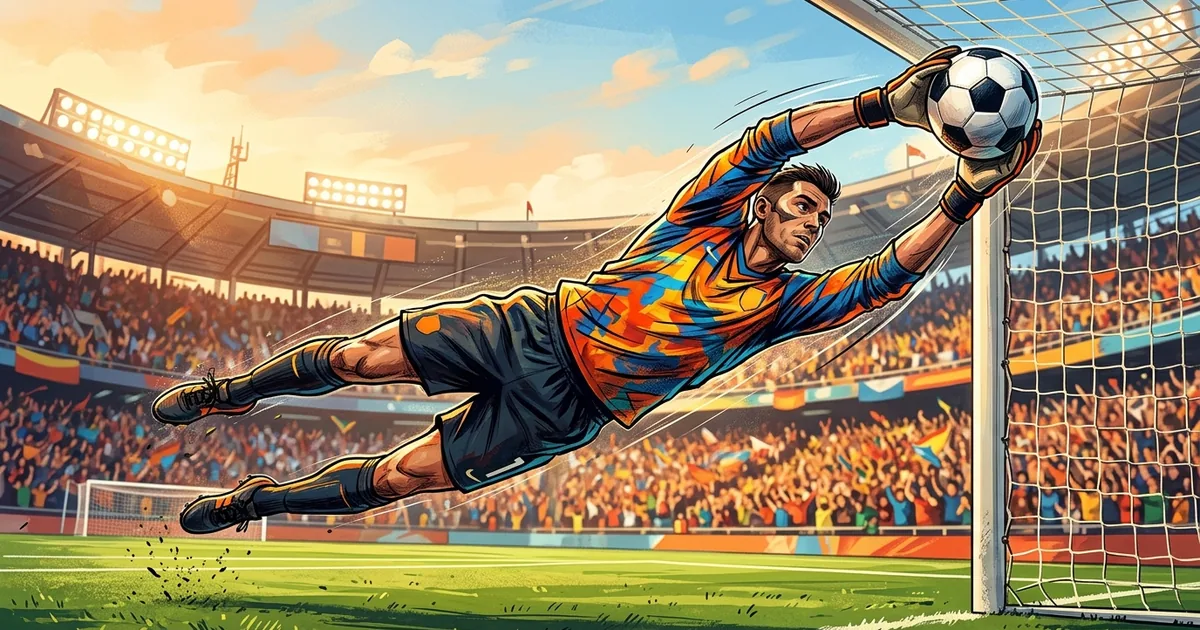
The statistics tell a story of a one-sided match that was, in fact, nothing of the sort. Spain’s 27 shots produced zero goals. Their keeper touched the ball three times. Cape Verde’s goalkeeper, Cláudio Eduardo Ramos Fernandes, known everywhere as Vozinha, touched it far more.
He saved from Oyarzabal, Laporte, and Torres in a performance that earned him 14 million new Instagram followers in the days after the final whistle. He was, per FIFA records, 40 years and 12 days old when he took the field — the oldest player ever to appear in any nation’s first-ever World Cup match. Post-match, on the pitch in Atlanta, he cried. “I have worked my whole life for this moment,” he said.
Bubista, the nickname of Cape Verde’s Portuguese manager Pedro Leitão Brito, watched it from the touchline. He has been in charge since January 2020, was named CAF Coach of the Year in 2025, and knew exactly what this moment meant for his goalkeeper specifically. “He was overwhelmed with emotion,” Bubista said. “He is quite an experienced player and has struggled throughout all of these years to be here at this world stage. It was also a cry of resilience.”
Vozinha played in Moldova, Cyprus, Slovakia, and the Portuguese second division. He never made it to a top flight. That isn’t a footnote. It’s the whole story of what this tournament means to the players wearing the Blue Sharks shirt.
How a Nation of 525,000 Got to the World Cup
Cape Verde is the smallest country by land area ever to qualify for the FIFA World Cup. Four thousand and thirty-three square kilometres, ten islands scattered across the Atlantic, a population of approximately 525,000. They have no professional domestic league. Their players develop through the European diaspora, which stretches most densely through Portugal, the Netherlands, and France.
Their football history is newer than it looks. They appeared at their first Africa Cup of Nations in 2013, reached the quarter-finals as debutants, and upset Cameroon in the process. They made three more AFCON appearances after that, reaching the quarter-finals again in 2023. The 2013 AFCON debut is worth remembering. Cape Verde entered that tournament with almost no continental pedigree, won their group stage including a 2-1 victory over Angola, and qualified from it. Their quarter-final run ended there, but it marked the moment the wider football world started paying attention to the Blue Sharks. A decade later they made the quarter-finals again at the 2023 AFCON. That run is the context for 2026. Their FIFA ranking climbed from 182nd in the world in 2000 to a peak of 27th in February 2014. The trajectory is not an accident. It’s the result of a generation of Cape Verdean players taking their chances in European football seriously.
On October 13, 2025, they beat Eswatini 3-0 at home in Praia to clinch qualification for this tournament, finishing CAF Group D four points clear of Cameroon with seven wins from ten matches. Former Cape Verde manager Rui Aguas, who oversaw their earlier rise, said the moment was “the greatest moment since independence.” The country gained independence from Portugal in 1975. Aguas wasn’t exaggerating.
The squad Bubista brought to North America is a product of diaspora. Logan Costa, widely regarded as Cape Verde’s best outfield player at 25, was born in Paris and plays for Villarreal in La Liga. He returned from ACL surgery in July 2025, was back in action by May 2026, and made this squad. Ryan Mendes, the captain and all-time leading scorer, played for Nottingham Forest and Lille across a career that spans two decades and six countries. He’s 36. He made his Cape Verde debut in 2009 and has been the constant for every generation of the squad built since.
Ed Lopes, who was in Atlanta on June 15, described what that night felt like in a way that no statistics could replicate. “The fact we were there for our country just made it so much more special,” he said. “Man, the hugs. You just felt so much warmth. The smile’s just bigger.”
Bubista has had six years to build this group. He didn’t inherit it mid-qualifying campaign. He’s shaped how they press, how they compact, how they hold shape when Spain have 74 percent of the ball and seven shots on target and the ball still won’t go in. The qualifying record (seven wins, the group won comfortably) is the evidence that what happened in Atlanta was not luck.
Two Debutants, Two Completely Different Worlds
Cape Verde shared the 2026 World Cup’s class of first-timers with Uzbekistan, Jordan, and Curaçao. The contrast between the two most-discussed debutants is worth sitting with.
On June 23 in Houston, Portugal beat Uzbekistan 5-0. Cristiano Ronaldo scored twice to become the first player ever to score at six different World Cups. Uzbekistan didn’t register a single shot on target. It was the kind of result that gets filed under “reality check” and forgotten before the next round of group matches begins.
Eight days earlier, Cape Verde held Spain to 0-0 with six total shots of their own. They didn’t dominate. They didn’t match Spain technically. They built a low block, compressed space, kept their shape for 90 minutes in Atlanta’s summer heat, and trusted their 40-year-old goalkeeper to do the rest. That’s a game plan. One that worked.
The 48-team expansion that brought both nations here doesn’t guarantee competitive parity. What it guarantees is a place at the table. What you do with it depends on how seriously you’ve built the infrastructure: the coaches, the pathways, the diaspora connections, before you arrive. Uzbekistan’s domestic league is investing and their time will come. Cape Verde’s time, it turns out, is now.
Spain’s manager Luis de la Fuente was candid after the match. “This team was clearly inferior to us,” he said, “but they did the things they had to do well.” He also said: “Football is like that. There are no small opponents here.” He didn’t sound like he believed the second part until 90 minutes had elapsed.
Why Today Against Saudi Arabia Could Make History
Cape Verde enter June 26 with two points: the 0-0 against Spain and a 2-2 draw with Uruguay in their second group match, in which they scored twice. Saudi Arabia have one point. A win for Cape Verde today secures at minimum five points and almost certainly sends them through as Group H runners-up or one of the best third-place qualifiers across 12 groups in the 48-team bracket.
A draw is complicated by what Uruguay and Spain do simultaneously. A narrow defeat might still leave Cape Verde with enough points to advance as one of the eight best third-place teams. But the cleanest path through runs directly past Saudi Arabia in Houston.
None of this conversation was supposed to exist. Cape Verde came here ranked 67th in the world. Spain came ranked second. A 65-place gap doesn’t usually produce 0-0 scorelines at the World Cup. It usually produces something closer to what happened when Portugal met Uzbekistan.
Cape Verde’s story since June 15 has been one of continuous relevance in a tournament that was supposed to have moved on without them. They drew Uruguay. They stayed in contention. And today they have a genuine shot at reaching the knockout stage of a World Cup at their first attempt — something most European nations with generations of experience have never managed.
That South Africa reached the Round of 32 this week in their first knockout appearance in 28 years suggests African football’s position in this tournament is no longer being measured by reputation or sentiment. Cape Verde is a different case again. No domestic league. No inherited infrastructure. A tiny island nation built on emigration, remittances, and the pride of diaspora players who chose to play for the islands their families came from.
The World Cup 2026 was meant to generate precisely these stories. More nations, more moments, more occasions that weren’t supposed to happen. Vozinha crying at full-time at Mercedes-Benz Stadium is what that ambition looks like when it actually works.
Spain took 27 shots. They hit the crossbar. Their goalkeeper touched the ball three times. And a man who spent his career in the second division of Portuguese football held the line for 90 minutes and broke down when it was over.
The scoreboard says 0-0. That number is not a disappointment. It’s the point.
