9 min read · 1,845 words
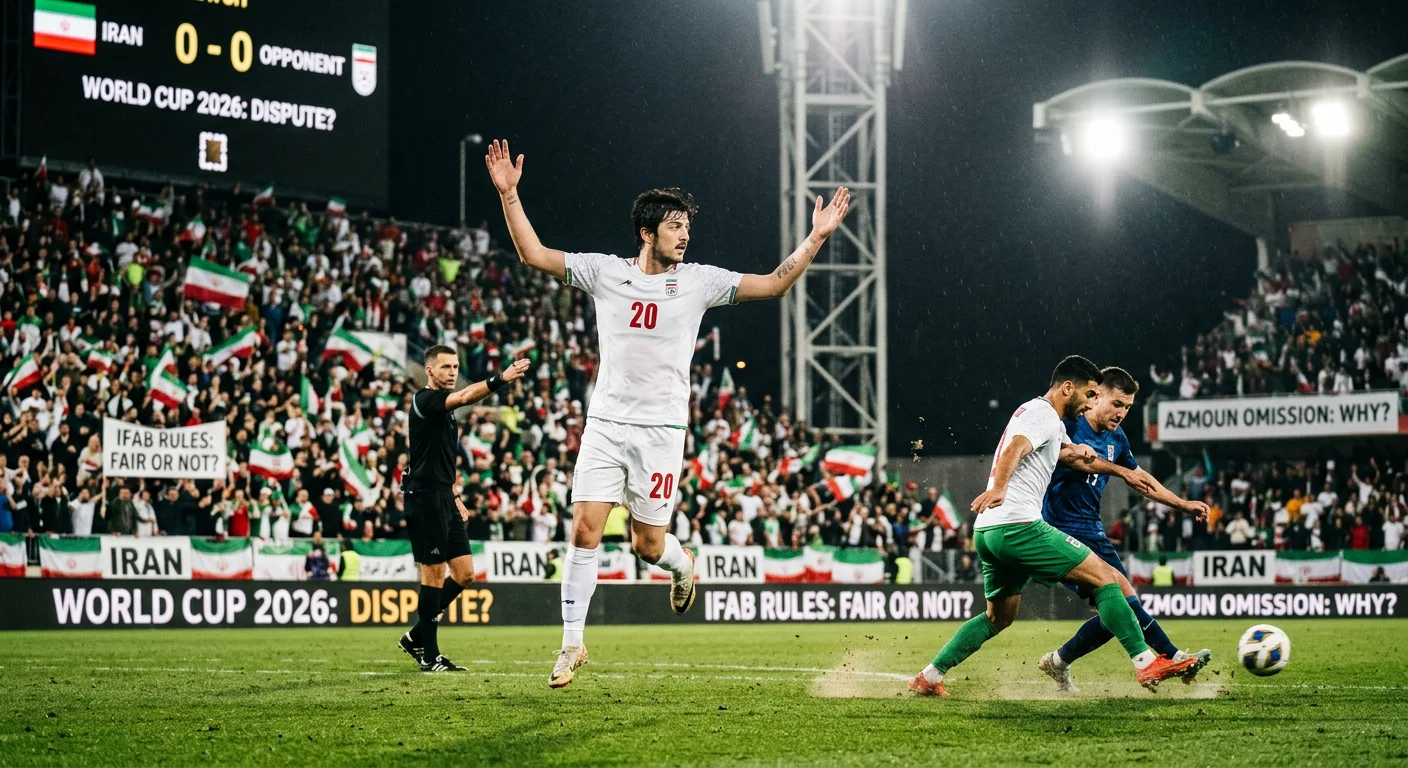
Iran arrive at World Cup 2026 without the one footballer most neutrals could name, and that absence reshapes how the tournament might play out for Team Melli. Sardar Azmoun, the 31-year-old Bayer Leverkusen forward, has been left out of Iran’s squad. He is, by some distance, Iran’s most recognisable footballer, and dropping him is the kind of selection call that travels well beyond the sports pages.
The omission lands against a backdrop of newly confirmed IFAB law changes that will shape every match at this tournament. So there are two stories braided together here. One is about a single player and the politics swirling around his exclusion. The other is about a rulebook that looks meaningfully different from the one fans watched four years ago. Both matter for how Iran, and everyone else, approaches the summer.
Who Sardar Azmoun Is
To understand why this decision carries weight, you need to know what Iran are leaving behind. Azmoun has long sat among the most decorated attackers his country has produced. He earned his senior debut as a teenager and built a career across Europe that gave him a level of pedigree few of his international teammates can match. British outlets nicknamed him the “Iranian Messi” early on, a tag that always felt generous, though it captured the excitement around a young forward who could finish, drift into pockets of space, and beat defenders in the air.
Born in Gonbad-e Kavus, in Iran’s north, Azmoun made his name in Russia. He arrived at Rubin Kazan as a teenager, became a fixture at Rostov, and then spent his most productive years at Zenit Saint Petersburg, where he won league titles and scored at a steady clip. A move to the Bundesliga with Bayer Leverkusen followed, along with a loan spell in Italy with Roma. That European grounding is exactly why his exit from the squad stings. This is not a fringe name. He’s an attacker with genuine top-flight experience and more than 70 caps for his country.
His goalscoring record places him among Iran’s all-time greats, in the conversation with the likes of Ali Daei and Mehdi Taremi. For a generation of Iranian supporters, Azmoun has been the player you build the attack around, the one defenders plan for, the face on the replica shirt. Removing that from a World Cup squad is not a routine rotation decision.
The Squad Omission and What Sits Behind It
Here’s where the story turns murky. According to BBC Sport reported coverage, the omission relates to a perceived act of disloyalty to Iran’s government. That framing matters, because the stated reason, a perceived act of disloyalty, comes via reports rather than official federation communication. Iran have not put out a detailed public explanation, and the specific nature of the alleged disloyalty remains unspecified publicly.
The gap between what’s reported and what’s confirmed is the whole point. When a federation drops its biggest star and lets the explanation arrive through media channels instead of an official statement, supporters are left to read between the lines. The The Independent noted the political dimensions around the decision, and the context only sharpens the questions.
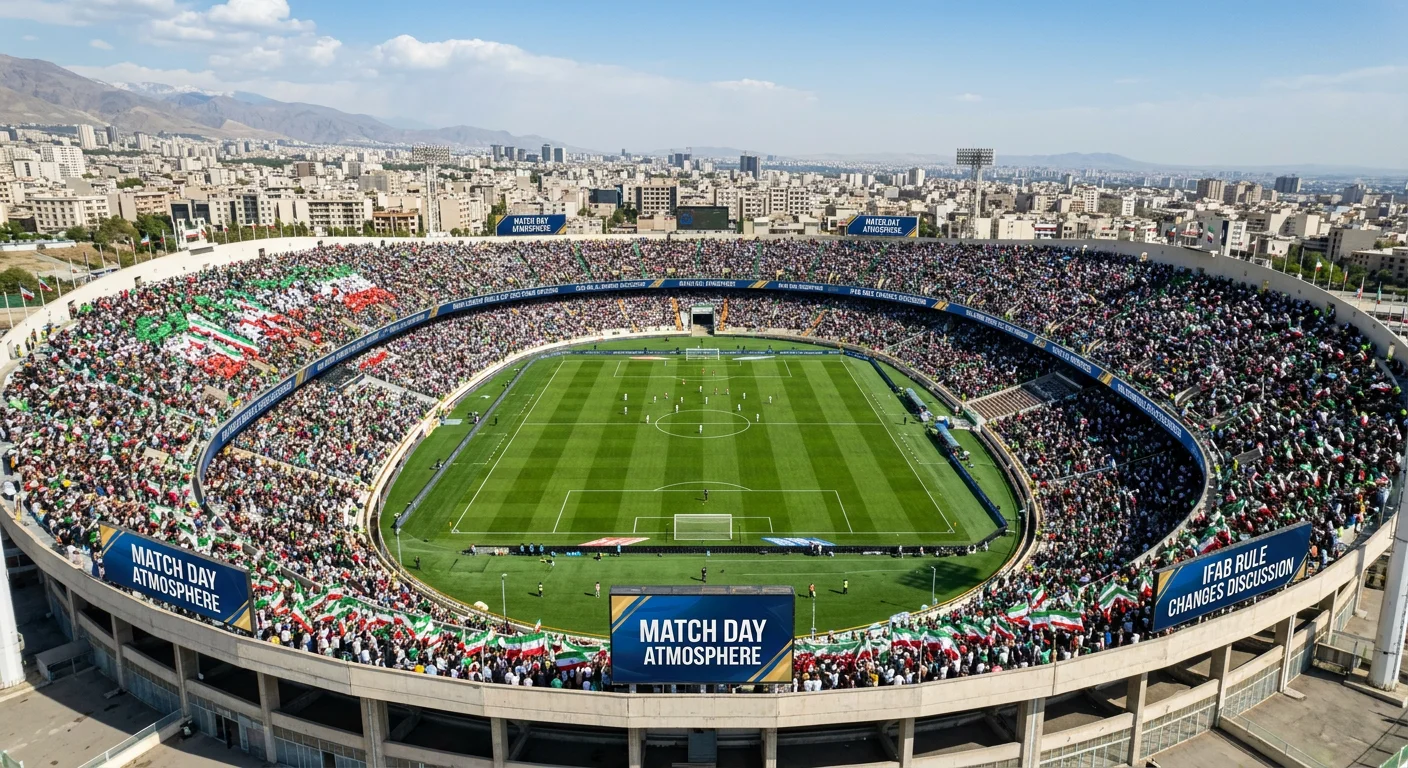
That context is unusual. Iran are set to play all three of their group matches on American soil, with the possibility of a USA fixture in a politically charged climate. For any player, a World Cup is the peak of a career. For one whose exclusion is tied, in reports at least, to questions of political loyalty, the situation becomes a story about far more than tactics. Azmoun has never shied from speaking out, and his willingness to engage with sensitive issues has made him a lightning rod before. None of that confirms the reasons behind this particular call, but it explains why the reports landed the way they did.
What Iran Lose on the Pitch
Strip away the politics for a moment and the football consequences are stark. Removing your most experienced attacker, a player with genuine Bundesliga pedigree, narrows the margin considerably. Iran have qualified for World Cups with regularity, but they have rarely had the squad depth to absorb the loss of a talisman without a drop in ceiling.
Think about what an attacker like Azmoun brings to a tournament side. There’s the obvious end product, the goals and the aerial threat. There’s also the gravity he creates, pulling defenders toward him and opening space for teammates. And there’s the experience of having done this before, on the biggest stage, against elite opposition. Younger forwards may have the legs, but matching that composure in a knockout-or-bust environment is another matter entirely.
Iran’s group-stage prospects now lean more heavily on collective organisation than on individual brilliance. Coaches can build a structure that defends well and counters with discipline, and Iran have shown they can do exactly that. But when a match tightens and someone needs to manufacture a goal from nothing, the absence of a proven match-winner is felt. That’s the practical cost of this omission, separate from any debate about why it happened.
The IFAB Rule Changes Shaping This Tournament
The squad story isn’t the only reason this World Cup feels different. The International Football Association Board, the body that writes the laws of the game, has confirmed a set of changes aimed squarely at match flow and player behaviour. The tournament also arrives as an expanded 48-team tournament, so the stakes around fairness and consistency are higher than ever. Here’s what’s changing.
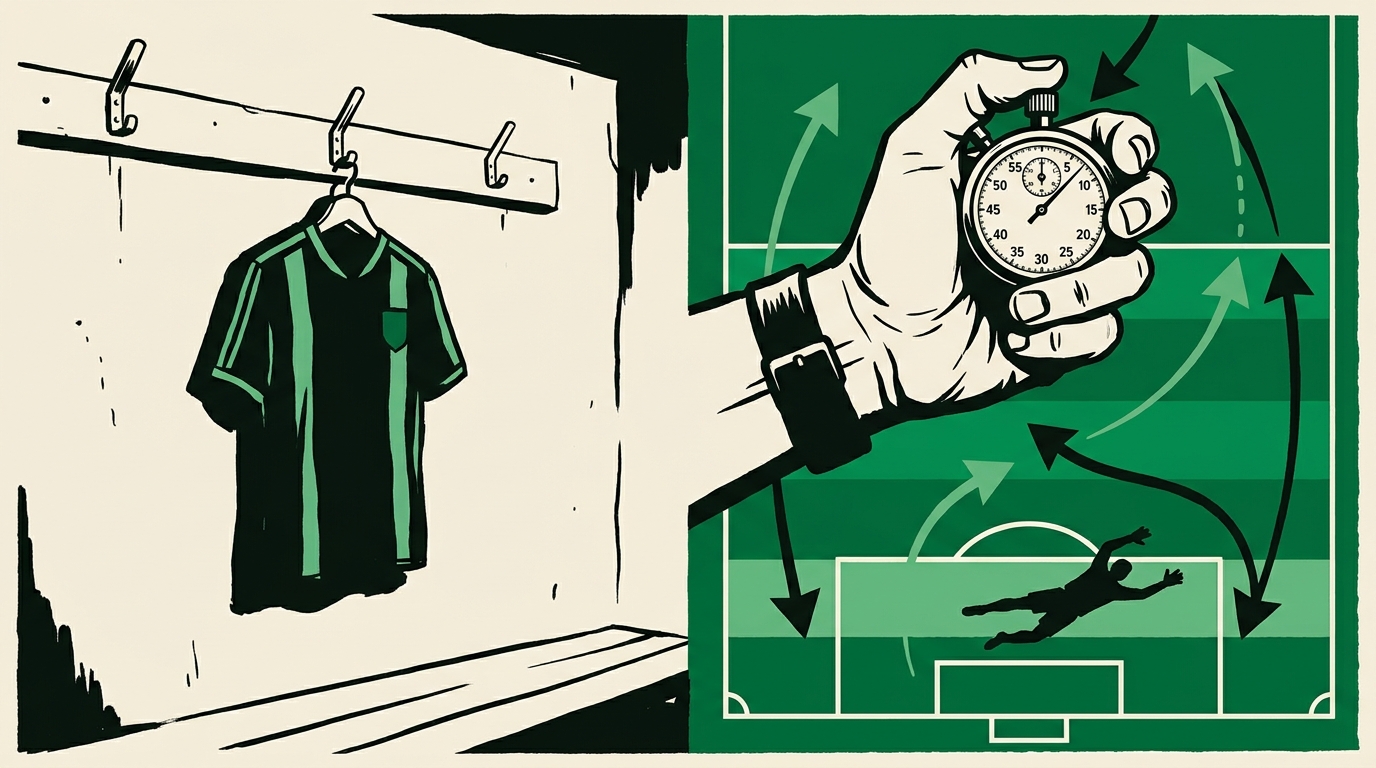
Goalkeeper tactical timeout ban. Referees have been empowered to penalise fake injury stoppages used to deliver tactical instructions. For years, a goalkeeper going down clutching a knock has functioned as an unofficial timeout, letting a team reset and the manager shout fresh instructions. The new approach targets that loophole directly, treating manufactured delay as the time-wasting tactic it usually is.
Expanded VAR powers. Video review now carries broader intervention authority beyond previous review thresholds. The aim is to catch clear offences that previously fell outside VAR’s remit, tightening the gap between what officials can see and what they can act on.
Ten-second substitution rule. Substitutions must be completed within ten seconds of the player reaching the touchline. The slow walk off the pitch, milking applause while the clock ticks, becomes a far riskier game. Drag it out and you risk a penalty for the delay.
Free-kick encroachment. New enforcement standards govern how close defenders can creep before a free kick is taken, with referees expected to apply the line more firmly.
Defensive wall positioning. Connected to the above, the rules around where walls can stand have been clarified, removing some of the grey area that led to inconsistent calls.
Playing time impact. Taken together, these measures are designed for one cumulative effect, to reduce manufactured stoppages and claw back the minutes lost to deliberate delay. Anyone who has watched the ball spend more time out of play than in it will understand the intent.
These align with the wider package IFAB has discussed for the tournament, which is widely reported to include measures aimed at goalkeepers holding the ball too long and structured hydration breaks built into each half. The thread running through all of it is the same. Less dead time, more football, fewer chances to game the clock. For a detailed walkthrough, Sky Sports’ explainer with Michael Bridge covers the changes, and The Independent’s breakdown sets out the reasoning.
Why the Two Stories Connect
It might seem odd to bundle a squad decision and a rulebook overhaul into one piece, but they share a theme. Both are about the gap between how the game is presented and how it actually works. The rule changes attack the small deceptions, the staged injuries and stalled substitutions that drain matches of momentum. The Azmoun situation, by contrast, shows how much of what shapes a tournament happens off the pitch and arrives unexplained.
For Iran specifically, the rule changes add another variable. A side that leans on defensive organisation and game management has, in the past, benefited from the rhythms a clever team can control. With stricter enforcement around delay and substitutions, the room to slow a match down shrinks. Combine that with the loss of a forward who could win a game outright, and Iran’s path looks narrower from both ends.
The Bigger Picture for the Summer
This World Cup was always going to be a landmark edition. The expanded format means more teams, more matches, and more storylines than any tournament before it. Iran’s selection drama is one of many threads worth following, and it sits alongside the rule changes as proof that the summer will be shaped as much by decisions in committee rooms as by anything on the grass.
England, for their part, have already begun preparations. Sky Sports confirmed the squad flying out to Miami ahead of warm-up fixtures against New Zealand and Costa Rica, building toward their opening group game against Croatia on June 17. The football itself begins on June 11. For supporters tracking the full slate of summer 2026 storylines, the Azmoun omission and the new laws are two of the more consequential opening chapters, and the strong Premier League contingent across competing squads only raises the stakes.
Frequently Asked Questions
Why was Sardar Azmoun left out of Iran’s World Cup 2026 squad?
The reported reason relates to a perceived act of disloyalty to Iran’s government, according to BBC Sport. That explanation has come through reports rather than an official federation statement, and the specific nature of the alleged disloyalty has not been made public. Iran have not provided a detailed public explanation.
Who is Sardar Azmoun?
He’s a 31-year-old Bayer Leverkusen forward and, by some distance, Iran’s most recognisable footballer. With more than 70 caps for his country and top-flight European experience, he ranks among Iran’s most accomplished attackers and has long been the focal point of the national team’s attack.
How much does losing Azmoun hurt Iran?
Considerably. Removing your most experienced attacker, a player with genuine Bundesliga pedigree, narrows the margin for a side that already lacks deep attacking reserves. Iran will lean more on collective structure and game management than on individual quality up front.
What are the main IFAB rule changes for World Cup 2026?
Confirmed changes include a ban on goalkeeper tactical timeouts via fake injuries, expanded VAR powers, a ten-second limit on substitutions, new free-kick encroachment standards, clarified defensive wall positioning, and a broader push to cut manufactured stoppages and recover lost playing time.
When does World Cup 2026 begin?
The football begins on June 11, 2026. England’s opening group game against Croatia is scheduled for June 17, following warm-up matches against New Zealand and Costa Rica.
Why are Iran playing all their matches in the United States?
Iran are set to play all three group matches on American soil, including the possibility of a fixture against the USA in a politically charged climate. That backdrop has added weight to the questions surrounding Azmoun’s exclusion.