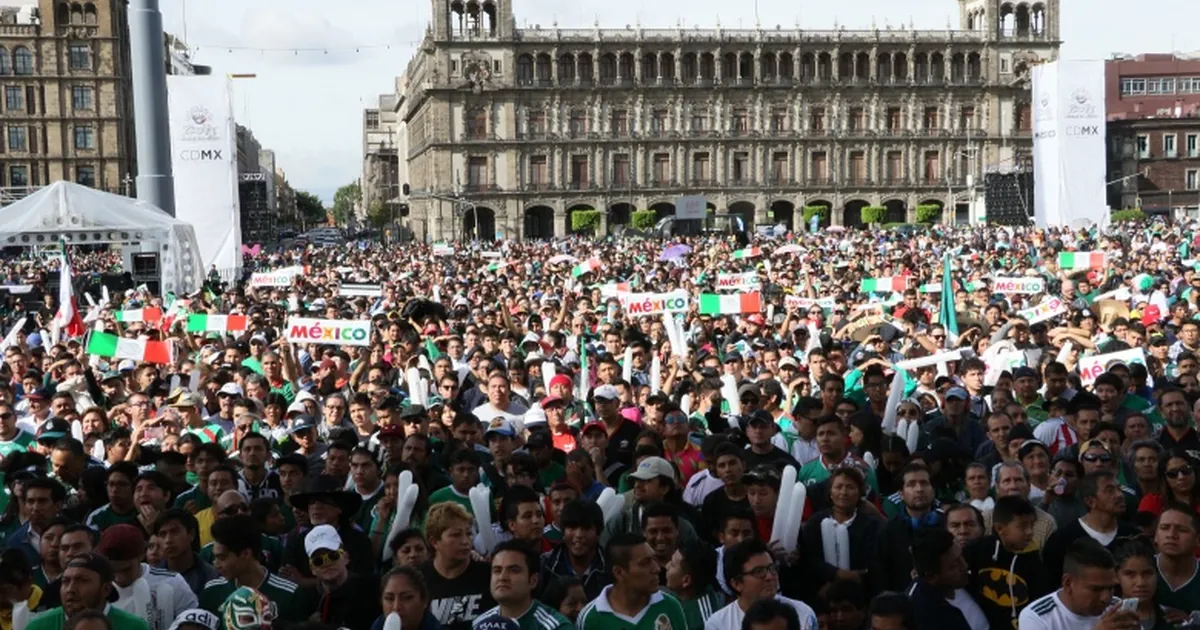
Fans watch football at a public fan zone in Mexico City's Zocalo. Photo: Gobierno de la Ciudad de México / Wikimedia Commons, CC BY-SA 4.0
11 min read · 2,281 words
Fans watch football at a public fan zone in Mexico City’s Zocalo. Photo: Gobierno de la Ciudad de México / Wikimedia Commons, CC BY-SA 4.0
The short version. The free FIFA Fan Festival is real, but in several 2026 host cities it sells out or fills up fast, and the “guaranteed” backup FIFA offers is a paid premium ticket. Rules vary wildly by city: Philadelphia is free all tournament with registration, Toronto ran a capped ticket lottery that vanished in hours, and Houston and Kansas City run first-come, first-served. Register early per city, arrive early, and have a diaspora or neighbourhood venue as a backup.
If you have searched “world cup 2026 fan festival sold out alternatives” after watching free tickets evaporate, you are not imagining it. The FIFA Fan Festival is marketed as the free, open heart of the 2026 World Cup, where anyone can watch matches on giant screens without a stadium ticket. In practice, that promise is heavily capacity-gated, and how you get in depends almost entirely on which host city you are standing in.
The good news is that a sold-out festival doesn’t mean you’re locked out of the World Cup. Across every host region there’s a deep bench of free public viewing, bars and pubs that open early, and neighbourhood watch parties that often beat the official site for atmosphere. This guide walks through why the “free” festivals fill up, what your realistic alternatives look like, and how to plan so you’re never left staring at a closed gate.
What the FIFA Fan Festival actually is
The official Fan Festival is FIFA’s free public viewing programme, built around big screens, live music, food, and family activations in a central spot in each host city. The idea has been a fixture of recent World Cups, and it’s pitched as the counterweight to expensive stadium tickets: you don’t need a match ticket, you just turn up and watch with thousands of other supporters.
For 2026 the festivals run across the three host nations, in cities such as Atlanta, Boston, Dallas, Houston, Kansas City, Los Angeles, Miami and Philadelphia in the United States, Guadalajara, Mexico City and Monterrey in Mexico, and Toronto and Vancouver in Canada. Each site shows a slate of matches on screen, and the headline promise is the same everywhere: admission itself costs nothing. For a fuller picture of how the tournament fits together, our complete guide to the 2026 World Cup covers the format, the schedule shape, and what to expect across all three countries.
The catch is in the word “admission.” Free admission and guaranteed admission are not the same thing, and that gap is where a lot of fans are getting caught out.
Why “free” sold out so fast
A festival site is a physical space with a hard limit on how many bodies it can safely hold. Once that number is reached, the gates close, regardless of how many people outside still want in. So even when a ticket costs nothing, the supply of those tickets is finite, and demand for a World Cup on home soil is enormous. That mismatch is the whole story.
Three forces stack on top of each other. First, raw venue capacity. Each site has a daily ceiling, and on busy days that ceiling is the binding constraint. Second, the calendar bunches demand. Opening matches, host-nation games, and the closing weekend pull far more interest than a midweek group fixture, so the same site that has elbow room on a quiet Tuesday turns people away on a marquee night. Third, the registration model itself. Many cities require you to claim a free spot in advance, and a free claim with no real cost to grab one tends to get hoovered up the moment it goes live, sometimes by people who later don’t show.
Toronto is the sharpest example of how fast this moves. Roughly 220,000 free tickets were claimed within about four hours, with the initial release gone in roughly two. The city runs a daily cap of around 20,000, with about 80% of spots entering free, and when a second batch of free tickets also sold out within hours, the pattern was clear. The screens hold what they hold, and the queue forms online instead of at the gate.
The original analysis: free access as a paid funnel
Here’s the part that sits uneasily. In several cities, the “guaranteed” way in isn’t a longer queue or a second free release. It’s a paid ticket. When the free allocation is gone, what remains on sale is a premium tier, which means the free festival quietly becomes the entry point for an upsell.
Houston shows the mechanics plainly. The site is a 275,000-square-foot venue with a general capacity around 7,500, run first-come, first-served, and alongside that free access, premium tickets went on sale for the otherwise-free event through tiers such as a Garden Pass and a Legacy Lounge Pass. The free door is genuinely free, but the guaranteed door has a price.
None of this makes the festival a scam. It’s a familiar way to monetise a popular free event, and the premium perks are real for fans who want them. The friction is that it reframes a public celebration as a capacity-limited product, and the ordinary fan who can’t claim a free spot is gently nudged toward paying for one. If the festival is meant to be the democratic counterweight to costly stadium tickets, a paid backstop blunts that purpose. Knowing the funnel exists is the first step to routing around it.
The rules differ wildly by host city
There’s no single “Fan Festival rule” for 2026. The access model changes from city to city, and treating them as interchangeable is how people get burned. A few clear patterns are worth holding in your head:
- Philadelphia is the standout for accessibility. It runs free across the whole tournament at its Fairmount Park festival site, with registration required. You can register for the Fairmount Park Fan Festival in advance, and the long run means more chances to get in than a single timed release allows.
- Toronto uses timed-ticket releases that disappear in hours. If you want this one, you treat it like a concert on-sale: be ready the moment tickets drop, and have a backup plan for the days you miss.
- Houston runs first-come, first-served for free entry, with paid premium tiers layered on top. Early arrival is everything, and on big days even early might not be early enough.
- Kansas City is free and first-come, first-served, capacity-limited. No advance claim guarantees a spot, so it rewards turning up well before the crowd.
The practical lesson is that you have to look up your specific city’s process and not assume your friend’s experience in another city applies to you. One festival might want you registered weeks ahead; another rewards you for showing up at lunchtime with a folding chair. For a sense of which cities deliver the strongest matchday atmosphere overall, see our take on which host cities give fans the best experience.
What fans can actually do instead
A closed festival gate is the start of your options, not the end of them. The alternatives split into a few broad categories, and many of them are better than the official site for atmosphere, comfort, or both.
Other free public viewing. The official festival is rarely the only screen in town. Cities, business districts, and parks often run their own free public watch areas with large screens, separate from the FIFA-branded site and frequently with far less registration friction. These secondary fan zones tend to fly under the radar, which means shorter queues for the same matches. Check your host city’s tourism board and downtown business-improvement channels in the days before a game.
Bars and pubs. The reliable workhorse of any World Cup. Sports bars build their whole month around the tournament, and dedicated football pubs go further, opening early for awkward kickoff times and screening every match regardless of who’s playing. The trade-off is that for big games you still need to arrive hours ahead or reserve a table, because the popular spots pack out long before kickoff. The upside is air conditioning, a seat, a drink in hand, and no capacity lottery to win first.
Neighbourhood watch parties. Often the most memorable way to watch. In host cities, neighbourhoods with strong ties to a competing nation turn into open-air celebrations when that team plays, with screens on the street, food, flags, and a crowd that actually cares about the result. This is where diaspora communities organise their own watch parties, and the energy when a goal goes in is hard to match anywhere official. You don’t need a ticket, a registration, or a reservation. You just need to know where to go and to show up respectfully as a guest in someone else’s celebration.
Home and group viewing. The least glamorous backup, but the most dependable. A rooftop, a backyard, a borrowed projector, and a group of friends will never sell out. For the matches you most want to see without any risk of being turned away, it’s worth keeping in your pocket.
How to plan so you actually get in
A little planning turns a frustrating day into a smooth one. Work through these before each match you care about:
- Look up your exact city’s access model now, not on matchday. Find out whether it’s advance registration, a timed release, or first-come, first-served, and put the relevant on-sale or open time in your calendar with an alert.
- Triage your matches. Decide which games you genuinely want to see live with a crowd and which you’re happy to catch anywhere. Spend your effort on the handful that matter, and stay flexible on the rest.
- Treat marquee games differently. Opening matches, host-nation fixtures, and the closing weekend will fill every venue. For those, either lock in a guaranteed spot well ahead or pick a smaller alternative that won’t hit capacity.
- Always carry a plan B and a plan C. Line up a bar or neighbourhood party as your fallback before you head out, so a “festival full” sign doesn’t strand you wandering for a screen.
- Arrive early and read the gate rules. For first-come venues, “early” means hours before kickoff on a big day. Check last-entry times too, since once that cutoff passes, no one else gets in no matter how long they wait outside.
- Be a good neighbourhood guest. Watch parties run on community goodwill. Support the local food and drink, follow the area’s parking and noise norms, and leave the place as you found it.
Per-city general notes
Without overcommitting to details that can shift, a few useful generalisations hold across host cities. Cities that run a single festival site over the full tournament, like Philadelphia, give you the most chances to get in, because a long window beats a one-off release. Cities that lean on timed releases, like Toronto, reward speed and punish hesitation, so you prepare like you’re buying concert tickets. Cities on a first-come model, like Houston and Kansas City, reward early arrival and a willingness to pivot to a nearby bar when the gate closes.
Beyond the official sites, the bigger metro areas tend to have the deepest alternative scenes. Where there’s a large football culture and a strong mix of communities, there are more secondary fan zones, more pubs screening every match, and more neighbourhoods that throw a party when their team plays. That depth is your safety net, and it’s usually richer than the single official festival the headlines focus on.
Frequently asked questions
The World Cup 2026 Fan Festival is sold out, what are my alternatives?
Plenty. Look for secondary free public viewing run by your city or downtown district, head to a sports bar or football pub that screens every match, or find a neighbourhood watch party tied to one of the competing nations. Group viewing at home is the no-risk fallback. Line up a couple of these before matchday so a full festival never leaves you without a screen.
Is the FIFA Fan Festival actually free?
Admission is free, but guaranteed admission often isn’t. Free spots are capacity-limited and can vanish fast, and in cities like Houston the way to lock in entry once free access fills is a paid premium ticket. So the event is genuinely free to enter if you get in, but getting in isn’t guaranteed unless you pay.
Which city has the easiest Fan Festival to get into?
Philadelphia is the standout, because it runs free for the whole tournament with registration, giving you far more chances to attend than a single timed release. Cities using one-off timed drops, like Toronto, are the hardest to plan around, since the free tickets can be gone within hours.
Do I need to register in advance?
It depends entirely on the city. Some require advance registration for a free spot, some run a timed release you have to catch the moment it opens, and some are simply first-come, first-served at the gate. Check your specific host city’s process, because there’s no universal rule.
What’s the best alternative for a big match like an opener or the final?
For the marquee dates, every official site and most popular bars will hit capacity, so either secure a guaranteed spot well ahead or choose a smaller venue or neighbourhood party that won’t fill up. Arrive hours early, mind last-entry cutoffs, and have a backup ready in case your first choice closes its doors.