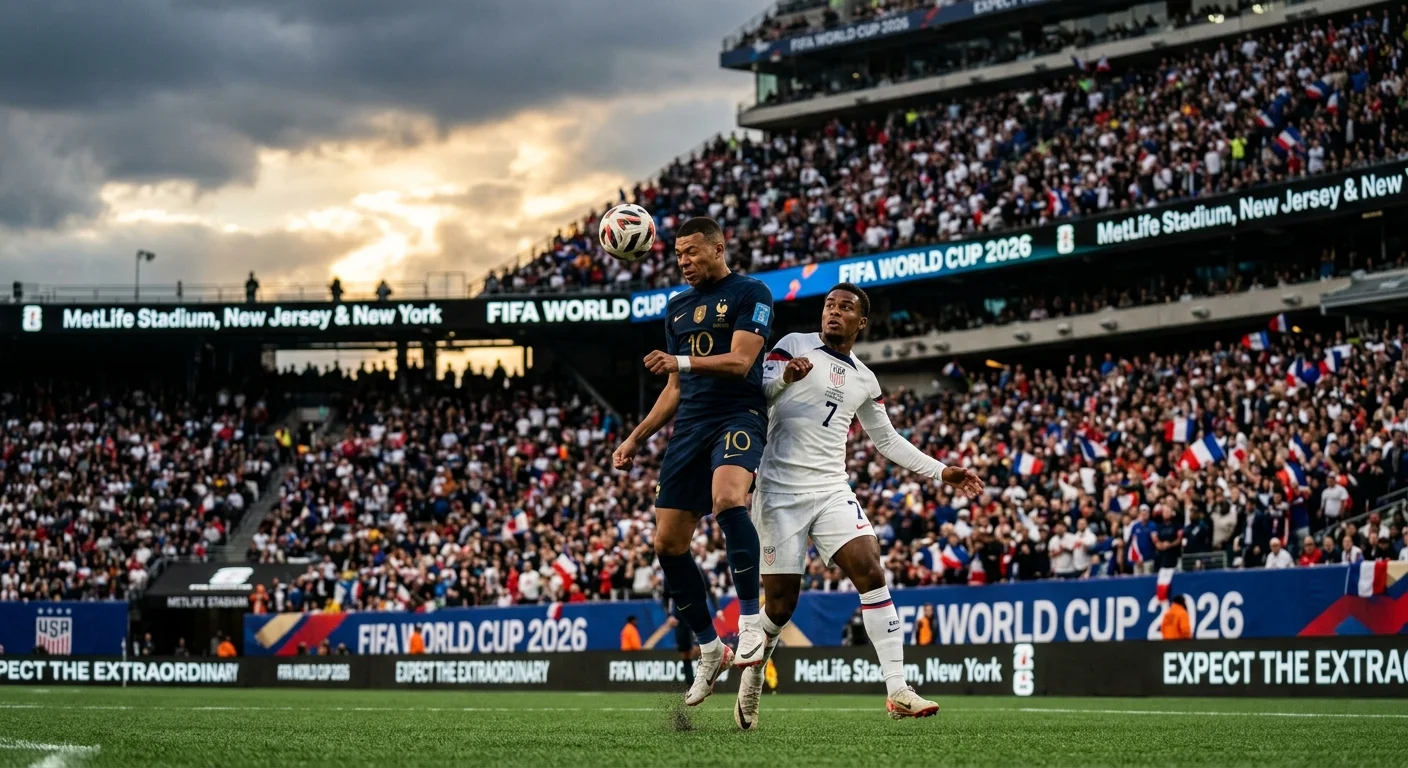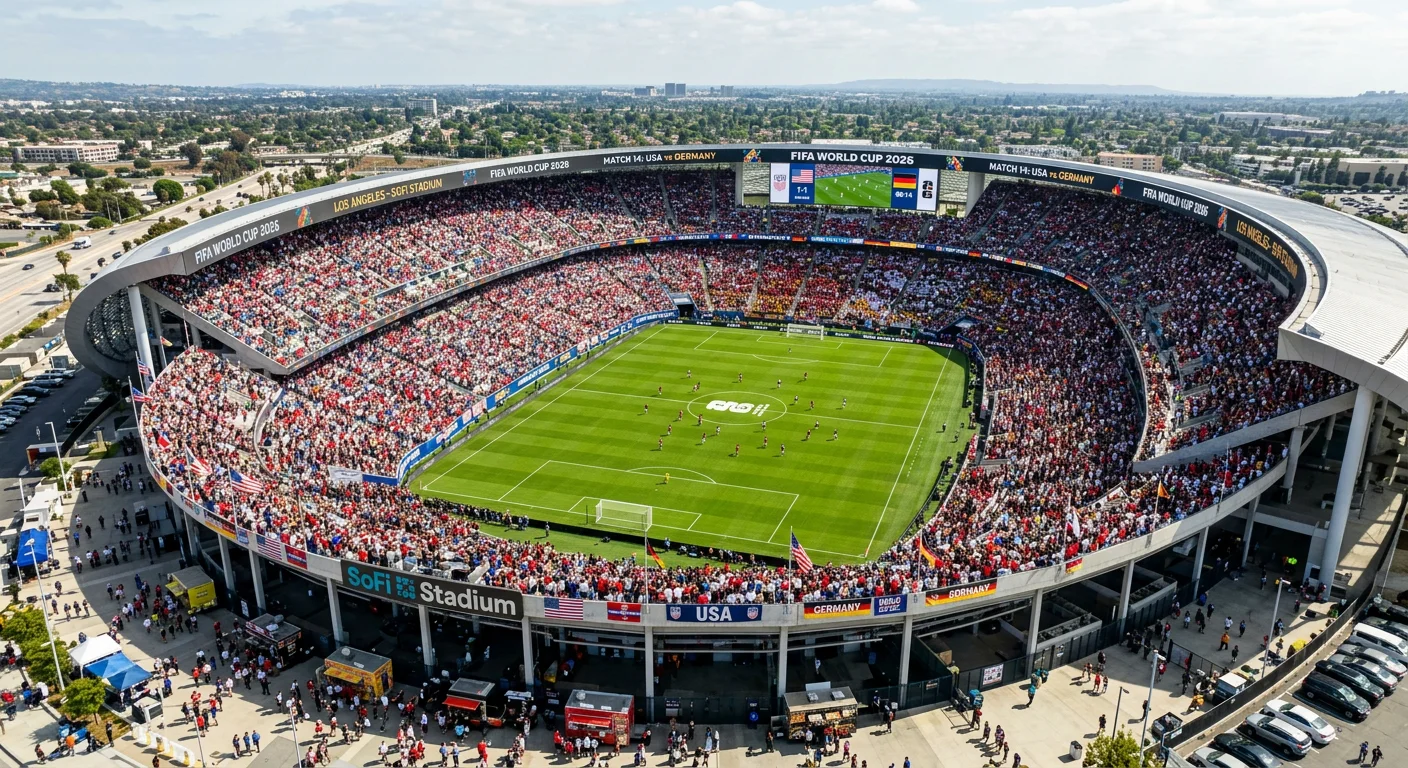
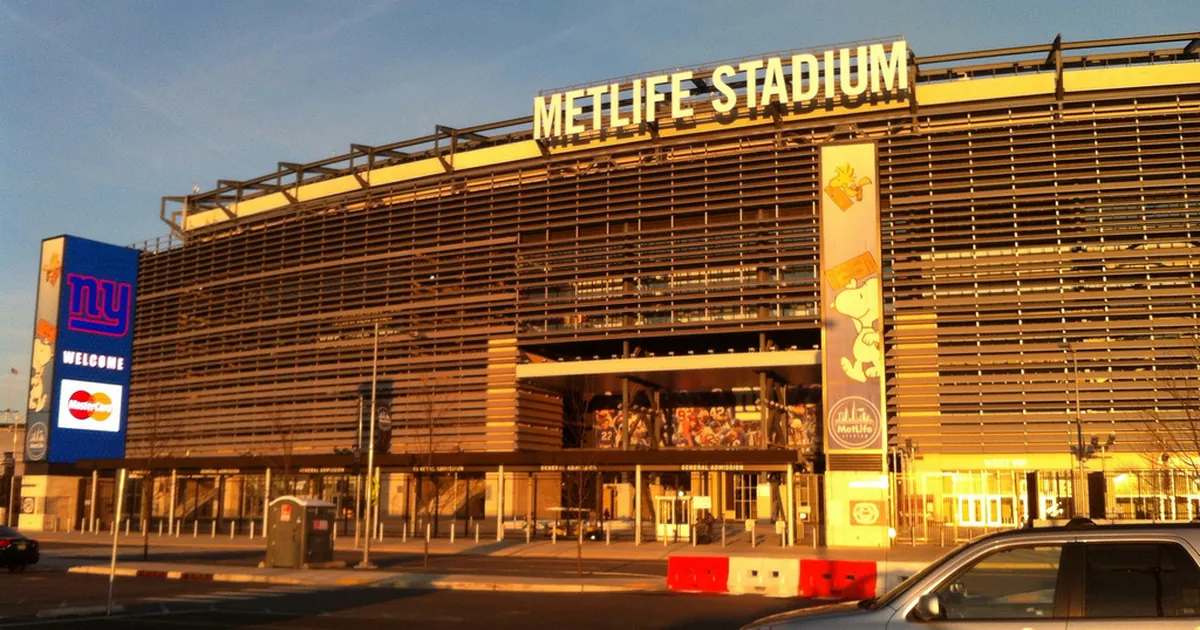
MetLife Stadium — branded New York New Jersey Stadium during World Cup 2026. Photo: gargudojr / Wikimedia Commons, CC BY-SA 2.0
9 min read · 1,767 words
If you tune in to a 2026 World Cup broadcast expecting to see MetLife Stadium or SoFi Stadium splashed across the screen, you’re in for a small surprise. The signs say something else. MetLife becomes New York New Jersey Stadium. SoFi turns into Los Angeles Stadium. AT&T Stadium answers to Dallas Stadium. None of these venues moved, none changed their seats or their roofs, and none lost their corporate landlords. FIFA simply hit the mute button on commercial naming rights for the duration of the tournament.
This is the “clean stadium” rule in action, and it catches a lot of fans off guard every four years. The names you’ve memorized from NFL Sundays and MLS matchdays vanish for roughly six weeks. In their place sit plain, geographic labels that read like placeholders. There’s a clear business logic behind the swap, and it shapes everything from the perimeter boards to the concession menus inside each venue.
Below you’ll find the full list of all 16 host venues, their real names versus their FIFA tournament names, the reasoning FIFA leans on to justify the policy, and answers to the questions fans keep asking once they notice the rebrand.
What the “Clean Stadium” Policy Actually Is
A “clean stadium” is a venue stripped of any branding that competes with the tournament’s official commercial program. FIFA sells category exclusivity, one airline, one card network, one beer, one telecom, to a small roster of global sponsors. Those partners pay enormous sums for the right to be the only brand of their kind visible across the event. A stadium named after a rival bank or a rival insurer undercuts that promise the moment a camera pans across the facade.
So FIFA contractually requires host venues to go neutral. The naming-rights holder, MetLife, SoFi, AT&T, and the rest, steps aside for the tournament window. Signage gets covered or removed. Logos disappear from the pitch-side boards, the seating bowl, the tunnels, and often the building’s exterior. Even concession stands can be affected, because a venue’s pouring-rights deal with a soft-drink company may clash with FIFA’s official beverage partner.
The policy isn’t unique to the World Cup. The Olympics run the same playbook, and so do many UEFA finals. Wembley becomes a generic “national stadium” reference in certain contexts, and Champions League host venues routinely drop sponsor names for the final. What makes 2026 striking is the sheer scale: 16 venues across three countries, most of them carrying high-profile corporate names that fans know cold.
Real Name vs FIFA Tournament Name: All 16 World Cup 2026 Stadiums
Here’s the complete rundown of every confirmed host venue for the 2026 tournament, matched against the official FIFA name in use during the competition. The venues span 11 cities in the United States, 3 in Mexico, and 2 in Canada.
| City | Real Name | FIFA 2026 Name |
|---|---|---|
| New York / New Jersey | MetLife Stadium | New York New Jersey Stadium |
| Los Angeles | SoFi Stadium | Los Angeles Stadium |
| Dallas | AT&T Stadium | Dallas Stadium |
| San Francisco Bay Area | Levi’s Stadium | San Francisco Bay Area Stadium |
| Houston | NRG Stadium | Houston Stadium |
| Philadelphia | Lincoln Financial Field | Philadelphia Stadium |
| Kansas City | Arrowhead Stadium | Kansas City Stadium |
| Atlanta | Mercedes-Benz Stadium | Atlanta Stadium |
| Seattle | Lumen Field | Seattle Stadium |
| Miami | Hard Rock Stadium | Miami Stadium |
| Boston | Gillette Stadium | Boston Stadium |
| Toronto | BMO Field | Toronto Stadium |
| Vancouver | BC Place | BC Place Vancouver |
| Mexico City | Estadio Azteca | Estadio Ciudad de México (Mexico City Stadium) |
| Guadalajara | Estadio Akron | Estadio Guadalajara |
| Monterrey | Estadio BBVA | Estadio Monterrey |
A few patterns jump out. The FIFA names are almost uniformly geographic: city first, “Stadium” second. That’s deliberate. A neutral, place-based label tells viewers where the match is happening without handing free exposure to any brand. It also travels cleanly across languages and broadcasts, which matters for an event watched in nearly every country on earth.
Notice too that not every venue carried a corporate name to begin with. Arrowhead Stadium and BC Place are named for a location feature and a province, not a sponsor, yet they still get tweaked to fit the city-first format. Estadio Azteca, one of the most storied grounds in the sport, keeps its essence under a Mexico City label. The point isn’t punishing brands; it’s enforcing a consistent, sponsor-neutral naming grid across all 16 sites.
The Mercedes-Benz Stadium Wrinkle
Atlanta’s venue offers the most interesting edge case. Mercedes-Benz Stadium becomes Atlanta Stadium on paper, but its famous logo isn’t going anywhere physically. The mark is integrated into the building’s retractable roof structure and can’t be covered without risking damage to the mechanism. So FIFA renames the venue in all official materials while the logo itself stays put. It’s a neat illustration of where the policy meets the limits of engineering. Branding can be muted in print and on broadcast graphics even when a physical sign survives.
Why FIFA Bothers With Any of This
The short answer is money, but the mechanics are worth understanding because they explain why the policy is so strict.
FIFA’s commercial model rests on tiered sponsorship. At the top sit FIFA Partners, then World Cup Sponsors, then regional supporters. Each pays for exclusivity inside a defined category, and the value of that exclusivity depends entirely on FIFA’s ability to keep competitors out of the frame. If a payments rival had its name on the final’s stadium, the official card partner would be furious, and rightly so. They paid to be the only one seen.
Television amplifies the stakes. A single World Cup final can draw a global audience in the hundreds of millions. Every second a non-sponsor name sits on screen is, in effect, free advertising that someone else paid for the right to block. Clean venues protect that promise frame by frame. The policy also keeps the visual presentation uniform, so a match in Houston looks branded the same way as a match in Vancouver. That consistency is part of what sponsors are buying: a controlled, predictable canvas.
There’s a legal layer as well. Sponsorship contracts include warranties that FIFA will deliver a clean commercial environment. Failing to remove competing branding could expose the organization to breach claims worth far more than the goodwill of any single stadium operator. The naming-rights companies, for their part, generally agree to the arrangement in advance, knowing the global exposure their venue gains from hosting outweighs a six-week pause on their own signage.
What Fans Actually Notice Inside the Venue
The renaming is the visible tip of a much broader scrub. Walk into a host venue during the tournament and the changes pile up. Ticket and wayfinding signs use the FIFA name. The video boards run FIFA-approved graphics rather than the usual club or team branding. Concession options may shift to match official partners, so the beer you’d normally buy at an NFL game might not be the one on tap during a World Cup match.
Transit directions can get confusing too. Local signage, rideshare drop-off labels, and mapping apps still use the everyday name, while official tournament communications use the FIFA name. If you’re navigating to the New York / New Jersey venue, it helps to remember it’s the same building you’d otherwise call MetLife. Our guide on whether you can walk to MetLife Stadium covers the practical access details regardless of which name the official materials use.
Which Venue Hosts the Final?
The 2026 final is confirmed for MetLife Stadium, branded as New York New Jersey Stadium, on July 19, 2026. It’s the largest of the host venues by World Cup capacity, which suits the marquee occasion. The opening match takes place at Estadio Azteca in Mexico City on June 11, giving the tournament a fittingly historic kickoff at a ground that has staged previous World Cup finals under its own name.
Beyond those two fixtures, the schedule spreads matches across all 16 venues, with the deeper knockout rounds concentrated at the larger US sites. For the full picture of the format, fixtures, and host cities, see our complete World Cup 2026 guide, and if you’re weighing where to base your trip, our breakdown of the best host city for fans ranks the options.
Frequently Asked Questions
Are the stadiums actually being renamed permanently?
No. The FIFA names apply only during the tournament window. The moment the World Cup wraps, MetLife, SoFi, AT&T, and the rest revert to their everyday commercial names. Think of it as a temporary costume, not a new identity.
Why doesn’t FIFA just leave the real names in place?
Because most of those names belong to companies that aren’t FIFA sponsors. Leaving them visible would dilute the category exclusivity FIFA sells to its official partners, and it would hand free global exposure to brands that didn’t pay for it. The clean-venue rule protects the value of those sponsorship deals.
Do the naming-rights companies get compensated for losing their signage?
The arrangement is typically negotiated as part of the venue’s hosting agreement well ahead of time. The companies generally accept the temporary pause because hosting World Cup matches brings their building enormous worldwide attention, which carries its own long-term marketing value.
Why does Atlanta keep the Mercedes-Benz logo if it’s renamed?
The logo is built into the retractable roof and can’t be covered without risking damage to the structure. FIFA renames the venue as Atlanta Stadium across official materials and broadcasts, even though the physical mark remains in place.
Will my mapping app or rideshare know the FIFA name?
Probably not. Local apps, transit systems, and rideshare platforms mostly use the everyday commercial names because that’s what residents recognize. Match your destination to the real name from the table above, then use the FIFA name when reading official tournament signage and tickets.
Is this the first time FIFA has done this?
Not at all. The clean-venue policy is standard for World Cups and for major events like the Olympics and UEFA finals. The 2026 edition just makes it especially noticeable because so many of the host venues carry well-known corporate names across three countries.
The Bottom Line on Stadium Names
The 2026 World Cup will be played in buildings you already know, wearing names you mostly don’t. That gap between the everyday name and the FIFA name is a feature of how the tournament protects its commercial backbone, not a quirk or a mistake. Keep the table above handy, and you’ll never be confused when a broadcast graphic flashes “Los Angeles Stadium” over a venue you’ve always called SoFi. Same seats, same pitch, same atmosphere. Just a cleaner, sponsor-neutral name for six unforgettable weeks.
Reference: for how the major leagues and UEFA competitions are structured this season, see our football league & competition format reference.