
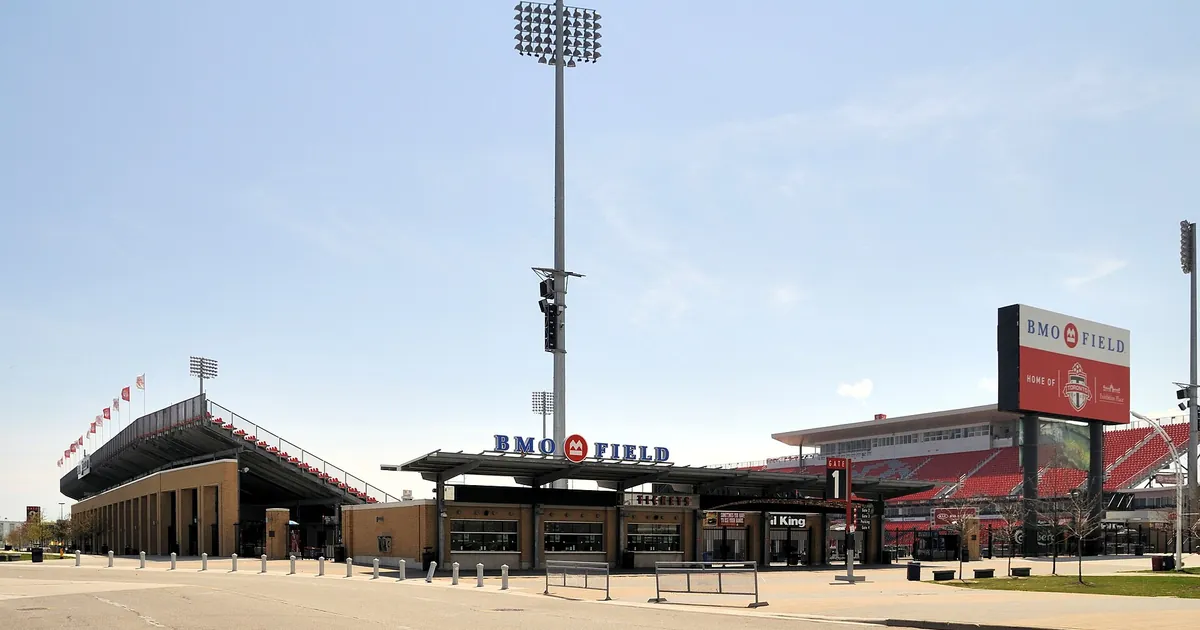
BMO Field, Toronto — a World Cup 2026 host venue. Photo: Wladyslaw / Wikimedia Commons, CC BY-SA 3.0
5 min read · 1,059 words
There is a quiet scandal of arithmetic buried in the build-up to Canada’s first men’s World Cup, and it has nothing to do with what fans pay. It is about what the host cities themselves are doing as sellers. Toronto’s World Cup 2026 ticket resale programme, the city buying its own allocation of seats and flipping them to corporate buyers, is not a rogue act. It is exactly what FIFA’s rules permit, and that is the part worth looking at, because it turns a municipal government into a speculator in a market its own taxpayers are subsidising.
What Toronto is actually doing with its World Cup 2026 tickets
The city of Toronto bought roughly 3,500 World Cup ticket packages and has been reselling them, and as of this week its chief financial officer says more than 450 of those packages have gone, sold largely to corporate sponsors at a profit. Mayor Olivia Chow’s office framed the move plainly: it is, in the city’s words, “one of several avenues pursued by the City to avoid spending property tax dollars” on the tournament, a way to “ensure a return on the City of Toronto’s investment,” as reported by CBC News.
This is sanctioned, not improvised. FIFA allowed every host city to purchase up to 1.5 percent of local tickets specifically “for the purpose of raising local funds via sponsorship, corporate packages” and similar initiatives, CP24 reported. Vancouver, Canada’s other host, confirmed it is doing the same with its allotment. The carve-out exists in the rulebook precisely so that cities can recoup money by reselling seats they were first sold.
The number that explains the behaviour
To understand why a city would become a ticket broker, look at the cost it is trying to claw back. Toronto’s World Cup bill has not crept upward, it has detonated. When the city first signed on, hosting was projected to cost in the region of CA$30–45 million. By 2022 that figure had ballooned past CA$280 million, and the latest projection sits around CA$380 million, per Global News. That is an order-of-magnitude overrun on a discretionary event, carried by a city whose residents are already absorbing it through property taxes.
Against a roughly CA$380 million liability, the math of the ticket programme is almost poignant. Even if all 3,500 packages sell at a healthy margin, the revenue is a rounding error against the cost, a few million dollars set against several hundred. The city is not getting rich. It is bailing with a teacup. But the political logic is real: every dollar recouped through corporate ticket sales is a dollar that does not have to be defended on the tax bill.
Original analysis: the regulation cuts one way for fans, the other way for the city
Here is the asymmetry that makes this more than a budget story. Ontario, reacting to exactly the kind of scalping that disfigures big events, amended its Ticket Sales Act so that World Cup seats for matches played in the province may be listed for resale only at the original price paid to FIFA, face value or less, and only on FIFA’s own Resale Marketplace, a provincial cap the same Toronto reporting notes applies to fans holding Ontario-match tickets. An ordinary supporter who buys a ticket and cannot use it is legally barred from making a single dollar of profit on it.
The city operates on the other side of that line entirely, and it is worth being precise about why, because the point is not that Toronto is dodging the anti-scalping rule. It isn’t. That rule governs secondary resale of tickets already issued to the public; the city is a primary FIFA-authorised seller, moving a 1.5 percent allocation it was granted specifically so it could raise money through corporate and sponsorship packages. The two activities are different legal animals. The asymmetry is therefore not about the city breaking a fan’s rule; it is about who gets handed the profitable channel in the first place. A privileged primary allocation, sold above cost to corporations, is reserved for the same public body that is billing residents for the tournament. The retail fan, shut out of that allocation, is then policed to face value on the only channel left open to them. One tier of seller is built to recoup; the other is built not to profit. That is a clean illustration of who consumer-protection rules are written around, and who never needed them because they were given the better seat at the table.
Stack that against the rest of the picture and the irony sharpens. We have already documented how the US opener failed to sell out as dynamic pricing collapsed on resale and how the projected accommodation shortage turned into a demand bust across host cities. Now add the hosts themselves to the list of sellers competing for the same finite pool of buyers, except the city is selling seats it acquired through a privileged 1.5 percent window, to recover costs it volunteered to take on, in a market where local fans face a hard price cap the city does not.
What it means for fans
For a supporter trying to get into a match in Toronto or Vancouver, the practical takeaways are narrow but worth knowing:
- City packages are a real supply channel. A meaningful block of seats is moving through corporate and sponsorship deals, not the public on-sale, if you have a corporate contact, that inventory exists.
- Your own resale is capped at face value. If you hold an Ontario-match ticket you cannot use, you can only relist it at cost or less, and only on FIFA’s marketplace. Do not pay a scalper above face for one, either, it is now against provincial rules.
- The “sold out” signal is noisy. With cities, sponsors, FIFA and fans all reselling into the same window, scarcity messaging tells you little about genuine availability close to kick-off.
None of this is corruption. It is the system working as designed, a design in which the body spending your property taxes on a tournament is also handed a profit-making seat allocation to soften the blow, while you are held to the letter of the anti-scalping law. The next time a host city tells you the World Cup pays for itself, ask which of the two of you is allowed to sell at a markup. For the wider money story, see our World Cup 2026 guide.
