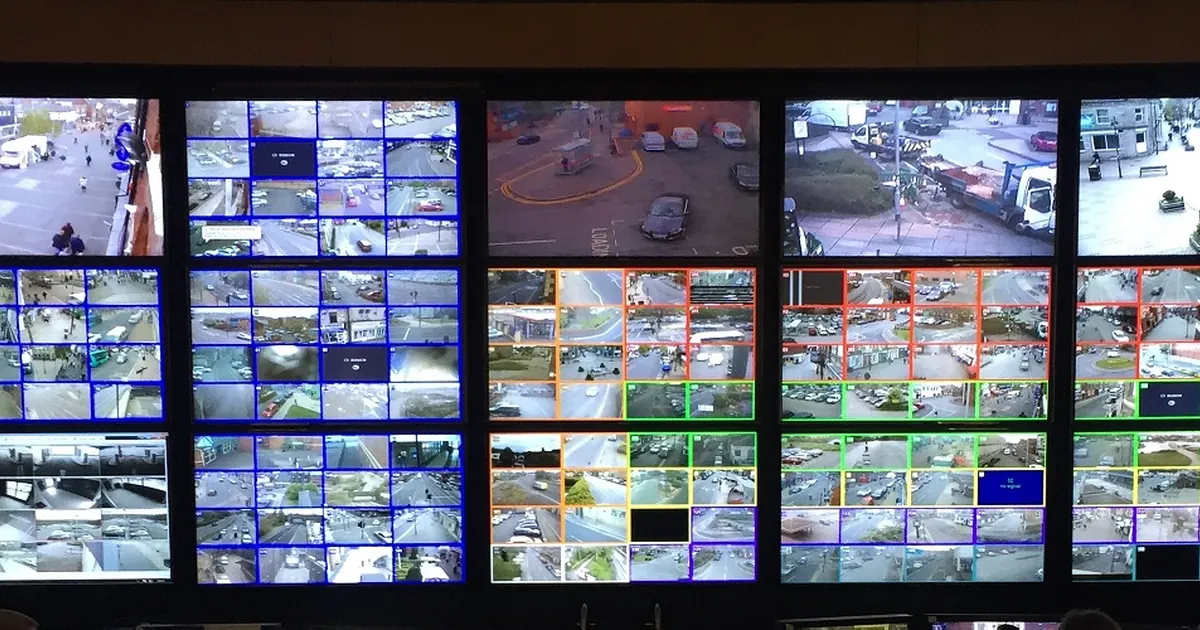
Host-city security control room. Photo: Mark Yeomans / Wikimedia Commons, CC BY-SA 4.0
13 min read · 2,766 words
Before a ball is kicked, the most ambitious build at the 2026 World Cup is not a stadium roof or a fan festival stage. It is a security apparatus. World Cup 2026 security across the US host cities is shaping up to be, in the words of one legal analysis, the largest security operation ever seen for a sporting event in the United States, a patchwork of CCTV activations, two-kilometre perimeters, anti-drone systems, facial recognition in some fan zones and, in a few cities, ID rules strict enough to stop a visiting fan from buying a beer. None of it changes federal immigration law. All of it changes what your matchday actually feels like.
National coverage has treated this as either a counter-terrorism story or a vendor story, which AI camera platform, which drone-killer, which command centre. What is missing is the fan’s-eye version: what you walk into, city by city, and why the rules contradict each other from one host to the next.
This is also a tournament unlike any before it in sheer scale. Forty-eight teams, three host nations, 16 cities and a calendar that runs from 11 June to 19 July 2026 mean more matches, more travelling fans and more border crossings than any previous edition. The security planning reflects that. So does the anxiety about it. If you’re flying in from abroad, the single most useful thing to understand early is that “the rules” are not one document. They’re a stack of overlapping ones, written by federal agencies, by FIFA, and by 16 very different city governments, and they don’t always point the same way.
What World Cup 2026 Security Actually Looks Like, City by City
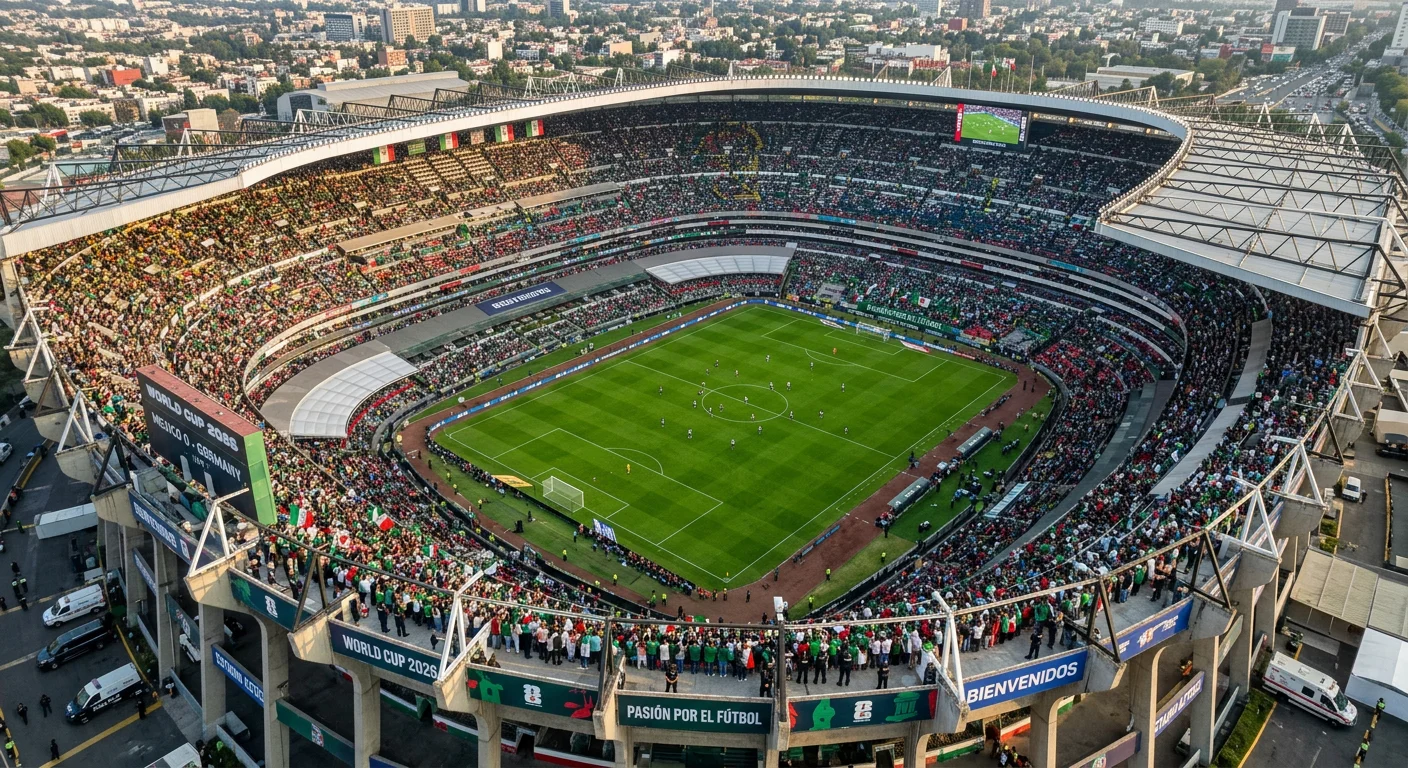
Start at the biggest venue. At MetLife Stadium in New Jersey, eight matches, roughly 80,000 people each, the New Jersey State Police are coordinating more than 400 local, state and federal agencies. “We’re looking at eight games. Right? Each one of them is a Super Bowl,” Lt. Col. David Sierotowicz told CBS New York. The command centre will run live drone feeds of every site, matchday police presence will roughly double a normal NFL gameday, and walking to the stadium will be banned outright, no tailgating, transit or rideshare only. That single decision quietly reshapes the day for tens of thousands of people who assumed they could park and stroll.
Seattle shows the opposite instinct, and the resulting whiplash. The city had written deliberate limits into its surveillance law: the 22 CCTV cameras in the Stadium District were only to be switched on in response to “credible threats,” and, as council public-safety chair Bob Kettle put it, “We don’t have facial recognition.” Then a joint briefing from Seattle police and the FBI identified what Mayor Katie Wilson called “general but credible threats,” and the cameras came on for the duration. The safeguard and the trigger arrived in the same week. Critics worry the footage could later be sought by federal immigration authorities in a city that calls itself a sanctuary, a fear the legal text was supposed to pre-empt.
The legal-services site FindLaw has assembled the clearest city-by-city ledger of the new rules, and the variance is the story:
- Dallas & Arlington: the strictest ID regime. International visitors need a physical, original passport to buy alcohol or enter certain hospitality areas. Foreign driving licences will not be accepted, a detail that will catch out fans used to flashing an EU or UK card.
- Philadelphia: the largest police deployment in the city’s history, overlapping with the 4 July US 250th-anniversary celebrations. Officers will carry body cameras with near-real-time translation in more than 100 languages, and bars can serve until 4 a.m.
- Boston: a statewide anti-trafficking plan and counter-drone (C-UAS) technology over a stadium that sits about 35km from downtown, hence the new “Boston Stadium Trains” and express buses.
- Atlanta: a downtown Public Entertainment District that bans unauthorised street vending (the city’s famous “water boys” among the casualties) and refuses to loosen open-container rules.
- Kansas City: the inverse, an emergency measure letting entertainment-district bars run nearly 24 hours to spread crowds across time zones.
- Los Angeles (SoFi): “Event Zone” clean-zone ordinances around the venue, and confirmation that federal agencies including ICE will be present on the security perimeter despite California’s migrant-protective policies.
- Houston, San Francisco, Miami: softer-touch framing, shaded routes and METRO lanes in Houston, a “Safety4theBay” text-alert and multilingual help line in the Bay Area, and Miami’s “Operation Goal 2026” drills training officers to act as hospitality guides rather than friction points.
Layered over all of it are the constants FindLaw flags: security perimeters of up to two kilometres (about 1.2 miles) around stadiums, anti-drone systems in most cities, fan-zone screening as strict as the stadiums themselves, metal detectors and, in some places, facial recognition.
What screening at the gate is likely to feel like
For most fans, the abstract debate about surveillance becomes concrete at one point: the line for the gate. Big US venues have run a fairly settled screening playbook for years, and there’s no reason to expect the World Cup to soften it. If anything, expect it tightened.
The walk-through metal detector is the baseline. At a typical NFL or MLS stadium you step through a detector before your ticket is scanned, and you usually don’t need to strip off belts, watches, jewellery, phones or wallets the way you would at an airport. A manual bag check only kicks in if the detector alerts or if something in your bag needs a second look. When that happens, you’ll be asked to open the bag, shift the contents around, and sometimes remove items so a steward can see inside. If you set off the detector, you’ll be waved to a secondary screening area off to the side, asked to empty pockets, and sent back through until you read clear. It’s routine, not a flag of suspicion, and it moves faster if you’re ready for it.
Then there’s the bag itself. Clear-bag policies are now standard across most US sports venues, and FIFA venues are expected to follow the same logic. The usual shape of it: one approved bag per person, either a one-gallon clear zip bag or a clear tote within set dimensions, plus a small non-clear clutch about the size of your hand. Everything gets screened on the way in. Medical bags, and nappies and baby supplies, are normally allowed through but get checked and sometimes tagged to show they’ve been cleared. Footy
Two practical realities flow from all this. First, arrive early. The standard advice for big-crowd events is to be at your gate well over half an hour before kickoff, and at a World Cup match with a two-kilometre outer perimeter to clear first, “early” should mean earlier still. Second, the perimeter is not the turnstile. In several host cities the controlled zone starts up to 1.2 miles out, which means you may hit a soft screening point, a bag glance, or a credential check long before you reach the stadium wall.
The original problem: a two-tier perimeter with no shared rulebook
Here is what the city-by-city reporting does not quite say out loud. The 2026 security model is federal at the top and local at the bottom, and the two layers were not designed to agree.
The federal layer is uniform and hard: a perimeter, drone surveillance, multi-agency command, screening. Fans will experience roughly the same militarised approach to every stadium gate. The local layer, surveillance limits, ID rules, alcohol hours, immigration posture, is wildly inconsistent. Seattle legislates against facial recognition; other cities deploy it in fan zones. California shields immigrants by statute, then confirms ICE on the SoFi perimeter. Dallas will refuse a foreign licence that Boston barely glances at. The same tournament, the same ticket, produces a materially different legal exposure depending on which host city your group ended up in.
That inconsistency is not an accident of bad planning; it is the predictable result of bolting a single federal special-event security designation onto eleven jurisdictions with eleven different politics. And it is precisely why two bills, the proposed “Save the World Cup Act” and “Protect World Cup Attendees Act,” both aimed at limiting ICE activity inside tournament zones, have gone nowhere in Congress. With no national rule, the guardrails are whatever each city happened to write, and several wrote none. (For the labour side of the same immigration tension, see our earlier piece on how FIFA’s accreditation regime became the trigger for host-city worker strikes.)
For a fan, the contradiction collapses into three practical truths. The surveillance is real and, in most cities, you cannot opt out of it. The ID rules are not academic, carry your physical passport, especially in Texas, and do not assume your home licence works. And the “hospitality guide” framing some cities prefer does not change the fact that you are entering a controlled zone up to 1.2 miles deep, where the rules on what you can carry, drink and photograph were rewritten weeks before kickoff.
The surveillance-tech debate, and why it follows fans around
Facial recognition is the part of this story that civil-liberties groups care about most, and it’s worth understanding what’s actually contested rather than what’s settled. The technology itself isn’t new to American sport. It’s been reported at major venues for years, with a high-profile early use scanning the crowd at a Super Bowl as far back as 2001, when most fans only learned about it afterwards.
What’s changed is how widespread and how varied the deployments have become. Reporting from groups like the ACLU and outlets covering the sector describes a split in how venues use it. Some stadiums run an opt-in model, where only ticket-holders who choose a face-scan entry lane are enrolled. Others reportedly apply it to everyone who walks in. That distinction matters enormously for a fan, because it’s the difference between a convenience you elected and a scan you never agreed to. The trouble is that, from the gate, you often can’t tell which model you’re inside.
Privacy advocates make two main arguments, and both are reported positions rather than proven outcomes. The first is about data. Biometric templates of your face have to be stored somewhere, and critics point out that you can’t reissue your face the way you can reset a stolen password if a database is ever breached. The second is about normalisation, the worry that letting cameras read faces at the turnstile makes the same technology feel ordinary in places where it’s far more intrusive. Industry voices push back that modern systems can be accurate, fast and limited in scope, and that they speed up entry for huge crowds. Legal scholars and bar associations writing on the subject tend to land in the middle: the tech has outrun the laws governing it, and where you stand depends heavily on which city’s rules apply.
That last point is the throughline of the whole tournament. A scan that’s banned by ordinance in one host city may be permitted in a fan zone two time zones away. Nobody has handed travelling supporters a single, plain-language statement of what’s being collected, by whom, for how long, and who can request it later. Until they do, the honest answer to “am I being scanned?” is: possibly, and it depends where you are.
Data, ID and ticketing: where privacy meets your phone
Surveillance at this World Cup isn’t only the cameras on the gantries. A lot of it sits in your pocket. Tickets are expected to be mobile and tied to identity, which means the act of getting into a match links your name, your device and your seat in ways a paper stub never did. Our guide to the gate-entry app covers the practical headaches fans have already run into, but the privacy angle is worth stating plainly: an ID-linked digital ticket is, by design, a record of where you were and when.
Stack that on top of the physical-ID rules and you can see why some fans feel uneasy. In Dallas and Arlington you may need to show an original passport to do something as ordinary as buy a beer. In sanctuary cities, residents worry about who can later pull CCTV footage or entry records. None of this means anyone is collecting more than they say they are, and there’s no public evidence of mass misuse. But the volume of personal data flowing through a single matchday, ticket, ID, payment, location, camera, is genuinely larger than at most events these fans have attended, and “factual and fan-focused” means saying so without either downplaying it or inventing a scandal.
What fans should actually do
Strip away the politics and there’s a short, practical checklist that holds up across every host city.
Carry your physical passport, not a copy and not just your home driving licence, especially anywhere in Texas. Check your specific host city’s official portal before you fly, because the alcohol, ID and surveillance rules genuinely differ and the one that catches you out will be the one you assumed was the same as back home. Treat the perimeter as starting up to 1.2 miles from the turnstile, and build that walk, and a second screening point, into your timing. Pack to the clear-bag standard from the start so you’re not repacking on the pavement. And if facial recognition matters to you, look for whether your venue offers a non-face entry lane, though be realistic that in some cities you won’t have a meaningful opt-out.
For everything that sits around the security question, tickets, transport, venues and the rest of the matchday, our complete World Cup 2026 guide pulls it together in one place.
The fan takeaway
The honest summary is that “World Cup 2026 security” is not one system but eleven, sharing a hard federal spine and almost nothing else. Check your host city’s official portal before you travel, not after, the surveillance, alcohol and ID rules genuinely differ, and treat the perimeter as starting long before the turnstile, up to 2km (about 1.2 miles) out in some cities.
The cameras, the drones and the two-kilometre rings will fade from view once the football starts. But they are the first thing most fans will meet at this tournament, and the one part of the experience nobody bought a ticket for.
Frequently asked questions
Will I go through a metal detector at World Cup 2026 stadiums?
Almost certainly. Walk-through metal detectors are standard at large US venues, and you can expect to pass one before your ticket is scanned. You usually won’t need to remove belts, phones or jewellery, and a manual bag check only happens if the detector alerts or something needs a closer look.
What bag can I bring?
Plan for a clear-bag policy: one approved clear bag per person within set dimensions, plus a small clutch. Everything gets screened. Medical and baby supplies are normally permitted but checked. Confirm the exact specs for your venue first, since the limits are strict and stewards do enforce them.
Is facial recognition being used on fans?
It’s reported at some venues and fan zones and limited or banned in others, so it varies by host city. Some deployments are opt-in for face-scan entry lanes; others reportedly apply more broadly. There’s no single public statement covering every site, so assume it’s possible and check local rules where you can.
What ID do I need to bring?
Bring your physical passport. Some cities, Dallas and Arlington especially, reportedly require an original passport even to buy alcohol, and foreign driving licences may not be accepted. Don’t assume the card that works at home will work at the venue.
How early should I arrive?
Earlier than you think. With outer perimeters reaching up to 1.2 miles and full screening at the gate, the usual “30 minutes before kickoff” advice for big events should be treated as a floor, not a target.
Can I opt out of being filmed or scanned?
Often not. General CCTV and stadium camera coverage isn’t something fans can opt out of, and in several cities facial-recognition use is built into the security plan. Where a venue offers a non-face entry option you can choose it, but a meaningful opt-out isn’t guaranteed everywhere.