8 min read · 1,645 words
There is a particular kind of tension that builds when a football match becomes something much larger than itself. Seattle knew it was getting a World Cup game. It did not quite anticipate getting a geopolitical flashpoint dressed in rainbow colours.
On 26 June, Egypt face Iran at Lumen Field in a Group G fixture that carries enormous sporting stakes for both nations. It also happens to fall on Seattle’s Pride Weekend, a coincidence that the city’s local organising committee, which operates separately from FIFA, decided last year to lean into fully, designating the match as the tournament’s first-ever official “Pride Match.” The backlash was swift, the politics were inevitable, and the football, almost as an afterthought, remains genuinely consequential.
How Did We Get Here?
The sequencing matters. Seattle’s committee made its Pride Match plans well before the 2026 World Cup draw took place. The date aligned with the city’s annual Pride celebrations, and organisers saw an opportunity to use football as a platform for LGBTQ+ visibility. It was, in isolation, a reasonable idea: a major American city, a globally watched tournament, a moment of cultural alignment.
Then the draw happened. Group G delivered Belgium, Australia, Egypt and Iran, and the schedule placed Egypt against Iran on 26 June. As The Guardian reports, both nations have called for the cancellation of LGBTQ+ rights festivities around the game, with the Egyptian and Iranian football federations objecting formally to the framing. Seattle’s committee has pushed ahead regardless.
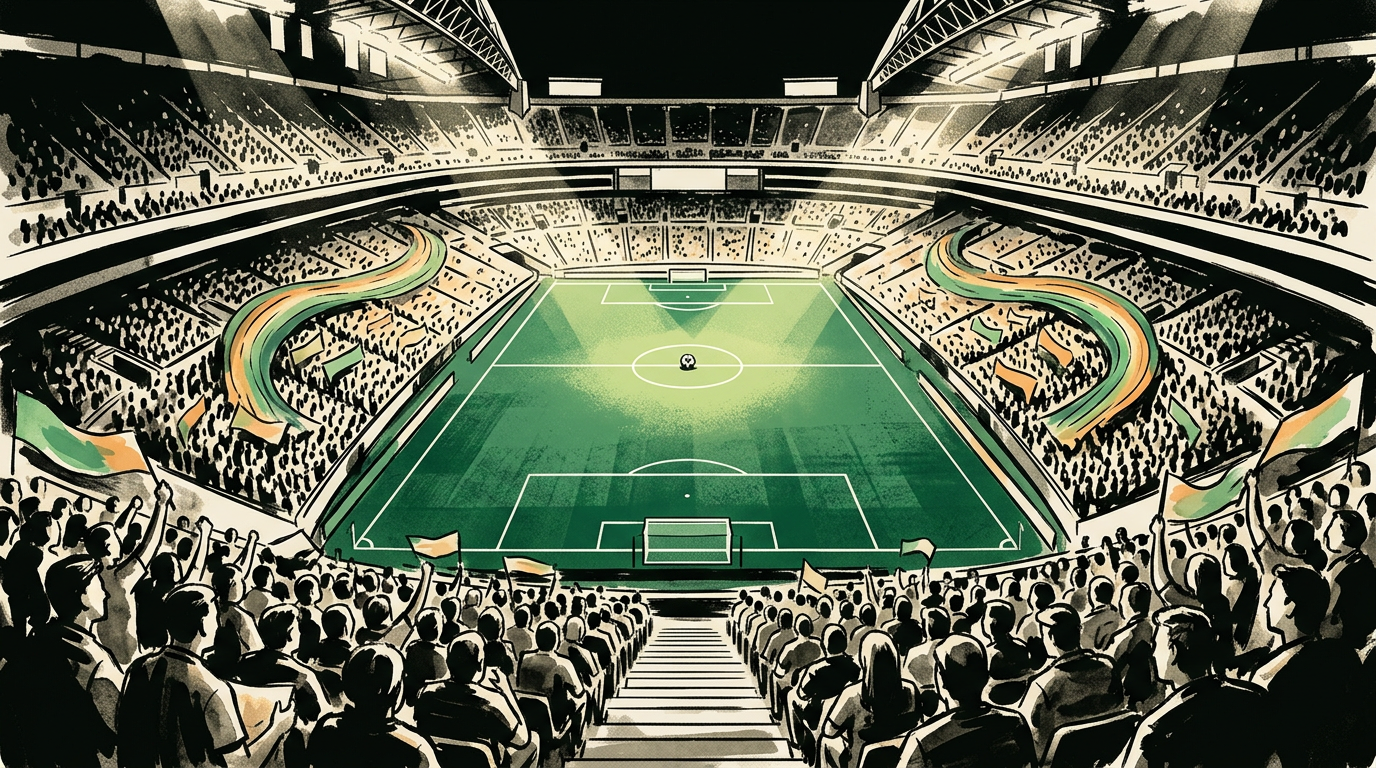
The result is a match in which the two teams on the pitch represent countries where homosexuality is criminalised, playing inside a stadium draped in rainbow flags, in a city that has built a civic identity around LGBTQ+ inclusion. The collision was not engineered by any single actor. It emerged from the structural chaos of a 48-team expanded World Cup format meeting the genuine enthusiasm of an American host city.
Iran’s Silence and Egypt’s Objection
Iran’s head coach has declined to engage with the subject publicly. BBC Sport notes that when asked about the Pride celebrations in Seattle, the coach refused to discuss the matter, a posture that is itself a kind of statement. Iran’s relationship with LGBTQ+ rights is not ambiguous: same-sex relations carry severe criminal penalties under Iranian law, and the Islamic Republic’s position has been consistent and brutal across decades.
Egypt’s objections have been more vocal at an administrative level, though the Egyptian Football Association’s public statements have been careful not to generate the kind of headlines that would distract from a squad that, for the first time in years, genuinely believes it can progress deep into a major tournament. Mohamed Salah, at 33 and in what may be his final World Cup, has carried Egypt to this point, and the federation is acutely aware that any controversy threatening squad focus is unwelcome.
What neither team has been able to do is change the facts on the ground. Seattle’s organising committee is not FIFA. It does not answer to the federations of participating nations. It answers to its own city, its own sponsors, and its own community, and that community has been unequivocal about what it wants from this occasion.
The Voices Being Overlooked
The most important perspective in this entire debate has received the least airtime. The Independent’s Kieran Jackson spoke to LGBTQ+ activists and community members with Iranian and Egyptian heritage, and their message was consistent: queer people exist in Iran and Egypt. They have always existed. The governments of those countries do not represent them, and the spectacle of their national football teams objecting to a Pride celebration erases them twice over, once by the state and once by the assumption that national identity and LGBTQ+ identity are incompatible.
This is the cultural depth that gets lost when the story is framed purely as a clash between Western liberalism and Middle Eastern conservatism. That framing flattens the reality of LGBTQ+ Iranians and Egyptians who are watching this tournament, who may be watching from Seattle itself, and who find in the rainbow flags something that their own governments have denied them. The Pride Match is not being imposed on a monolithic population. It is being celebrated in spite of governments that do not speak for everyone they claim to represent.
From my own experience covering Spanish football and its intersections with Catalan and Basque identity politics, I have seen how easily the assumption that a nation’s government reflects its people’s full complexity gets weaponised. It is no different here.
What Is Actually at Stake Footballistically
Strip away the politics and you have a match of genuine Group G drama. The Independent’s group analysis confirms that all four teams enter the final round of fixtures with qualification still possible, though Egypt are best placed, with Salah’s form giving them a significant advantage over their opponents.
Belgium, under pressure after a turbulent qualifying campaign, need results to go their way. Iran have shown defensive resilience across the group stage but have struggled to convert their chances. Egypt, buoyed by Salah and a collective spirit that has surprised many observers, look the likeliest of the three to join the group leaders in the knockout rounds. A win for Egypt against Iran would almost certainly confirm their progression, and the football logic is clear even if everything surrounding it is not.
For Iran, the match is existential in sporting terms. Their coach’s refusal to discuss the Pride context is presumably tactical as much as ideological: he needs his players focused on a must-win game, not on the flags in the stands. Whether that focus is achievable inside Lumen Field on Pride Weekend is another question entirely.
FIFA’s Studied Neutrality
FIFA’s position throughout has been one of careful non-engagement. The governing body has noted that Seattle’s Pride Match designation comes from the local organising committee, not from FIFA itself, a distinction that allows the organisation to avoid taking a side while also avoiding the criticism it received after Qatar 2022, when the decision to award the tournament to a country with similar laws on homosexuality drew sustained and legitimate condemnation.
The 2026 World Cup across the United States, Canada and Mexico was always going to produce these collisions. American host cities have their own politics, their own identities, their own communities with expectations about what hosting a global event means. Seattle is not Doha. The local organising committee is not a FIFA subsidiary. And the result is a tournament that, for all its commercial smoothness, keeps generating friction between the sport’s global ambitions and the specific places where it lands.
There is an argument that this friction is healthy, that it forces conversations that football’s governing bodies would prefer to defer indefinitely. There is a counter-argument that it instrumentalises both LGBTQ+ communities and the players on the pitch, turning a football match into a proxy war for values neither set of athletes chose to represent. Both arguments have merit. Neither resolves the situation.
What Comes Next
The match will be played. The flags will be in the stands. Iran’s coach will continue not discussing it. Egypt’s federation will continue objecting. The LGBTQ+ fans in Lumen Field, including those of Iranian and Egyptian heritage, will be there regardless.
What happens after depends partly on the scoreline. If Egypt qualify and Iran exit, the political story will be subsumed by the sporting one, at least temporarily. If the result produces controversy, or if incidents occur inside or outside the stadium, the narrative will harden in ways that are difficult to predict.
For the 2026 World Cup more broadly, this match is a test case for what the expanded, multi-host format produces when it meets the genuine diversity of American civic life. The tournament’s architects wanted a celebration of global football. They are getting one, complete with all the contradictions that global football contains.
The rainbow flags will be waving. The football will be played. And somewhere in the stands, queer Iranians and Egyptians will be watching a match their governments tried to strip of its meaning, finding that meaning anyway. That, more than any statement from any federation, is the story worth telling.
FAQ
What is the World Cup Pride Match in Seattle?
Seattle’s local World Cup organising committee designated the Egypt versus Iran Group G fixture on 26 June as a “Pride Match” to coincide with the city’s annual Pride Weekend celebrations. The designation comes from the city’s committee, not from FIFA directly.
Why are Egypt and Iran objecting to the Pride Match celebrations?
Both countries have laws criminalising same-sex relations, and their football federations have formally called for the cancellation of LGBTQ+ rights festivities around the game. Iran’s coach has refused to discuss the subject publicly ahead of the fixture.
Can FIFA overrule Seattle’s Pride Match designation?
FIFA has maintained that the Pride Match label comes from Seattle’s local organising committee, which operates separately from the governing body. FIFA has not moved to cancel or alter the designation, effectively allowing it to stand while distancing itself from the decision.
What are the qualification stakes for Egypt and Iran in Group G?
All four teams in Group G, Belgium, Australia, Egypt and Iran, entered the final round of fixtures with qualification still mathematically possible. Egypt, led by Mohamed Salah, were best placed going into the match, with a win likely confirming their progression to the knockout rounds.
What do LGBTQ+ Iranians and Egyptians think about the Pride Match?
Activists and community members with Iranian and Egyptian heritage have emphasised that queer people exist in both countries despite government persecution. Several have expressed support for the Pride Match celebrations, arguing that their governments’ objections do not represent the full complexity of their populations.
Where can I watch the Egypt versus Iran World Cup match?
For information on how to watch this fixture and other World Cup matches, visit our watch guide for broadcast and streaming options available in your region.
