
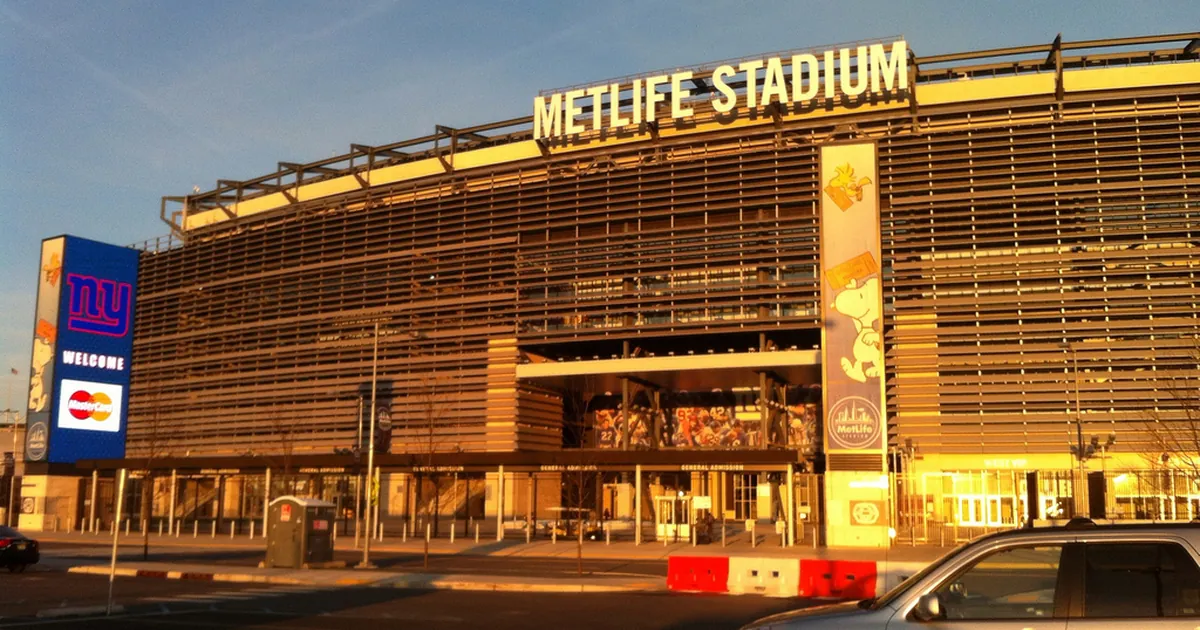
MetLife Stadium. Photo: gargudojr / Wikimedia Commons, CC BY-SA 2.0
5 min read · 904 words
The NJ Transit World Cup train was supposed to be the smart way into MetLife Stadium this summer: leave the car at home, skip the Meadowlands parking scrum, and ride the rails to eight World Cup 2026 matches. Instead, it has become the tournament’s first great fan-revolt over money. After three public price cuts dragged the dedicated round-trip fare from $150 down to $98, fewer than 6% of the seats have actually sold, a stunning vote of no confidence from the very fans the service was built for.
The numbers are bleak. NJ Transit planned to move roughly 40,000 supporters to each of MetLife’s eight fixtures, about 320,000 dedicated round-trip seats across the slate. As of early this week, only 17,739 tickets had been bought a count credited to The Athletic and relayed by Fox Sports. That is less than one seat in sixteen.
How the NJ Transit World Cup train fare collapsed to $98
The fare itself tells the story of a project negotiated in reverse. The dedicated East Rutherford match-day round-trip from New York Penn Station launched at $150. Within days, after public anger and political pressure, Governor Mikie Sherrill announced a cut to $105, then days later a second reduction to $98. New York, running its own dedicated bus product into the stadium, slashed its fare in parallel.
Even at $98, the math is brutal for a family. A normal off-peak NJ Transit trip to the Meadowlands rail spur runs around $13. The World Cup product is roughly seven-and-a-half times that, for the same train, to the same platform. For a party of four, the round-trip rail bill alone is $392 before a single ticket, beer or burger is bought inside.
FIFA’s $11 billion, New Jersey’s $48 million bill
Behind the fare sits a blame game that has turned unusually personal. Governor Sherrill has framed it as a question of who should pay to move fans safely, pointing out that NJ Transit is “stuck with a $48 million bill” to run the service while “FIFA is making $11 billion” from the tournament. FIFA’s counter is contractual: it says agreements were adjusted back in 2023 so that host-city transport would be provided “at cost” rather than handed over free, leaving the local agency, and therefore the local fan, holding the operating tab.
Both things can be true. NJ Transit genuinely faces real marginal costs to staff and run extra trains. FIFA is genuinely banking a record commercial haul. What neither side priced in was the fan’s willingness to simply opt out.
Original analysis: the demand curve everyone ignored
Here is the piece the official statements keep dancing around. The $98 fare was never really competing with FIFA’s profit margin, it was competing with a Honda with four people in it. Around MetLife, the realistic alternatives are well understood by anyone who has been to a Giants or Jets game: drive and split parking, or carpool and split a rideshare. Once you put four bodies in a car, the per-head cost of the train has to beat roughly $25–$35 a person to win. At $98 each, it never came close.
That is why the cuts didn’t move the needle. Dropping from $150 to $98 is a 35% reduction, but the fare was still landing on the wrong side of the carpool break-even point, so demand barely flinched. This is textbook elasticity: the product was priced into a band where it loses to the substitute almost regardless of the exact number. To genuinely fill 40,000 seats a match you would need a fare in the $30s, and at that level NJ Transit’s $48 million hole gets deeper, not shallower. The agency is trapped between a fare fans will pay and a fare that covers its costs, and there is no overlap.
There is a capacity wrinkle too. The Meadowlands rail spur has historically topped out near 35,000 riders for a major event, yet officials projected 40,000 per match. In other words, the service was arguably over-sold on paper before it was under-sold at the till, a reminder that the train was never going to be a clean substitute for the car for a full sell-out crowd anyway.
What World Cup fans heading to MetLife should actually do
For supporters weighing the options, the practical read is straightforward:
- Travelling solo or as a pair? The $98 dedicated train is defensible, you avoid Meadowlands parking, traffic and the notorious post-match egress, and you are not splitting a car anyway.
- Travelling as a group of three or four? Run the carpool maths first. Shared parking or a single rideshare will almost certainly undercut four $98 fares, even before factoring in the convenience of leaving when you want.
- Either way, decide on transport before you commit to a kickoff. A 3pm match in June heat changes the calculus, see our breakdown of how heat is shaping the 2026 World Cup and the walk-up reality at the stadium is its own challenge, which we covered in whether you can actually walk to MetLife.
The broader lesson is one FIFA’s host cities will be relearning all summer: a World Cup ticket is only the first line on the budget. We’ve tracked which cities are getting the wider fan-cost equation right and wrong and how transport, not the marquee, often decides the matchday experience.
For now, the empty seats on the NJ Transit World Cup train are the clearest message fans have sent FIFA so far, and they sent it with their wallets. For the full picture on getting to, paying for and surviving the tournament, start with our complete World Cup 2026 guide.
