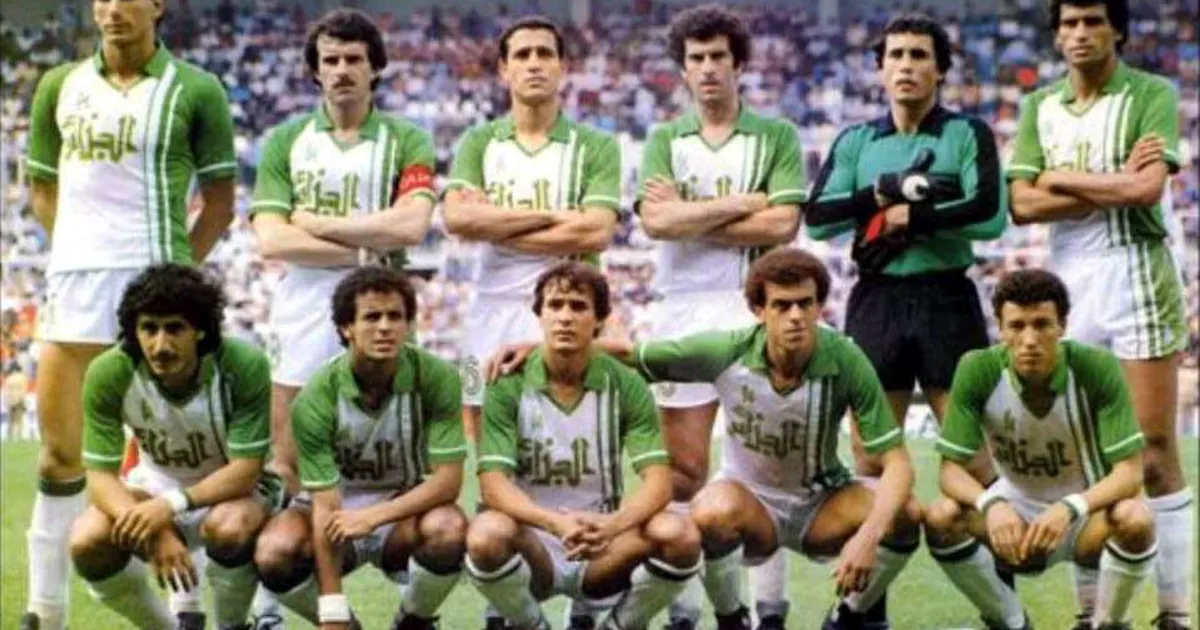
Algeria's 1982 World Cup squad, who faced Austria in Gijón. Photo: Aminou444 / Wikimedia Commons, Public domain
6 min read · 1,115 words
On June 27, 1982, Austria and West Germany played 10 minutes of genuine football in Gijón, Spain. West Germany scored. The teams then spent 80 minutes passing calmly between themselves while Algeria, which had beaten West Germany three days earlier, watched from the stands as the result that would eliminate them was held in place by tacit agreement. German fans whistled for time. Austrian fans waved white handkerchiefs. Algerian fans burned their tickets.
FIFA’s response was structural: from 1986 onwards, all final group stage matches within the same group would kick off simultaneously, removing the informational advantage that made the Gijón arrangement possible. The problem appeared solved.
On June 27, 2026, Algeria plays Austria again, in Kansas City. Forty-four years later, to the month.
The Group J Picture
Heading into the final group game, Argentina top Group J with six points and are through. Austria sit second on three points (goal difference zero). Algeria are third on three points (goal difference minus-two). Jordan are fourth with zero points and are already eliminated.
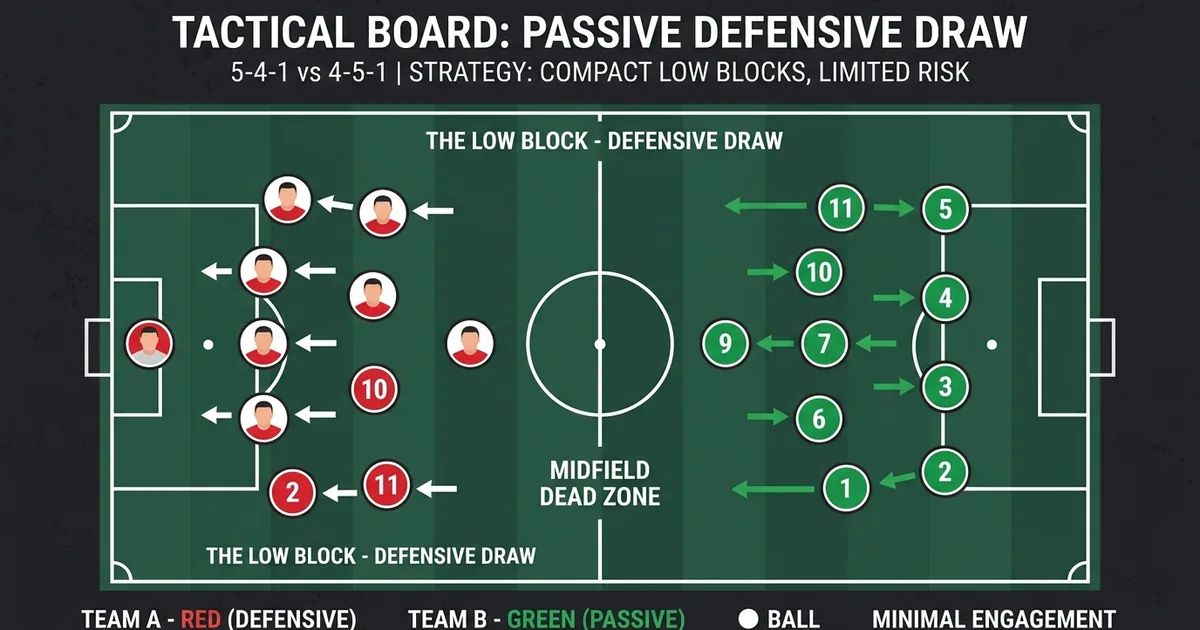
A draw would move Austria to four points, securing their place as group runners-up. A draw would move Algeria to four points, improving their standing in the competition for the eight best-third-place qualification slots. As of June 24, Algeria sit fifth among current third-place teams. Four points would almost certainly move them into a safe position.
Sky Sports noted on June 24, 2026 that Austria may prefer not just to draw but to actively lose: finishing as runners-up means facing the Group H winner, which is likely Spain. Finishing as best-third in their bracket could route Austria toward the United States instead. That adds a layer the 1982 scenario did not have. Austria’s rational incentive might be to lose, not merely to draw. Algeria’s rational incentive is not to lose, which a draw satisfies. The overlap is a 90-minute match in which neither team has a clear reason to push for a decisive result.
The 48-Team Format’s Structural Problem
The expansion to 48 teams restructured the group stage into 12 groups of four. The top two from each group advance automatically. The eight best third-place finishers across all 12 groups also advance, giving third place real value rather than making it a dead end. That rule was intended to keep more teams in contention longer. It also multiplied the windows where a non-decisive result can benefit two teams simultaneously while eliminating a third.
In a straightforward group stage, the fourth-placed team goes home. When two teams can calculate in advance that a draw moves both of them safely forward, and the eliminated team has no recourse, the incentive structure becomes explicit. Playing cautiously for a share of the points is rational. Chasing the win introduces the risk of losing and potentially dropping out of the best-third-place bracket or into a harder knockout draw.
FIFA synchronised final group stage kickoffs after 1982 to remove the informational asymmetry: if both games in a group happen simultaneously, neither team can engineer a result with full knowledge of what the other game is doing. But synchronisation addresses the information problem, not the incentive problem. Austria and Algeria know before they walk onto the pitch exactly what each result means for both of them. The game is simultaneous. The incentives are not changed by that.
The 44-Year Irony
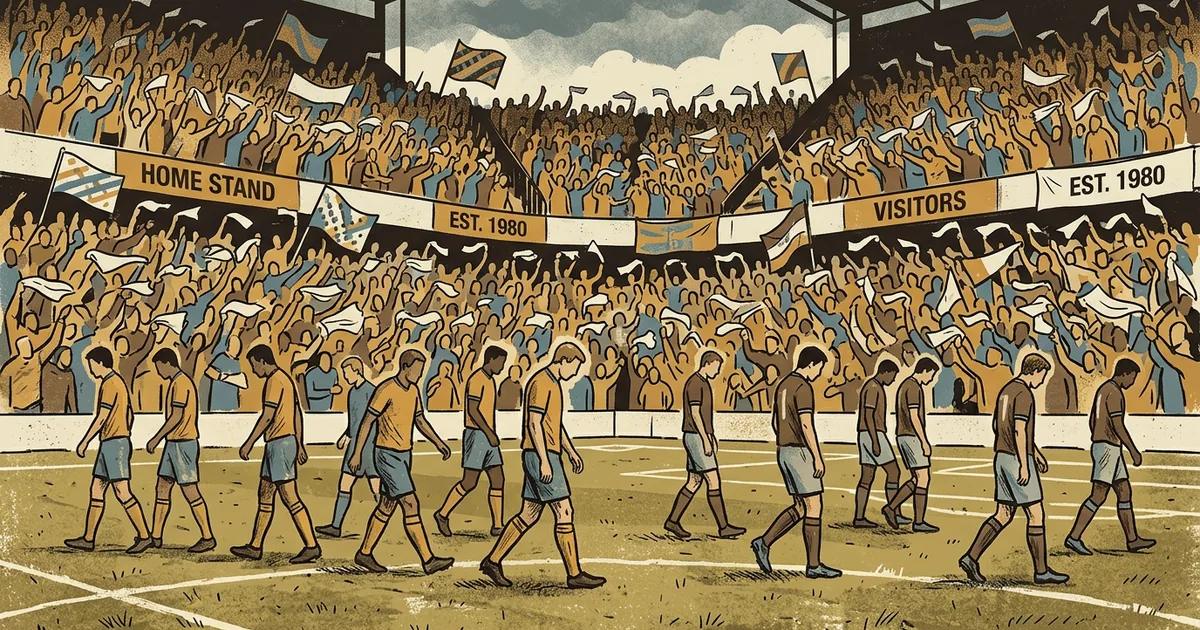
The historical echo is uncomfortable regardless of what actually happens on June 27. In 1982, Algeria was the victim: a team that had beaten West Germany and played better football across the group was eliminated by a result they had no control over. Forty-four years later, Algeria is in a position where it might benefit from the same structural mechanism.
That does not make the Algerian players culpable for what follows. The incentive was not designed by either camp. Sky Sports framed the situation as tactical preference rather than integrity concern, which is a fair framing. AFP wire reporting, carried by the Cape Argus on June 24, 2026, flagged the broader pattern: Algeria versus Austria is one of several group final matches this tournament where both teams can advance with a draw while a third is eliminated.
What the 1982 Gijón match proved is that you do not need collusion to produce this outcome. You need two sets of players who each understand their situation and respond to it. The Austrian players in 1982 did not conspire with West Germany. They read the incentives correctly and played accordingly. That is not match-fixing. That is incentive design producing its intended output.
More Than One Match
Algeria versus Austria draws the historical attention because of 1982, but it is not the only group closer this tournament where the format creates this problem. AFP wire reporting also flagged Australia versus Paraguay and Egypt versus Iran as matches where both teams can advance with a draw while eliminating a third.
The common mechanism is the eight-best-third-place rule. When third place carries real value, the downside risk of pushing for a win, and potentially losing and falling out of the qualification bracket, is calculable and real. A team on four points might rationally assess that staying conservative is better than chasing a three-point third-place total that may not hold up.
This consequence of the expanded format was foreseeable. FIFA had direct experience of 1982. They changed the scheduling to fix the information asymmetry. They did not change the underlying arithmetic that makes certain draws mutually beneficial. Expanding from 32 to 48 teams, and adding a best-third-place qualifier pool, increased the number of groups, which increased the number of final group games where this calculation can arise.
What Would Change It
There are design options. Weighting third-place advancement more heavily on goal difference would reduce the value of a low-scoring draw for teams competing for the best-third-place slots. Applying extra time and penalty rules to final group games would eliminate the possibility of a mutually beneficial draw, though at significant cost to a tournament already stretched across 16 venues and 39 days.
Neither option can be applied to Group J before June 27. The format is fixed. The incentives are set. Jordan are already eliminated and have no say in the matter.
The Gijón match was not against the rules. No law was broken in 1982. Two sets of players responded to a structure that made a particular outcome rational for both parties. When Algeria and Austria kick off at Arrowhead Stadium on June 27, the structure will look familiar.
Forty-four years is a long time to keep making the same mistake.
Sources: Sky Sports (June 24, 2026, Group J analysis and Austria tactical preference); Cape Argus / AFP wire (June 24, 2026, 48-team format integrity analysis); FIFA official format documentation and Group J standings; Wikipedia historical records of the 1982 Disgrace of Gijón.
