
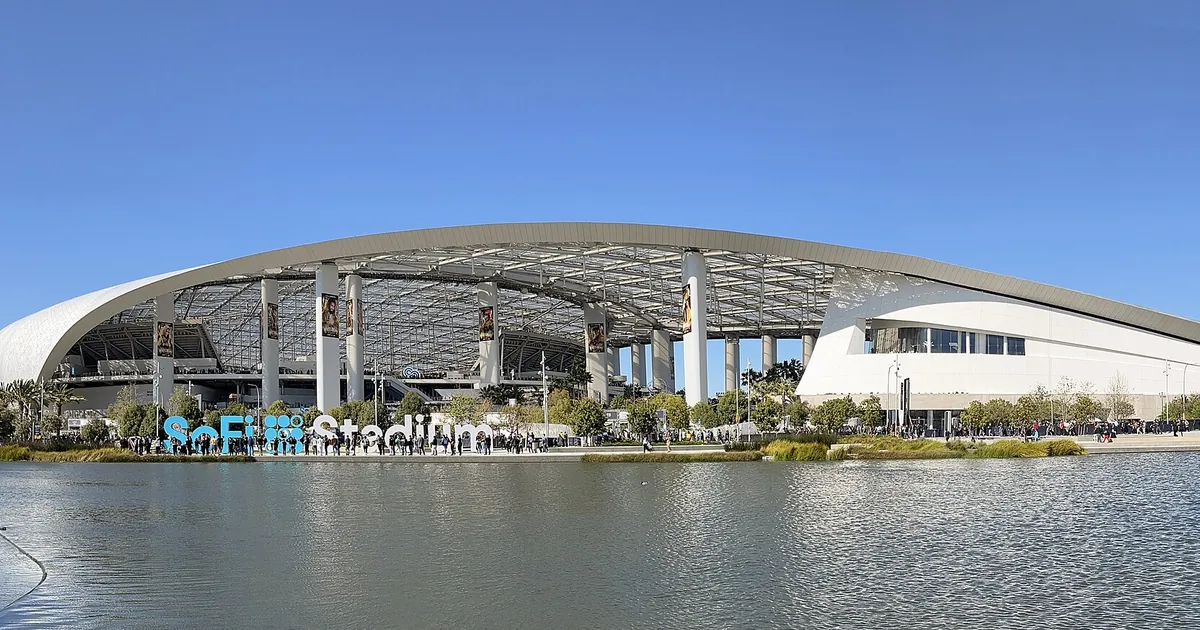
SoFi Stadium. Photo: Troutfarm27 / Wikimedia Commons, CC BY-SA 4.0
5 min read · 1,017 words
Two Californians filed a federal lawsuit against StubHub the week of July 2, and the case reads like a receipt for everything that’s gone wrong with World Cup ticketing this summer. Julia Reeker Moghal paid $1,905 for three tickets to the June 18 Switzerland-Bosnia and Herzegovina match at SoFi Stadium. She stood outside the gates when kickoff came and went. The tickets never arrived. Reuben Renteria paid $2,294 for two seats to Mexico vs. South Korea in Guadalajara. Same story: no tickets, no warning, a trip already booked and paid for.
The lawsuit, filed in federal court in the Southern District of New York, wants class-action status, monetary damages, a court order banning StubHub from selling World Cup tickets at all, and a share of the company’s profits handed back to buyers. It’s a big ask. But it’s not really about these two plaintiffs anymore. It’s about a pattern that consumer attorneys say has been building since the tournament’s opening week.
The “Ghost Ticket” Problem
According to Spectrum News reporting, the mechanism behind most of these cancellations has a name in the resale industry: speculative, or “ghost,” ticketing. A seller lists a ticket they don’t actually hold yet, betting they can acquire it before the match and pocket the markup. When that bet fails, the buyer is the one left standing at the gate.
Scott Friedman, who runs the ticketing watchdog network Ticket Talk, says hundreds of fans have reached out to him directly for help this tournament. Consumer attorney Brad Clements has taken the fight further: he’s represented more than 170 customers in arbitration claims against StubHub and recovered roughly $1.5 million so far. That’s not one bad month. That’s a volume business built on a practice California lawmakers are now moving to outlaw, with legislation that would require sellers to actually hold a ticket before they’re allowed to list it.
StubHub Blames FIFA. FIFA Blames No One.
StubHub’s public defense leans entirely on its FanProtect Guarantee, which promises a replacement ticket or a refund when something goes wrong. In its statement, the company pointed the finger elsewhere, saying the problems were “largely driven by problems with the event organizer’s own ticketing infrastructure.”
FIFA didn’t accept that framing for a second. A spokesperson told reporters the organization “has no visibility over, or control of, secondary market ticket transactions,” rejecting the idea that its own systems were at fault. Full stop. No shared blame on offer.
The pattern isn’t limited to these two plaintiffs. Spectrum News reported a third case: a fan who traveled to Mexico City for a match he never got to attend because his tickets never materialized, and who was refunded only after the fact, not before he’d already spent the money on flights and a hotel room. A refund that arrives after the trip is already ruined isn’t really the guarantee it’s marketed as.
Both statements can’t be entirely true, and neither company has much incentive to find the middle ground. What’s missing from both is any acknowledgment that a fan who paid StubHub’s own 30% resale surcharge (15% charged to each side of the transaction) is out that money the moment either party throws up its hands.
A Pattern FIFA Has Perfected
This isn’t the first time FIFA’s ticketing operation has drawn a hard line around exactly who’s on the hook. In June, FootyGazette reported that FIFA voided roughly 60 fans’ $0 checkout-glitch tickets and rebilled them full price within seven days, treating every primary-market sale as final and non-negotiable, in FIFA’s favor every time. Then, after the quarterfinal exits knocked the U.S. and Portugal out, resale prices crashed by as much as 60% in some markets. FIFA’s cut of every resale transaction stayed exactly the same whether the ticket sold for a premium or a fire-sale price.
Stack those two stories next to this one and a shape starts to appear. On the primary market, FIFA’s terms make every sale final the instant a fan clicks “buy.” On the secondary market, FIFA disclaims any responsibility for what happens next. In both directions, the fee gets collected and the risk gets pushed onto whoever’s holding the ticket, or the empty seat, when the music stops.
StubHub isn’t innocent here either. A company that lets sellers list tickets they don’t actually own is running its own kind of risk transfer, just aimed at customers instead of FIFA. But say it plainly: for a fan who saved for a year to watch one World Cup match, “not my department” from two different billion-dollar companies isn’t an answer. It’s a gap two entities built together, whether they meant to or not, and neither has offered to close it from their own side of the ledger.
What Happens Next
The lawsuit is a long way from a verdict, and class certification is anything but guaranteed. That’s a genuine unknown, not something FootyGazette can predict this early. What’s already measurable is the California legislature’s response: a bill that would ban speculative listings outright, forcing sellers to hold inventory before they’re allowed to sell it. If it passes, it would be the most direct regulatory consequence to come out of this tournament’s ticketing mess, arguably more consequential in the long run than any single FIFA policy tweak, since it would apply to every future concert and stadium event StubHub touches, not just this one tournament.
It also wouldn’t have saved Moghal or Renteria. Neither of their tickets vanished because of a law that hadn’t been written yet; they vanished because the incentive to list a ticket you don’t hold already existed, and nobody closed it in time. For fans planning around the semifinals still to come, the practical lesson from Clements’ arbitration numbers is blunt: document every purchase confirmation and message, and don’t assume “refund or replacement” covers the flight and hotel booked around a ticket that never shows up. StubHub’s guarantee, on its own wording, only promises to make the ticket problem whole, not the trip built around it.
For the full picture of how ticket pricing has whipsawed all tournament, from the original dynamic-pricing backlash to this week’s resale collapse, see FootyGazette’s World Cup 2026 fan guide.
