9 min read · 1,957 words
Thomas Tuchel has unveiled England’s 26-person World Cup squad for the 2026 tournament in North America, and the headline isn’t who made the plane. It’s who didn’t. By leaving out Phil Foden, Cole Palmer, and Trent Alexander-Arnold, Tuchel has made three of the loudest selection calls an England manager has faced in years. The squad reflects his tactical pragmatism over star power, prioritizing tournament football requirements over league performance. For a coach hired to win a major trophy rather than to please a fanbase, it’s a statement of intent that will define how this campaign is judged.
The decisions were revealed in a live show broadcast from Wembley Stadium, with Harry Kane named as captain. As Tuchel put it, “It has been a tough process to decide on the nomination, but I have full belief in this group of players. They all deserve their place. The squad and everyone involved with the team will give all we can to make the country proud.” That quote does a lot of quiet work. It frames the omissions not as snubs but as the byproduct of a coherent plan, and it asks supporters to trust a process that, on the surface, looks like it’s leaving talent at home.
Tuchel’s Approach as England Manager
To understand the squad, you have to understand the man picking it. Tuchel built his reputation as a coach who wins knockout football. His sides tend to be defensively organized, tactically adaptable, and ruthless in the moments that decide tight games. He’s a manager who thinks in systems first and individuals second, and that lens changes how a squad gets assembled. A player who lights up the Premier League across 38 fixtures isn’t automatically the player you want across seven high-pressure matches in a compressed window.
That distinction matters more than it sounds. League football rewards consistency over a long season, where a creative player can drift through quieter games and still produce match-winning moments. Tournament football is different. Games are decided by fine margins, transitions are punished instantly, and the manager often needs every outfield player to contribute defensively without the ball. Tuchel’s selections read like a coach who has weighed that contrast carefully and landed on profiles that fit the second category, even at the cost of pure flair.
The article’s phrase for this, a “cold calculation about tournament football versus league football,” captures the mindset well. It isn’t that the excluded players lack quality. It’s that Tuchel appears to value how a player functions inside a defined structure more than how good their highlight reel looks. For a nation that has spent decades watching gifted squads underdeliver at major tournaments, this is either the breakthrough in thinking England needed or a gamble that ages badly. We won’t know which until the knockouts.
The Key Omissions and the Debates They’ll Fuel
Each of the three big exclusions tells you something different about Tuchel’s priorities.
Phil Foden
Foden’s absence is attributed to either fitness concerns, mid-season form decline at Manchester City, or tactical incompatibility with Tuchel’s system. Any one of those would be a talking point. Together, they paint a picture of a player whose route into this particular setup just didn’t open up. Foden’s best work tends to come in fluid, possession-heavy sides where he can drift between lines and find pockets of space. A more structured, transition-aware England may simply ask different things of its attacking midfielders, and that’s a tactical fit question as much as a form one.
Cole Palmer
Palmer’s exclusion is arguably the hardest to square with recent form. Despite an exceptional Premier League debut at Chelsea, he was left out, with the reasoning tied to that same “cold calculation about tournament football versus league football.” The suggestion is that there are concerns about how he functions in structured, less possession-dominant setups. Palmer thrives when his side dominates the ball and he can operate in the spaces a dominant team creates. Strip those conditions away in a tight tournament game where England might cede possession, and the calculation changes. Whether that’s the right read on a player of his ceiling is exactly the kind of debate that will rage all summer.
Trent Alexander-Arnold
This is, in the article’s own words, “the one that will generate the most tactical debate.” Alexander-Arnold’s passing range is genuinely rare, the sort of weapon that can unlock a packed defense in a group game where opponents sit deep. Leaving that out is a choice with consequences, and the article flags the obvious risk directly. The decision will face scrutiny if England struggles with wide play in group stages. If the team can’t break down low blocks, every missed cross and stale attack will be measured against the creator left at home. Tuchel clearly believes his structure provides that creativity another way. The group stage will test that belief in real time.
Who Got the Nod, and Why
If the omissions reveal Tuchel’s priorities, the inclusions confirm them.
Djed Spence of Tottenham secured the 26th and final spot, with his versatility across both flanks cited as the deciding factor. That single pick tells you a lot. In an expanded tournament with more games and more rotation, a defender who can cover both sides of the pitch is worth more than a specialist who only fits one role. Spence offers Tuchel insurance and flexibility from a single squad place, and that’s precisely the kind of efficiency a tournament manager craves.
Ivan Toney was selected as a “physical, hold-up option in attack,” providing a Plan B that contrasts with more technical forward profiles. This is classic tournament thinking. When a game is locked at 0-0 with twenty minutes left, or when England needs to protect a lead against a team throwing bodies forward, a target forward who can hold the ball, win fouls, and relieve pressure becomes invaluable. Toney isn’t there to start every game. He’s there for the specific scenarios that knockout football reliably throws up, and having that contrasting option on the bench is a feature of the plan, not an afterthought.
Both picks point the same direction. Tuchel hasn’t built a squad to win a beauty contest. He’s built one to solve the practical problems tournaments create.
The Tactical Framework Taking Shape
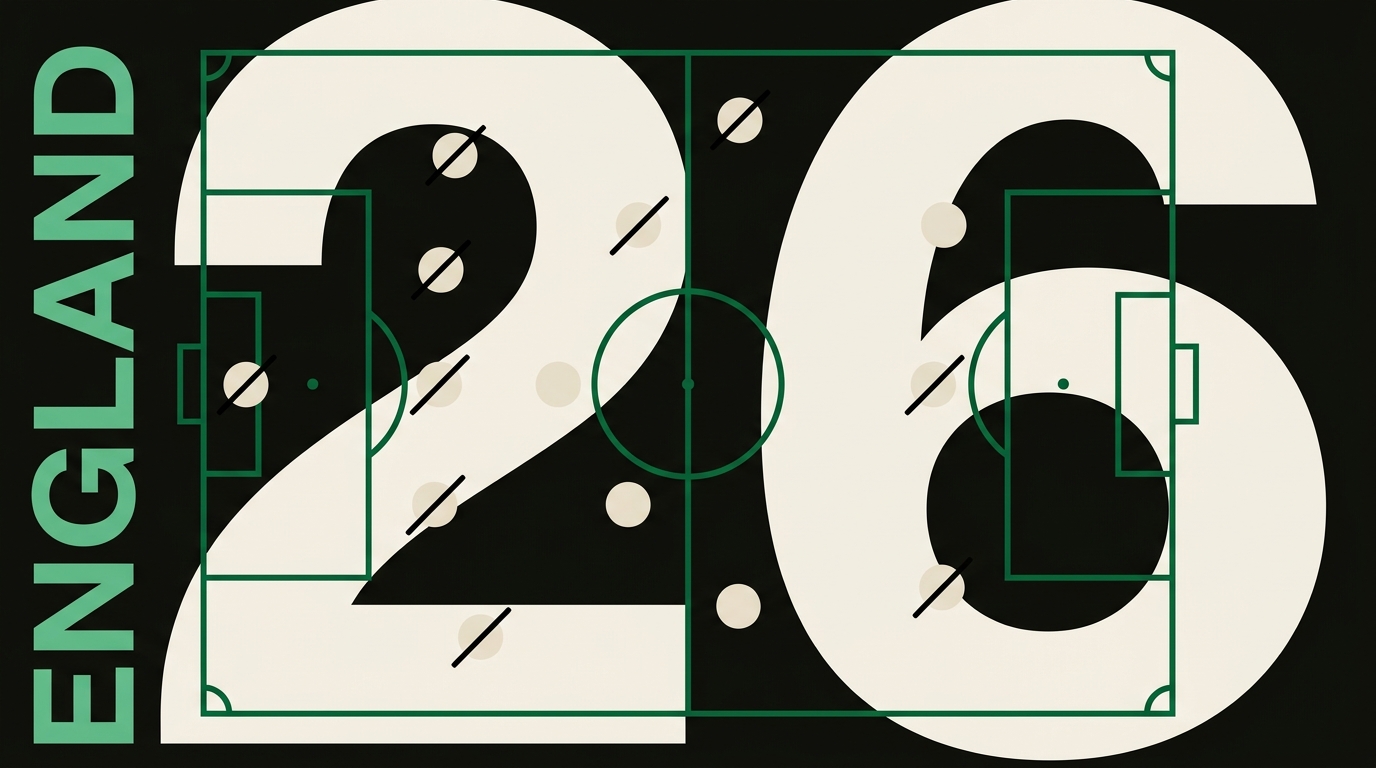
The squad suggests Tuchel is developing a clear tactical picture, with flexibility between back-three and back-four formations. Spence’s inclusion as a potential wing-back is the clue here, indicating “a three-defender shape remains a possibility.” That flexibility is valuable across a long tournament because it lets England change the team’s shape without changing personnel. A back three can become a back five to protect a lead, or a more aggressive four to chase a game, depending on the opponent and the scoreline.
For readers who want to understand why a manager would lean this way, our tactical analysis of the back three breaks down how the system distributes defensive responsibility and frees up wide players to push higher. The short version is that a back three can give a side both solidity and width, which is exactly the balancing act Tuchel seems to be chasing. Picking versatile defenders rather than one-position specialists is how you keep both options live deep into a tournament.
The Guardiola Subplot
The squad announcement landed against a notable backdrop. Pep Guardiola’s departure from Manchester City was confirmed the same Friday as the squad reveal. Tuchel described him as “one of a kind,” and the article suggests City players navigating this transition may have influenced selection decisions. It’s an unusual variable to factor in, but not an irrational one. Players adjusting to upheaval at club level carry that uncertainty with them, and a manager weighing fine margins might reasonably account for how settled a player feels heading into the biggest weeks of the season. Whether it tipped any single call is impossible to know, but the timing made it part of the conversation.
What’s Actually at Stake at World Cup 2026
This tournament is unlike any that came before it, and that reshapes how a squad should be built. The expanded 48-team format places greater demands on squad depth, making versatile selections more strategic. More teams means more games, and more games means more rotation, more fatigue, and more situations where a manager needs a player who can fill multiple roles. England faces the group stage before the round of 32 knockout phase, a longer road to the final than previous editions offered.
That extended path is exactly why Tuchel’s logic, however divisive, has internal consistency. If you’re going to play more matches across more days, depth and flexibility stop being luxuries and become requirements. A squad of 26 brilliant individuals who all want the ball at their feet can become a liability when you need someone to defend a one-goal lead in the round of 16. A squad of adaptable players who understand their roles can grind through it. For more on how the new structure changes the math, our full guide to the 48-team format walks through the schedule and the qualification routes in detail.
The stakes for England specifically are enormous. This is a generation expected to deliver after near misses, and Tuchel was hired precisely because of his pedigree in winning the games that matter most. If his structure holds and England goes deep, the omissions become evidence of a manager who saw the bigger picture. If the team stalls against a deep defensive block and that famous attacking talent is sitting at home, the same decisions will be replayed endlessly. That’s the deal Tuchel has made with this squad. He’s bet his reputation that system beats spectacle when the pressure peaks.
For the wider context around this summer’s biggest football moments, our rundown of summer 2026 storylines sets the scene, and if you’re planning to follow every England match, the World Cup 2026 how-to-watch guide has you covered.
Frequently Asked Questions
Why did Tuchel leave out Foden, Palmer, and Alexander-Arnold?
According to the reporting, the exclusions stem from Tuchel’s “cold calculation about tournament football versus league football.” Foden’s absence is attributed to fitness concerns, a mid-season form decline at Manchester City, or tactical incompatibility. Palmer’s exclusion reflects concerns about how he functions in structured, less possession-dominant setups. Alexander-Arnold’s omission is described as the one likely to generate the most tactical debate.
Who got the final squad spot?
Djed Spence of Tottenham secured the 26th position, with his versatility across both flanks cited as the deciding factor.
What formation will England play?
The squad points to flexibility between back-three and back-four formations. Spence’s inclusion as a potential wing-back indicates a three-defender shape remains a possibility, though Tuchel appears to want the option to switch between systems.
Why does the 48-team format matter for selection?
The expanded 48-team tournament places greater demands on squad depth, which makes versatile players more valuable. England faces the group stage before the round of 32 knockout phase, a longer route that rewards adaptability and rotation.
What’s the significance of Ivan Toney’s selection?
Toney was picked as a “physical, hold-up option in attack,” offering a Plan B that contrasts with more technical forwards. He gives Tuchel a different way to change a game, particularly in tight knockout situations.
Did Guardiola’s exit affect the squad?
Pep Guardiola’s departure from Manchester City was confirmed the same Friday as the squad announcement. Tuchel called him “one of a kind,” and the reporting suggests City players navigating that transition may have factored into selection.