
8 min read · 1,712 words
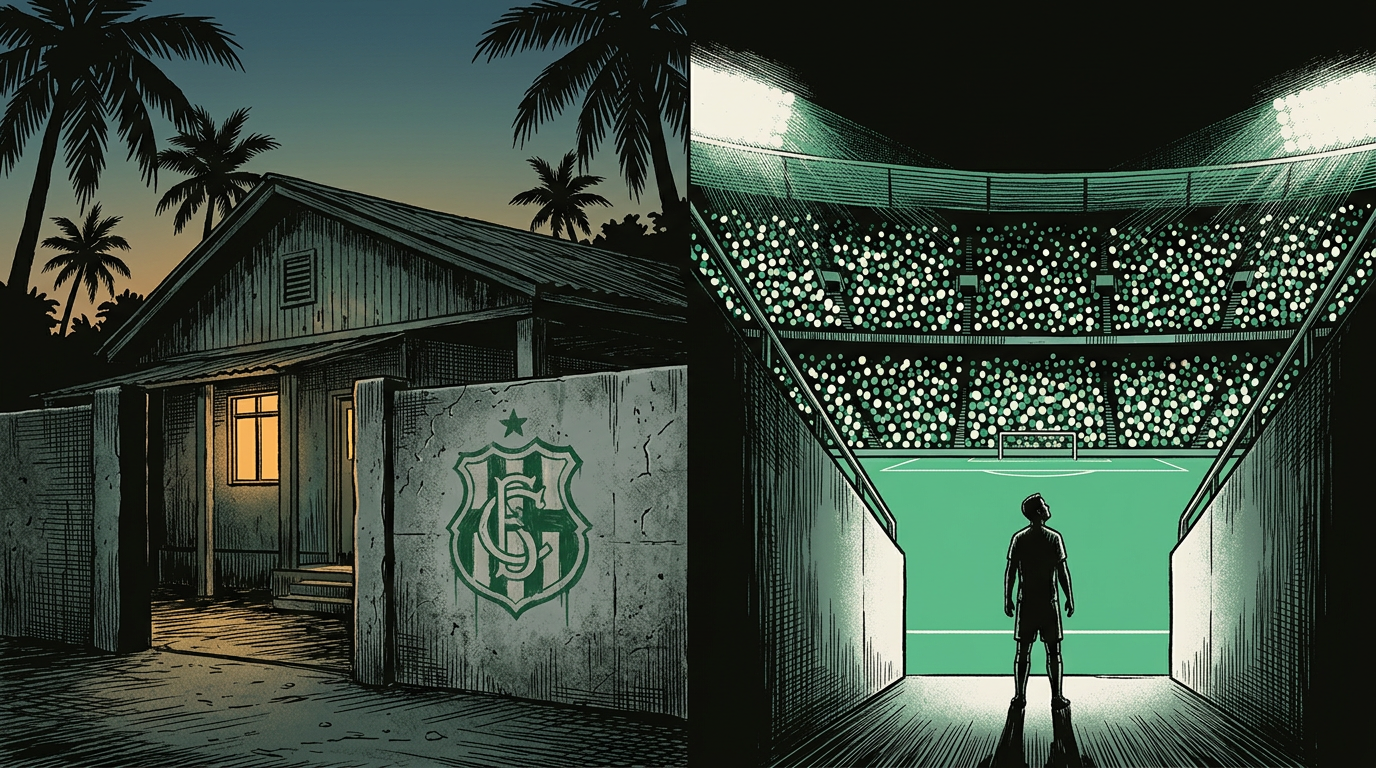
There is a photograph Tamy Michel keeps close. Her father, Solange, standing outside Baltimore SC’s training ground in Port-au-Prince, the club he ran for 18 years through coups, earthquakes and the particular cruelty of Haitian political imprisonment. He was jailed in the 1990s during the turmoil that consumed the country. The club survived. The family endured. And now, at the 2026 World Cup Haiti are back on football’s grandest stage for the first time since 1974, the very year Solange Michel’s family began their stewardship of Haitian football.
That symmetry is not lost on anyone connected to Les Grenadiers. It lends this squad’s presence in North America a weight that pure sporting analysis cannot fully capture. Their opponents in the group stage opener, Scotland, arrive with a rather more prosaic burden: the nagging, familiar fear that Steve Clarke’s side might once again exit a major tournament before it truly begins.
A Nation Returns, Hungry and Unafraid
The Guardian’s profile of Haiti’s journey to this tournament is one of the more affecting pieces of World Cup journalism you will read this summer. Tamy Michel’s aunt, Simone Devuleux, eventually took over Baltimore SC after Solange’s imprisonment, continuing a family line of custodianship that stretches back half a century. The squad itself is drawn from across the Haitian diaspora, players raised in the United States, Canada, France and elsewhere who have chosen to represent a country many of them know more through inheritance than lived experience.
That diaspora dimension is crucial to understanding Haiti’s competitive profile. This is not a naive side stumbling onto the world stage through good fortune and a weak qualifying group. Several players in the squad operate at a decent professional level in MLS and the lower tiers of European football. They are, as the Guardian reports their own players describing themselves, “hungry”, a word that carries genuine biographical resonance here, not mere pre-match cliché.
Haiti qualified through CONCACAF, navigating a region where the margins are tight and the travel brutal. They are not here to make up the numbers. Whether they can translate that hunger into points against a Scotland side with considerably more experience of major tournament football remains the central question of this fixture.
Clarke’s Selection Dilemma and the Weight of Expectation
Scotland’s situation is straightforward in its pressure, if not in its solution. Sky Sports frames this bluntly: is this a must-win for Clarke’s side? The honest answer is yes, or as close to yes as you can get in a group stage opener. Scotland have qualified for three consecutive major tournaments, Euro 2020, Euro 2024, and now this, and have yet to progress beyond the group stage in any of them. The patience of the Scottish Football Association and, more pertinently, the Scottish public is not infinite.
The BBC’s interactive exercise, putting readers in Clarke’s shoes to pick the side and tactics, reflects genuine uncertainty about the optimal approach. There is no obvious correct answer. Do you set up defensively and absorb Haiti’s energy, looking to win on the counter? Do you press high and try to impose Scottish physicality on a side less accustomed to that intensity at this level? Clarke has historically favoured pragmatism, but pragmatism against a team with nothing to lose can curdle quickly into passivity.
The selection questions are real. Scotland’s midfield balance, how much defensive cover behind the creative players, how much licence for the likes of John McGinn to get forward, will likely determine the tempo of the match. Up front, the competition for places has been a genuine talking point throughout qualifying.
What the Azteca Reminded Us About This Tournament
The opening ceremony and Mexico’s 2-0 win over South Africa at the renamed, but spiritually immovable, Azteca set the tone for what this expanded 48-team tournament can be at its best. The Guardian’s Football Daily captured something important about that occasion: legacy endures. You can rename a stadium, charge 280 pesos for a beer and book David Guetta for the pre-match entertainment, but the ghosts of 1970 and 1986 were present regardless. The World Cup still means more than the corporate apparatus surrounding it would sometimes suggest.
That feeling, of something genuinely mattering, is precisely what Haiti’s return taps into. The 1974 squad that represented the country in West Germany did so under the Duvalier dictatorship, their participation shadowed by political instrumentalisation. This squad carries a different kind of weight: the weight of a diaspora’s longing, of a family’s 52-year investment, of a football culture that has survived everything the Caribbean’s most turbulent nation could throw at it.
For Scotland, the emotional register is different but no less real. Jude Bellingham’s recent comments about England’s Euros campaign, that the squad “didn’t connect as well as it could have” and weren’t as happy as they should have been even when winning, serve as an inadvertent warning to any team that arrives at a tournament more focused on avoiding failure than pursuing success. Clarke will be acutely aware of this dynamic.
Tactical Considerations: Styles, Spaces and the Heat Factor
How will Haiti approach this tactically?
Haiti’s coaching staff have built a side that is compact without being passive. They press in organised waves rather than with the relentless high-energy approach of, say, a Klopp-era Liverpool, but they are not a team content to sit in two banks of four and absorb. Their attacking transitions are quick, and several of their diaspora-raised players have the technical quality to hurt a Scotland defence that, historically, has been vulnerable to pace in behind.
Where are Scotland most vulnerable?
The spaces in behind Scotland’s full-backs have been exploited in recent competitive fixtures. Clarke’s system demands that his wide defenders contribute to attacks, which creates exposure on the counter. Against a Haiti side with quick, direct forwards, those spaces could be decisive. Scotland conceded from set pieces at a higher rate than any other CONCACAF-qualifying nation’s likely opponent in this group, which is a concern given Haiti’s physicality from dead-ball situations.
Does the diaspora factor affect team cohesion?
This is the question Anglo-American coverage tends to ask with a slightly sceptical inflection, as though a team built from diaspora players must necessarily lack unity. The evidence from Haiti’s qualifying campaign suggests the opposite. The shared sense of representing something larger than club football, of carrying a nation’s story onto a global stage, has historically been a cohesive force rather than a fragmentary one. Costa Rica’s 2014 run, built on similar emotional foundations, is the obvious reference point.
Is this genuinely must-win for Scotland?
In practical terms, a defeat here would leave Scotland needing to win their remaining two group games to have a realistic chance of progressing. Given the likely quality of their other opponents, that is not impossible, but it would require a significant shift in mentality and performance level. The psychological damage of losing to a team making their first World Cup appearance in 52 years, in front of a global audience, should not be underestimated either. So yes: must-win is not hyperbole.
What does qualification mean for Haitian football’s infrastructure?
Beyond the results, Haiti’s presence at this tournament carries structural implications. World Cup participation brings FIFA prize money and, more importantly, visibility that attracts investment and sponsorship. For a football federation that has operated with limited resources, Baltimore SC’s survival through Solange Michel’s imprisonment is emblematic of how precarious the infrastructure has been, the financial and reputational boost of a World Cup campaign could be genuinely transformative. The Michel family’s 52-year stewardship may be entering its most consequential chapter.
How has the expanded format changed the stakes for smaller nations?
The 48-team format has been controversial among purists, but for nations like Haiti it represents a genuine opportunity. With 16 groups of three teams and the top two plus eight best third-placed sides advancing, the mathematics are more forgiving than in previous editions. Haiti need not win their group to progress, a single victory and a draw could, depending on other results, be sufficient. That changes the calculus of how they approach each game, and it changes the pressure on Scotland too.
The Broader Picture: What This Match Represents
There is a temptation, particularly in British football coverage, to frame Haiti primarily as the obstacle Scotland must overcome, a story about Clarke’s selection headaches and Tartan Army anxiety. That framing is understandable from a Scottish perspective but it misses the more compelling narrative.
Haiti’s return to the World Cup after 52 years is the kind of story that reminds you why football, at its best, carries meaning that transcends the tactical and the transactional. The Michel family’s half-century of custodianship, through dictatorship, imprisonment, natural disaster and the grinding poverty that has defined so much of Haiti’s modern history, is not background colour. It is the story.
Scotland’s story is real too, of course. The weight of expectation, the history of near-misses and group-stage exits, the particular intensity of a small nation’s relationship with its football team, these things matter to the people who live them. Clarke is a thoughtful manager who understands the emotional landscape he operates in.
But when the two teams walk out for their opener, it will be worth pausing on what Haiti’s presence represents. A family that kept a club alive through a father’s imprisonment. A diaspora that chose to come home, in the only way available to them. A football culture that survived everything and arrived, finally, at the biggest stage in the sport.
For more on how this tournament is unfolding across all its storylines, our summer 2026 storylines hub is being updated throughout the competition. Scotland’s campaign fits within the broader World Cup coverage we are running across all 48 participants. And if you are still working out how to follow the matches, our guide to watching football online in 2026 covers the main options available depending on your territory, or you can head directly to our watch page for subscription details.
Haiti versus Scotland is, on paper, a straightforward group stage opener between a tournament debutant (in modern terms) and a side with recent major tournament experience. In reality, it is one of the more layered matches of the early rounds. The Tartan Army will be loud. Les Grenadiers will be hungry. And somewhere in the stands, the Michel family will be watching 52 years of history arrive at its moment.
