
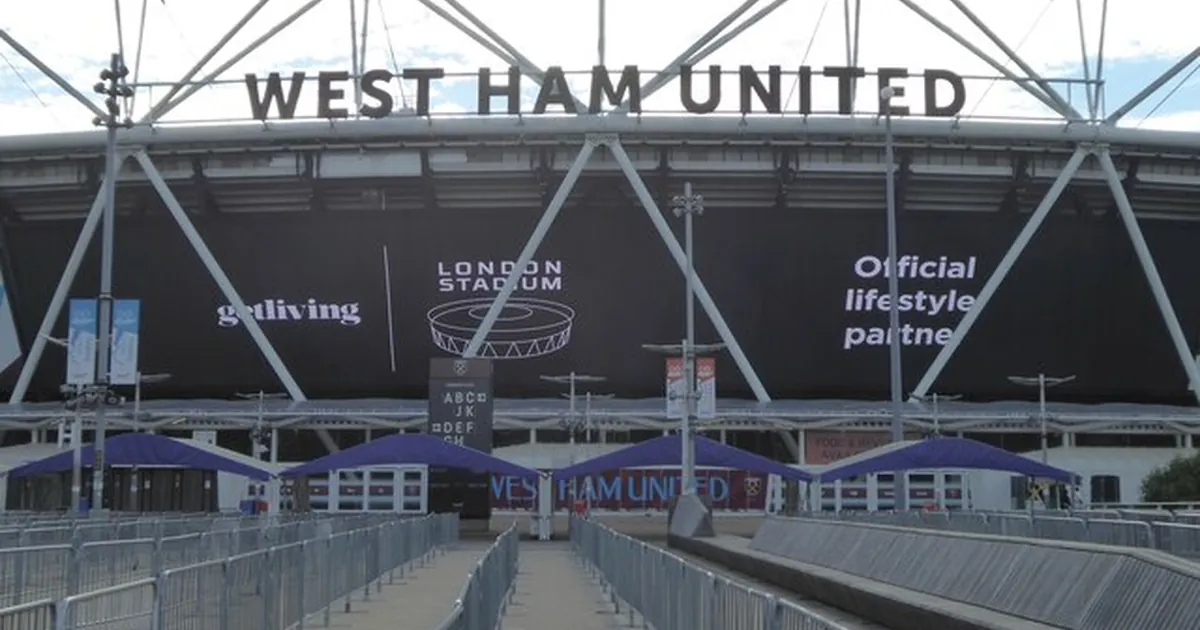
London Stadium. Photo: Rod Allday / Wikimedia Commons, CC BY-SA 2.0
6 min read · 1,157 words
Daniel Kretinsky is about to become West Ham United’s biggest shareholder, and the way that happens matters more than the fact of it. According to Sky Sports the Czech billionaire’s stake will rise from 27 per cent to 43 per cent over the next couple of weeks, overtaking the 38.8 per cent held by David Sullivan, who resigned as joint chairman this month. The West Ham Kretinsky deal lands in the middle of the gravest governance crisis in the club’s modern history, and it is the first real test of whether English football’s new regulator can actually do anything about a control shift dressed up as housekeeping.
This is not a takeover in the cinematic sense. No new money is buying the club out of trouble. An existing owner is quietly consolidating control while a co-owner exits under a cloud. And that, precisely, is the scenario the Independent Football Regulator is least equipped to scrutinise.
The West Ham Kretinsky math, and why it changes control
Strip out the personalities and the numbers tell a clean story. Sullivan at 38.8 per cent and Kretinsky at 27 per cent described a club with no single controlling owner, a balance of power. Move Kretinsky to 43 per cent and Sullivan out of the chair, and you have, for the first time, a clear principal. The shareholders’ joint statement framed the goal as stability: to “stabilise West Ham, retain as many of our key players as possible and secure an immediate return to the Premier League” after relegation. Vanessa Gold and Kretinsky added that they were “deeply concerned by the revelations made by The Times and Panorama this week and our thoughts go out to those women.”
The revelations are the reason any of this is happening on this timeline. On 8 June, BBC Panorama and The Times reported allegations of sexually exploitative and predatory behaviour against Sullivan from seven women. Sullivan denies the allegations. What turned a scandal into a governance story was a second disclosure: the rest of the board said it learned only this week that the Football Association had restricted Sullivan’s contact with the club’s women’s and youth teams since 2023, as part of an ongoing safeguarding investigation. A 38.8 per cent owner and joint chairman had been under a safeguarding restriction for more than two years, and his fellow directors say they did not know.
Where the new regulator is supposed to step in
This is the moment the Independent Football Regulator was built for, at least on paper. The IFR’s licensing regime, established under the Football Governance Act, came into force for incumbent owners on 12 December 2025, with the regulator expecting to begin processing prospective owners, directors and senior executives from around the start of the tournament window in 2026. Its centrepiece is the Owners, Directors and Senior Executives suitability test, modelled on the Financial Conduct Authority’s Senior Managers Regime, which weighs honesty and integrity, financial soundness and the source of an owner’s wealth.
The integrity limb is not abstract. The regime explicitly directs the regulator to weigh criminal convictions, live court proceedings, regulatory actions, director disqualifications and findings by sporting bodies. A safeguarding restriction imposed by the FA, the game’s own governing body, sits squarely inside the kind of material the test is designed to surface. The IFR’s whole pitch to a sceptical public was that it would catch exactly this: a fitness problem known to one part of football and invisible to the people who needed to act on it.
The blind spot: a 43% owner walks through the lighter door
Here is the original problem, and it is the part the transfer-business coverage skips. The toughest scrutiny in the Football Governance Act is reserved for new owners. As the regulatory analysis published by law firm Morgan Lewis reads the statute, a “prospective” owner must satisfy a proactive standard, the regulator must have “no grounds to suspect” their wealth is tied to serious crime, and they must clear the full honesty, soundness and resources bar before being approved. An incumbent owner is treated far more gently: the IFR need only “take reasonable steps to investigate” and decide “on the balance of probabilities,” and reviews are triggered only where concerns already exist. The asymmetry is in the design of the Act, not the discretion of the regulator.
Kretinsky is an incumbent. He is already well above the regime’s 25 per cent ownership threshold, so his move from 27 to 43 per cent is not the arrival of a new owner the regulator must vet from scratch, it is an existing owner increasing a stake he already holds. The single largest concentration of control in West Ham’s recent history therefore travels through the regime’s lightest-touch door, not its heaviest. The transaction most worth examining, one owner taking de facto command of a club as a co-owner exits under a safeguarding cloud, is precisely the transaction the suitability test was not primarily designed to stop.
None of this is an allegation against Kretinsky, who faces no suggestion of wrongdoing and may well be exactly the steadying hand a relegated, scandal-hit club needs. The point is structural. A regime sold as a guard against “rogue owners” is strongest at the front door, the prospective buyer filling in forms, and weakest at the side door, where control changes hands between people already inside the building. West Ham is the first high-profile club to walk through that side door while the cameras are on.
What the IFR can realistically do now
The honest answer is: less than the headlines imply, and more than nothing. The regulator can open an incumbent review where concerns exist, and a publicly reported FA safeguarding restriction plus live media allegations comfortably clear that bar for scrutiny of Sullivan’s continued involvement. Once an application or review is live, the IFR has 90 days for an initial determination, extendable by 60. It can attach conditions, require information, and, at the extreme, find an individual unsuitable. What it cannot easily do is pre-clear Kretinsky’s consolidation with the same forensic standard it would apply to a stranger buying in, because the Act deliberately spares incumbents the “sufficient financial resources” test and lowers the evidentiary burden.
For West Ham supporters, who have spent two seasons protesting the board, the practical takeaway is uncomfortable. The new owner is arriving through the mechanism that asks the fewest questions, at the precise moment the club most needs questions asked. The regulator’s first marquee case is not the rogue-billionaire takeover its architects imagined. It is something quieter and harder: an inside reshuffle, executed at speed, under a safeguarding shadow that the club’s own directors say they were the last to see.
That is the test. Not whether the IFR can block a villain at the gate, but whether it can compel transparency when control moves between people who are already holding the keys.
Further reading from FootyGazette: David Sullivan quits West Ham · the FA safeguarding probe and West Ham’s governance crisis · why the IFR’s first real tests will define it.
