7 min read · 1,347 words
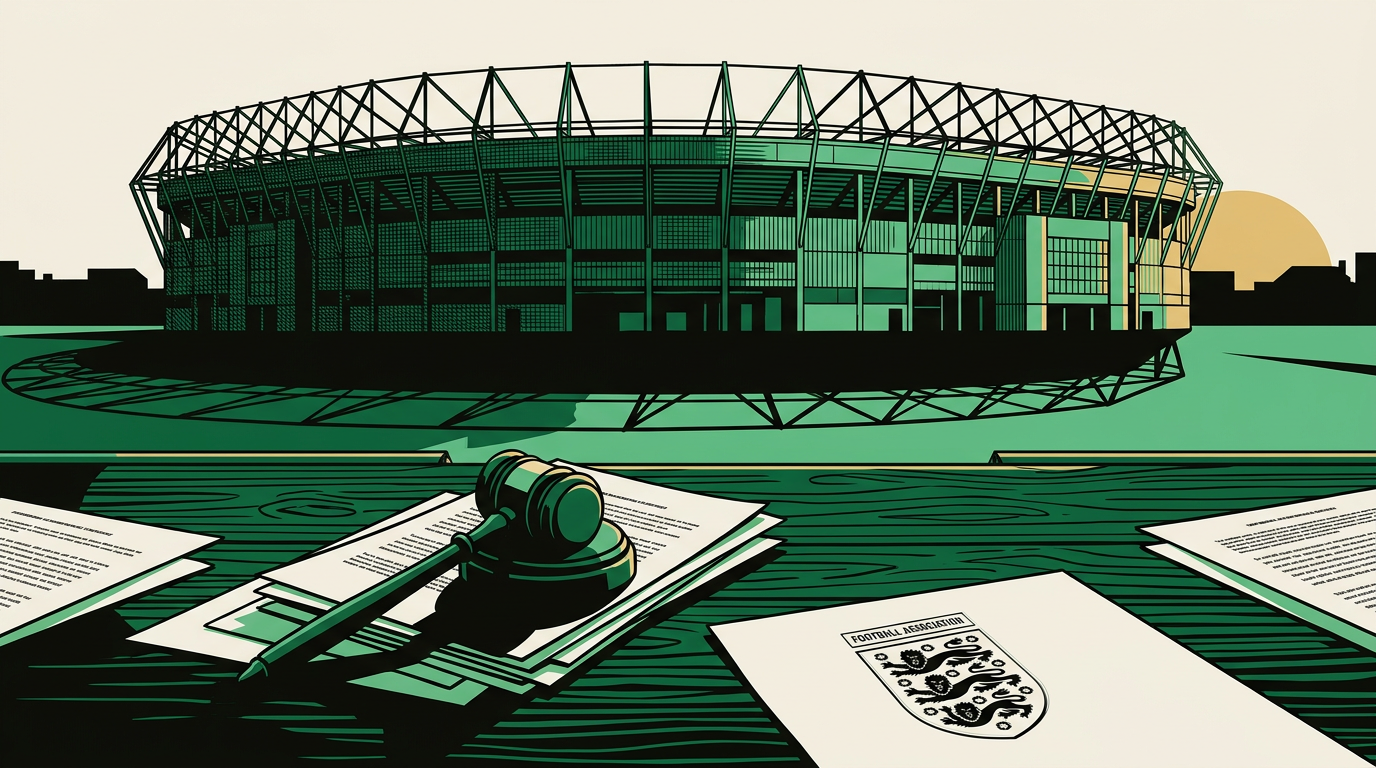
David Sullivan has operated under a “temporary agreement” restricting his contact with West Ham United’s women’s and youth teams since 2023, a period of nearly three years during which the Football Association has been conducting a safeguarding investigation following a complaint that, the Guardian understands, involves an allegation of sexual misconduct unrelated to football.
The disclosure, first reported by the Guardian lands at a moment of compounding reputational pressure on Sullivan, whose past ownership of Sport newspapers has simultaneously come under renewed scrutiny. The former victims’ commissioner Vera Baird told the Guardian that those publications deliberately used sexualised images of underage girls as “bait for predatory men”, a characterisation Sullivan has not publicly rebutted in detail at the time of writing.
Taken together, the two stories represent something qualitatively different from the routine governance controversies that have dogged West Ham United in recent seasons. This is not a question of stadium debt, transfer policy, or fan relations. It is a question of whether a club’s controlling shareholder is fit and proper to hold that position, and whether the FA’s regulatory apparatus is equipped to answer that question in anything approaching a timely fashion.
What the FA Investigation Actually Involves
What is the nature of the complaint against Sullivan?
The Guardian reports that the FA received a complaint approximately three years ago, and that the allegation involves sexual misconduct unrelated to football. The investigation remains ongoing. The FA has not confirmed the precise scope of its inquiry, and Sullivan has not been charged with any criminal offence. The “temporary agreement” restricting his contact with the women’s and youth teams is understood to have been put in place as a precautionary measure while the investigation proceeds.
How long can an FA safeguarding investigation run?
Three years is, by any measure, an extended timeline for a regulatory process. The FA’s safeguarding framework, strengthened considerably after the Barry Bennell scandal and the subsequent Sheldon Review, was designed to act swiftly when children or vulnerable adults are at risk. That a temporary agreement has been in place since 2023 without apparent resolution raises legitimate questions about the pace of the process, irrespective of its eventual outcome. The FA declined to comment on the specifics when approached by the Guardian.
What is the significance of restricting access to women’s and youth teams specifically?
The restriction is telling in its precision. Sullivan remains, as far as is publicly known, the majority shareholder and co-chairman of the men’s first-team operation. The targeted nature of the access restriction, women’s and youth, suggests the FA identified specific contexts in which contact was deemed inappropriate pending the investigation’s conclusion, rather than imposing a wholesale suspension of his involvement in the club. Whether that distinction is defensible will depend entirely on what the investigation ultimately finds.
The Sport Newspapers Dimension
What did Sullivan’s Sport newspapers publish?
The “Countdown to 16” feature, which ran in Sullivan’s Sport newspaper titles during his ownership tenure, pictured models in lingerie and bikinis in the weeks before their sixteenth birthdays, at which point they could legally be shown topless. Vera Baird, the former victims’ commissioner, told the Guardian the feature “deliberately came as close as possible to breaking the law” and described the images as bait for predatory men. The feature is not a new discovery, it has been documented by media historians and press freedom researchers for decades, but its re-emergence in the context of an active FA safeguarding investigation gives it a different weight.
Is there a legal distinction between the newspapers and the football investigation?
Yes, and it matters. Sullivan’s ownership of the Sport titles predates his involvement in football ownership, and the editorial decisions made by those publications are a matter of press law and media regulation rather than football governance. The FA’s remit does not extend to a club owner’s conduct in unrelated commercial enterprises. However, the FA’s fit-and-proper-person test, formally the Football Association’s Owner and Director Test, does permit consideration of conduct that may bring the game into disrepute, and the interpretation of that clause has historically been contested and inconsistently applied across the football pyramid.
West Ham’s Governance Position
West Ham’s board has not issued a substantive public statement on either matter. That silence is itself a governance choice, and not obviously the correct one. The club’s women’s team, competing in the Women’s Super League and preparing for a season in which qualification pathways to European competition remain live, operates in an environment where its controlling shareholder’s access has been formally curtailed for three years. Players, staff, and the club’s commercial partners are entitled to clarity on the chain of command and the safeguarding structures in place.
The timing is also commercially awkward. Sky Sports reported this week that West Ham value midfielder Mateus Fernandes at £80 million, with Manchester United exploring a potential deal for the player. A club seeking to extract maximum value from a major asset does not benefit from its ownership structure being simultaneously scrutinised for safeguarding failures. Transfer counterparties and their legal teams read the newspapers.
The Broader Women’s Football Context
The Sullivan story lands in the middle of a Women’s World Cup qualifying window that has, until this week, been generating largely positive headlines for English football. England face Ukraine in a Group A3 qualifier, with Sarina Wiegman making four changes to a squad that needs to respond to earlier dropped points, according to live coverage from the Guardian. Meanwhile, Wales manager Rhian Wilkinson told the BBC that her side, having beaten the Czech Republic to claim top spot in Group B1, have the potential to reach next year’s Women’s World Cup.
The juxtaposition is uncomfortable. Women’s football in England has spent the better part of a decade constructing a credibility architecture, professionalisation of the WSL, the Lionesses’ Euro 2022 triumph, record attendances, serious broadcast deals. The governance of clubs within that ecosystem matters to that project. A controlling shareholder operating under a safeguarding access restriction for three years, at a club competing in the top flight of the women’s game, is not a minor footnote.
What Needs to Happen Next
The FA faces a straightforward credibility test. If its safeguarding investigation has been running since 2023 and a temporary agreement has been in place throughout, the governing body owes the game, and specifically the women’s and youth players at West Ham, a clear timeline for resolution. Investigations of this nature are necessarily sensitive, and due process matters. But “temporary” arrangements that run for three years without public accounting are not temporary: they are a permanent state of managed ambiguity, and managed ambiguity is not a safeguarding framework.
Sullivan, for his part, has the option of transparency. He has not been charged with any criminal offence. If the allegation is, as the Guardian reports, unrelated to football, he may have grounds to contest the access restrictions or to seek a faster resolution of the process. His silence, and the club’s, suggests either legal advice to say nothing or an absence of a coherent communications strategy. Neither reflects well on an organisation that aspires to be taken seriously in the modern game.
For West Ham as an institution, the question is structural. The club’s ownership has been a source of instability for years, the acrimonious departure of co-owner Karren Brady, the ongoing debt architecture around the London Stadium, the repeated disconnect between boardroom ambition and sporting delivery on the men’s side. The women’s team has, in many respects, operated as a more professionally run entity within the same ownership umbrella. Whether it can continue to do so while its controlling shareholder’s position remains unresolved is a question the FA, the WSL, and West Ham’s own board need to answer with rather more urgency than they have shown to date.
Readers following the women’s qualifying campaign can find further context on the Premier League and women’s football governance landscape across our coverage hub, and our summer 2026 storylines tracker is being updated as the qualifying window develops. For those looking to follow the Women’s World Cup qualifying matches, our guide to watching football online in 2026 covers the main broadcast options.
