7 min read · 1,537 words
There is a particular kind of irony in hosting the world’s most watched sporting event whilst simultaneously operating the world’s most aggressive border regime. The United States, Canada and Mexico were awarded the 2026 World Cup on the premise of vast infrastructure, enormous stadiums and a combined population of football-curious neutrals. What the bid documents did not account for was the second Trump administration’s immigration posture, and Fifa, an organisation not exactly renowned for contingency planning, is now scrambling to manage the consequences.
The tournament kicks off in a matter of days. Officials are still being turned away at airports. That is, to put it diplomatically, not ideal.
The Artan Case: What We Know
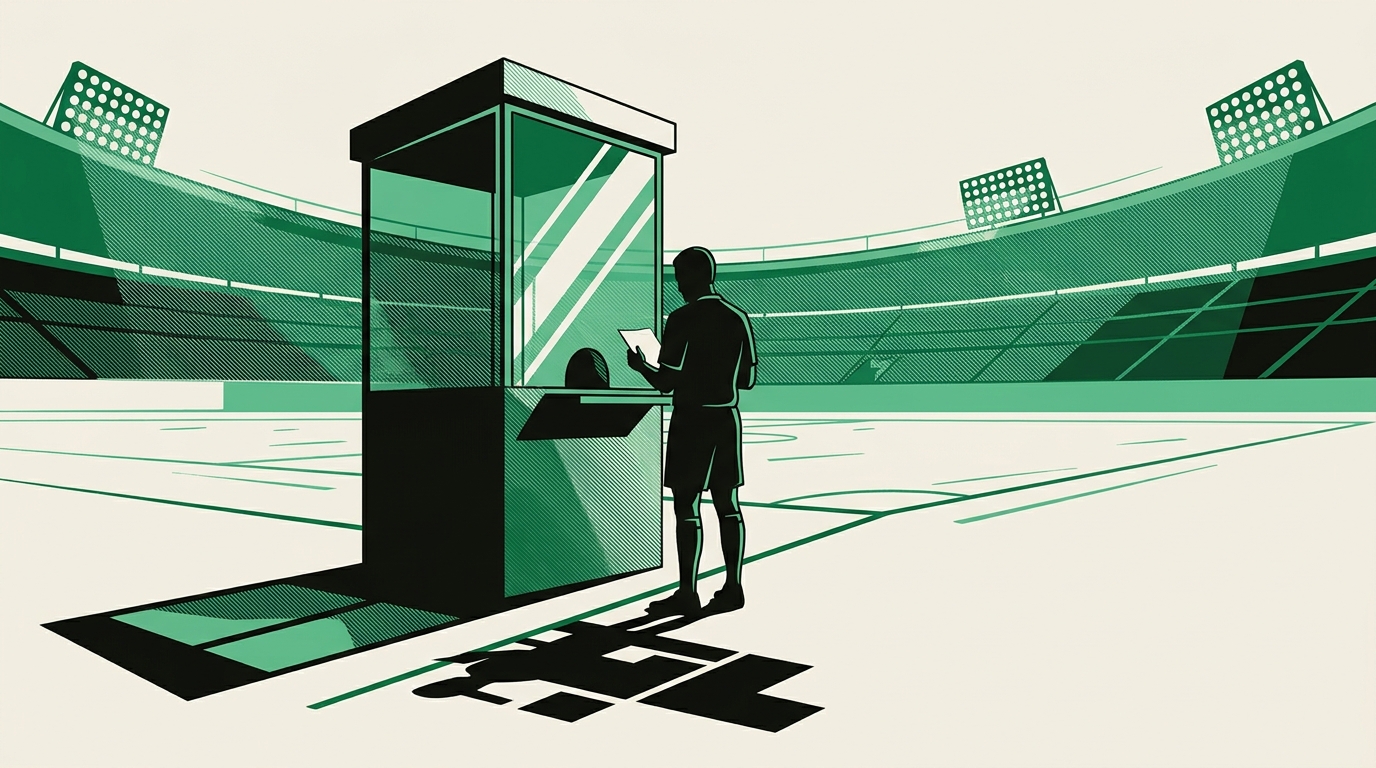
The most prominent individual affected is Omar Artan, a Somali referee who was subjected to an 11-hour immigration interview before being denied entry to the United States despite, in his own words, holding the “right papers” and the “right visa.” Artan was one of Fifa’s appointed match officials, not a spectator, not a journalist, not someone arriving on a tourist whim. He had been through the full accreditation process that Fifa administers for every World Cup. He had the documentation. He was still turned away.
The BBC’s report quotes Artan directly, and the composure with which he describes his experience is striking. Eleven hours in an immigration holding room is not a minor inconvenience. It is the kind of treatment that, applied to a European official from a Uefa member association, would have generated considerably more noise. The fact that it happened to a Somali referee, from a nation with a complicated relationship with US immigration policy, will not be lost on anyone paying attention.
What remains unclear is the precise legal basis on which Artan was ultimately denied entry. US Customs and Border Protection does not typically explain individual decisions publicly, and Fifa has been characteristically vague in its official response. Whether Artan’s passport, his nationality, or some other flag in the system triggered the extended interview has not been confirmed by any source. That ambiguity matters, because it determines whether this is an isolated administrative failure or evidence of a systemic pattern.
Iranian Officials and the Broader Pattern
Artan is not alone. The Guardian’s report identifies Iranian officials among those caught up in the restrictions, an unsurprising complication given that Iran remains under comprehensive US sanctions and its nationals face some of the most stringent entry scrutiny of any country. Iran qualified for the tournament. Their players, presumably, have been granted the necessary clearances. Whether the same applies uniformly to support staff, federation officials and media personnel is a different question.
The broader issue is structural. Previous World Cup hosts found workarounds. Brazil issued temporary visas to ticket holders in 2014. Russia and Qatar, both authoritarian states with rather more flexibility in bending bureaucratic rules, used Fan IDs and Hayya cards as de facto entry documents that bypassed conventional border processes. The United States cannot and will not do the equivalent. Its immigration architecture is federal, legally complex and, under the current administration, being actively tightened rather than relaxed. Fifa knew this when it awarded the tournament. The question of how seriously the organisation gamed out the consequences is one worth asking, even if the answer is uncomfortable.
What Fifa’s Position Actually Is
Fifa has issued statements. Statements, in this context, are doing a lot of heavy lifting. The organisation has confirmed it is working with US authorities to resolve individual cases, which is the diplomatic way of saying it is hoping the problem does not get worse before the opening match. There is no indication that Fifa has secured any formal exemption framework for accredited officials, the kind of blanket clearance that would actually solve the problem rather than manage it case by case.
This is not entirely Fifa’s fault, to be fair. Negotiating immigration policy with the Trump administration is not a straightforward task for any entity, and Fifa’s leverage is limited. The US wants this tournament. It has invested significant political capital in co-hosting it. But that desire has not translated into a streamlined entry process for the people Fifa needs on the ground to actually run the thing.
The practical risk is real. Referees are not interchangeable at 48 hours’ notice. If Artan’s case is replicated with other officials, and there is no particular reason to assume it will not be, Fifa faces a genuine operational problem. The 48-team format means 104 matches across three countries. That requires a substantial officiating pool. Losing accredited referees to immigration holds is not a scenario the tournament schedule was built to absorb.
The Wider Tournament Context
It is worth noting that the visa situation is unfolding against a backdrop of a tournament that, by most other measures, is generating genuine excitement. Scotland are in North Carolina preparing for their group stage campaign, a fact that would have seemed improbable to most Scottish supporters as recently as three years ago. The expanded format, whatever its tactical dilutions, has created qualification pathways for nations that historically watched from the outside.
Eight players over the age of 40 are reportedly set to feature across the tournament, according to The Independent a statistic that says something interesting about the longevity demands of modern elite football, though perhaps not something entirely flattering about squad depth in certain confederations. The football itself, when it begins, will be watched by enormous audiences. In the UK, the BBC and ITV have secured rights to broadcast all 104 games, meaning the tournament will be more accessible to British viewers than any previous edition.
None of that resolves the problem of officials being detained at airports. The two things coexist uncomfortably: a tournament of genuine scale and ambition, undermined at its administrative edges by a political environment its governing body either could not or chose not to fully anticipate.
What Happens Next
The immediate priority for Fifa is ensuring that every accredited official who needs to be in the United States is actually in the United States before their assigned matches. That sounds obvious. It should not require stating. The fact that it does is a reasonable measure of how badly this situation has been managed at the preparatory stage.
Longer term, the Artan case raises questions about how Fifa selects host nations and what due diligence it applies to entry requirements for officials from nations that may face disproportionate scrutiny. A Somali referee holding valid Fifa accreditation should not spend 11 hours in an immigration interview. A German referee in the same position almost certainly would not. That disparity is not incidental, it is the story.
For the 2026 World Cup to be remembered for the right reasons, Fifa needs to resolve these cases quickly and transparently. The football will take care of itself, broadly speaking. The off-pitch administration has been rather less reliable. Supporters in the UK wanting to follow every match can find broadcast information and streaming options at FootyGazette’s watch guide.
Omar Artan had the right papers. He had the right visa. He was still turned away. Until Fifa can explain exactly why, and demonstrate it has mechanisms to prevent it happening again, that fact sits at the centre of this tournament’s opening week like a question nobody in Zurich particularly wants to answer.
FAQs
Who is Omar Artan and why was he denied entry to the United States?
Omar Artan is a Somali referee appointed by Fifa to officiate at the 2026 World Cup. He was held for 11 hours at a US port of entry before being denied access despite holding valid accreditation and a US visa. The precise legal basis for the refusal has not been publicly confirmed by US immigration authorities.
Which other officials have been affected by World Cup 2026 visa restrictions?
Iranian officials have been identified among those facing difficulties, given Iran’s status under US sanctions. The full scope of affected individuals has not been comprehensively disclosed by Fifa, making it difficult to assess whether these are isolated cases or part of a wider pattern.
Has Fifa secured any exemption for World Cup officials from US immigration rules?
No formal blanket exemption framework has been publicly confirmed. Fifa has stated it is working with US authorities on individual cases, but there is no indication of a systemic solution equivalent to the Fan ID or Hayya card arrangements used in Russia and Qatar.
How does the 2026 situation compare to previous World Cup host countries?
Brazil, Russia and Qatar each implemented specific entry mechanisms, temporary visas, Fan IDs and Hayya cards respectively, that reduced border friction for tournament participants. The United States’ federal immigration system and the current administration’s enforcement posture make comparable workarounds significantly harder to implement.
Where can UK viewers watch all 104 World Cup 2026 matches?
The BBC and ITV hold broadcast rights in the United Kingdom and will show all 104 matches across their free-to-air platforms. For a full breakdown of how to follow the tournament, see our how to watch football online guide.
Could visa issues affect the quality of refereeing at the tournament?
Potentially, yes. Referees are assigned to specific matches through Fifa’s officiating programme and cannot simply be replaced at short notice. If further accredited officials face entry problems, it could disrupt Fifa’s officiating schedule at a tournament requiring coverage of 104 games across three countries.
