
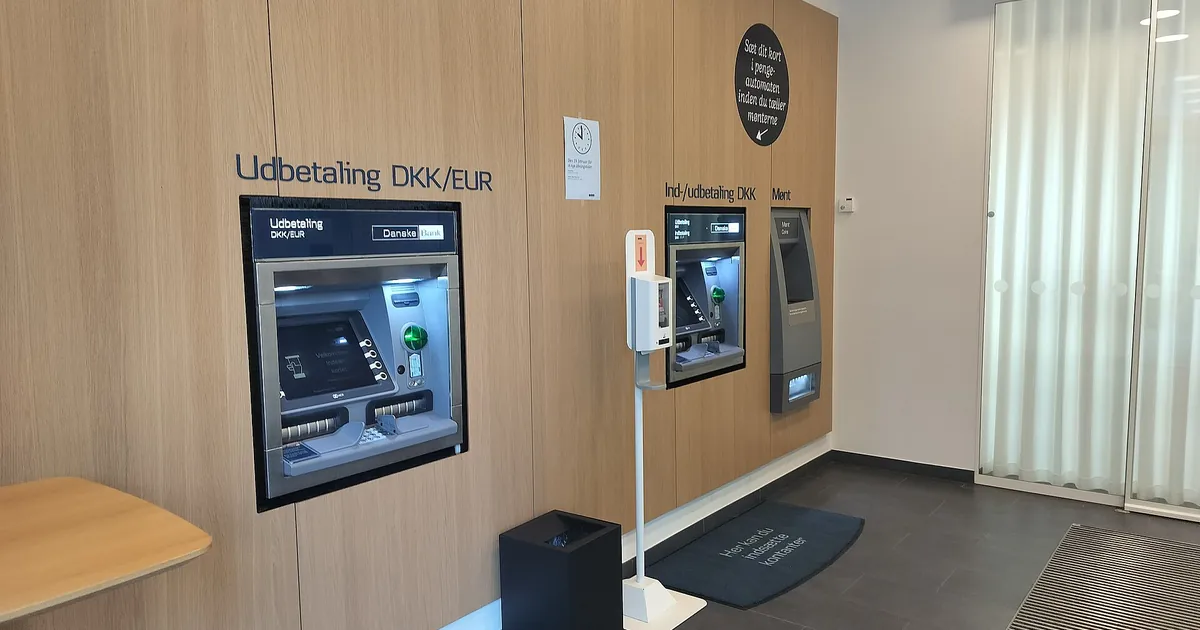
Banks in World Cup host cities have been told to flag suspicious transactions 'regardless of threshold'. Photo: T0m0k0l0v3r / Wikimedia Commons, CC0
6 min read · 1,317 words
Three days before a ball is kicked, one of the most aggressive enforcement build-outs around the tournament is not aimed at ticket touts or hooligans. It is aimed at money. The World Cup 2026 human trafficking crackdown now runs from a White House task force down through the Treasury Department’s financial-intelligence unit to the teller windows of banks in all eleven US host cities, and it is being assembled around a specific claim: that a mega-event draws a surge in sex and labour trafficking. That claim deserves scrutiny, because the best available evidence from past mega-events, including a previous World Cup, says the surge it is built to stop rarely arrives in the form everyone expects.
What the World Cup 2026 human trafficking crackdown actually is
On May 11, the Treasury’s Financial Crimes Enforcement Network (FinCEN) issued a formal Notice urging “increased vigilance by financial institutions located in and around cities hosting the 2026 FIFA World Cup.” The instruction to banks is unusually broad. FinCEN asks them to file Suspicious Activity Reports on potential trafficking “as soon as possible regardless of threshold”, meaning the usual dollar floor for reporting is waived, and to share information across institutions and even across borders. FinCEN Director Andrea Gacki framed financial institutions as “essential partners in the fight to counter human trafficking.” The Notice closes by tying the effort to Executive Order 14159, “Protecting the American People Against Invasion”, the administration’s immigration-enforcement order. That is the tell worth holding onto: the trafficking apparatus is wired directly into the immigration apparatus.
This sits on top of a federal coordinating layer, a White House FIFA World Cup 2026 task force stood up in 2025, and a visible local layer. Federal, state and local officials held a joint press conference in downtown Los Angeles to publicise the effort; Seattle has been training hospitality businesses to spot trafficking indicators; Miami-Dade has run its own awareness ramp-up. The public-facing message is consistent across cities: QR codes to hotlines, awareness campaigns, multi-agency “safety plans.” Nobody disputes the sincerity. The question is what the machine will actually catch.
The number the press conferences never cite
Here is the part the announcements leave out. The link between major sporting events and a spike in sex trafficking is one of the most thoroughly examined, and thoroughly undercut, claims in the field. Researchers at the University of Texas at Austin reviewed the body of scholarship and found that while online ads for paid sex can rise around any large gathering, concerts, car races, trade shows, the Super Bowl, the perennial poster child for the surge narrative, was “not distinct in this regard,” despite years of headlines calling it America’s biggest day for sexual slavery. The Polaris Project, which operates the National Human Trafficking Hotline, the very number FinCEN is directing banks to call, has publicly called the Super Bowl trafficking spike a myth. And this is not only a Super Bowl story: a peer-reviewed study of sex work around the 2010 World Cup in South Africa found no trafficking boom, summarising the visitors who actually arrived in one line, “there are a lot of new people in town, but they are here for soccer, not for business.”
As recently as February 2026, reporting from the Bay Area Super Bowl found law-enforcement officers and sex workers in rare agreement that the predicted surge was hype, trafficking is real and year-round, they said, but it does not spike on cue for the big game. FinCEN’s own Notice quietly concedes the underlying point: it describes trafficking as “an ever-present threat,” not an event-driven one. The surge framing is doing the rhetorical work; the evidence underneath describes a constant.
Why a crackdown built on a shaky premise still matters to you
This is the original problem, and it is a money story before it is a morality story. When you stand up a dragnet calibrated for a surge that behaves like background noise, the dragnet does not come back empty, it comes back full of the wrong things. The recurring pattern that post-event reporting on these operations describes is a lopsided one: anti-trafficking sweeps tend to generate arrests of consenting adults in the sex trade while turning up very few actual trafficking victims, a point the Bay Area reporting above made about this year’s Super Bowl operation. The apparatus justifies itself on the rescue and tends to run on the arrests.
Layer the financial surveillance on top and the collateral widens. Read FinCEN’s list of red-flag behaviours as an ordinary travelling fan rather than a victim: frequent short-notice travel, hotel-heavy spending, cash withdrawn and redeposited at ATMs, peer-to-peer transfers and prepaid or crypto cards, large “travel-related transactions.” That is also a fairly precise description of a group of friends pooling money for a once-in-a-lifetime trip across three or four host cities. With the reporting threshold waived, “regardless of threshold”, banks are being nudged to flag more, not less, and to flag it fast. Most of those reports will lead nowhere, but each one is a permanent financial-intelligence record attached to a name. For foreign visitors, the EO-14159 framing means those records sit inside an immigration-enforcement pipeline, not just a criminal one.
This is the same structural move we have seen elsewhere in this tournament’s security build-out: a genuine risk used to justify a broad, opaque, fan-facing apparatus. We mapped the physical version, the cameras, facial recognition and shifting stadium perimeters, in our look at the surveillance fans walk into and the labour-and-immigration version in our reporting on how FIFA’s accreditation rules collided with ICE. The trafficking crackdown is the financial face of the same regime: maximal data capture, minimal published rulebook, and the burden of false positives landing on visitors, migrants and sex workers rather than on the federation or the state that built it.
What would actually help, and what fans should know
The point is not that trafficking is fake or that vigilance is wrong. It is that an event-driven surge model misallocates the effort. The interventions researchers and frontline groups consistently endorse are unglamorous and year-round: funding for the National Human Trafficking Hotline, labour inspections in the industries where exploitation genuinely concentrates, and survivor services that do not depend on a tournament being in town. None of those need a 64-match deadline to work, and none of them generate a press conference.
For fans, the practical read is narrow but worth having. If your bank flags or freezes a transaction during the tournament, the host-city trafficking-vigilance push is a plausible reason, and the fix is mundane, be ready to verify travel and spending, and keep records of group payments. If you genuinely witness exploitation, the hotline number on those QR codes is real and worth calling. But treat the surge headlines for what the evidence says they are: a recurring moral panic that travels with big events, lands hardest on the most vulnerable people in the host city, and leaves behind an enforcement infrastructure that does not pack up when the trophy does. The World Cup will leave. The financial-intelligence files, and the precedent for waiving the threshold to create them, will not.
For more on how this tournament’s money and power keep bending the same way, read our World Cup 2026 guide.
Sources
- FinCEN, “FinCEN Issues Notice on the Threat of Human Trafficking During the 2026 FIFA World Cup” (fincen.gov, May 11, 2026)
- Polaris Project, “The Super Bowl Myth” (polarisproject.org)
- University of Texas at Austin, “Research Debunks Myth of Super Bowl Sex Trafficking, Improves Media Narrative” (news.utexas.edu)
- The Press Democrat, “Human trafficking is real. Bay Area sex workers and cops say the Super Bowl surge is myth” (pressdemocrat.com, February 5, 2026)
- Richter et al., “‘There are a lot of new people in town: but they are here for soccer, not for business’, the impact of the 2010 soccer World Cup on sex work in South Africa” (peer-reviewed, PMC)
- FOX 11 Los Angeles, “Cracking down against human trafficking at 2026 FIFA World Cup” (foxla.com)
