
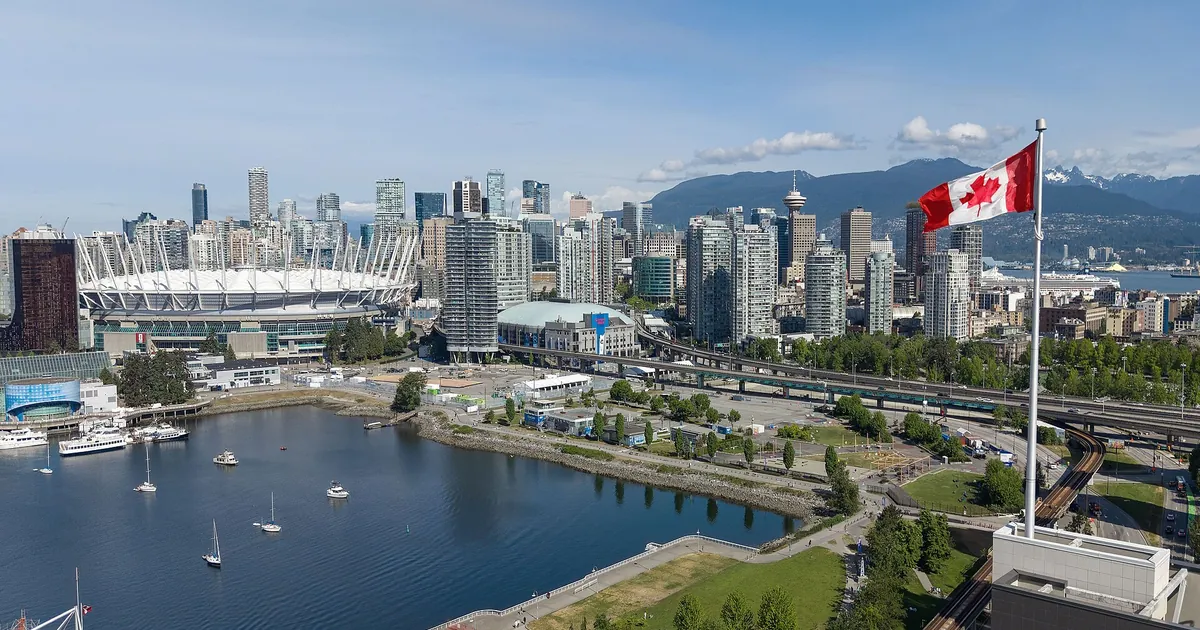
The Vancouver skyline — ranked the best 2026 World Cup host city for fans. Photo: Quintin Soloviev / Wikimedia Commons, CC BY 4.0
7 min read · 1,327 words
The short version. If you want the world cup 2026 best host city for fans the answer is not the glamour name on the fixture list, it is the city you can actually walk across. Vancouver tops the rankings (walkability 98, the highest of all 16 host cities), with Seattle the strongest US all-rounder and Atlanta the speed champion from the airport. Mexico City and New York/New Jersey win on atmosphere but lose on the last mile. The fan experience is decided by walkability, transit and bar density near the stadium, not by marquee status. This is the experience companion to our which host cities are getting fan costs right analysis.
Ask which is the world cup 2026 best host city for fans and most people will reach for a famous name, the city hosting the final, or the one with the biggest stadium. The data tells a quieter story. Across the studies that have scored all 16 host cities on accessibility, affordability, atmosphere, safety, weather, hotel availability, travel-to-stadium time, walkability, bar density and soccer culture, the cities that win are the connected ones: the places where a supporter can land, reach the ground, drink, eat and walk home without renting a car or surrendering an afternoon to a motorway. This piece ranks the venues on fan experience and explains why the connected city beats the famous one. For the wider tournament picture, see our complete guide to the 2026 World Cup.
The ranking: who is getting the fan experience right
Vancouver sits at the top. Its walkability score of 98 is the highest of any host city, the average run from airport to stadium is roughly 36 minutes, bar density around the ground is strong, food and drink prices are reasonable by World Cup standards and hotel availability is high. It is, on the numbers, the most complete fan city of the sixteen, a conclusion echoed when Vancouver was ranked the best host city for travelling supporters.
Seattle is the best US all-rounder, and not by accident. A walkability score of 89, bar density of 13.37 and hotel density of 2.51 sit alongside Lumen Field, a downtown stadium you can reach on foot from a hotel or a bar rather than from a distant car park. That combination is why Seattle was ranked the number one US host city for fans.
Atlanta is the speed champion. Its airport-to-stadium time of around 27 minutes is the fastest of any host city, walkability sits at a respectable 79, and there are roughly 6.26 bars per square mile around Mercedes-Benz Stadium, enough density to build an atmosphere before kick-off. Little wonder Atlanta charts high among the cities best suited to host. Where it ranks against the others on pure value is a separate question, examined in host cities ranked by value for money.
The famous names: atmosphere is not the same as experience
Mexico City and New York/New Jersey are the marquee fixtures of the tournament. Mexico City hosts the opener at the Estadio Azteca; New York/New Jersey hosts the final at MetLife Stadium. Both rank top for atmosphere, the noise, the history, the sense of occasion. Neither ranks top for all-round fan experience, and the reason is structural. Atmosphere is what happens inside the ground for ninety minutes. Experience is the other twenty-two hours of the day: the journey in, the journey out, the bar you found, the walk back to bed. A city can be electric on the pitch and exhausting everywhere else.
Original analysis: the last mile, not the marquee, decides it
Here is the argument the rankings imply but rarely state outright: fan experience is won or lost on the last mile. Not the stadium’s brand, not the city’s fame, not even the size of the crowd, but the short, repeated, unglamorous distances a supporter covers between the hotel, the bar and the turnstile. Those metres are where a tournament either feels like a festival or feels like a logistics exercise.
This is why walkability, transit and bar density near the ground are the metrics that actually predict satisfaction, and why brand and marquee status do not. A walkable stadium turns the pre-match hours into part of the spectacle: fans spill out of bars, the streets fill, strangers talk, and the occasion builds on foot. A car-dependent stadium in the suburban sprawl does the opposite, it isolates supporters in parking structures and shuttle queues, and the atmosphere has to be rebuilt from scratch once everyone is finally inside.
Run the host cities through that lens and the hierarchy inverts the celebrity one. Vancouver and Seattle outrank glamour names precisely because their grounds sit inside the city, reachable on foot and by transit, ringed by places to drink and eat. The famous venues whose stadiums sit in car-dependent sprawl pay a fan-experience tax that no amount of marquee status buys back. A “best host city” tool can rank the venues on their numbers; the editorial point is the why, the connected cities win because the last mile is where the experience lives. We take that argument to its hardest test in the last-mile problem at MetLife.
The cities that ask the most of fans
If the connected cities are the easy wins, it is worth naming the ones that will demand the most patience, not to dismiss them, but so fans arrive with the right expectations. The venues defined by car-dependent sprawl, where the stadium sits a long shuttle or rideshare from anywhere you would actually want to spend an evening, front-load the friction: you will spend more on transport, more time in queues, and more energy rebuilding the matchday buzz that a walkable city hands you for free. None of that makes them bad destinations, the football will be every bit as good, and some of the grandest occasions of the tournament are staged there. But it does change how you should plan. In a sprawl city, budget for the car or the surge fare, pick accommodation by its transit link to the ground rather than its proximity to a downtown you may rarely see, and treat the journey itself as part of the cost of the ticket. The value rankings bear this out: the cities that score well for fans on a budget tend to be the ones where you are not paying a premium simply to move around, a point examined in the value-for-money analysis above.
How to read the rankings before you book
Treat the headline rank as a starting point, not a verdict. If your priority is a complete, low-friction trip, weight walkability and travel-to-stadium time most heavily, that is where Vancouver, Seattle and Atlanta earn their places. If your priority is being inside the biggest occasions of the tournament, accept that Mexico City and New York/New Jersey ask more of you logistically in exchange for the history. And always check bar and hotel density around the specific stadium, not just the city centre; the two are not always the same place.
Frequently asked questions
Which is the best World Cup 2026 host city for fans?
On the combined rankings, Vancouver is the best all-round host city for fans, thanks to a walkability score of 98, the highest of all 16 hosts, an airport-to-stadium run of roughly 36 minutes, strong bar density and high hotel availability. Seattle is the strongest US alternative.
Why do Vancouver and Seattle rank above more famous host cities?
Because fan experience is decided by the last mile, walkability, transit and bar density near the stadium, rather than by a city’s fame. Vancouver and Seattle have walkable, well-connected grounds, while several marquee venues sit in car-dependent sprawl that isolates supporters before and after matches.
Which host cities are best for atmosphere?
Mexico City and New York/New Jersey rank highest for atmosphere, helped by hosting the opener at the Estadio Azteca and the final at MetLife Stadium respectively. They are unmatched for occasion, but rank lower on all-round fan experience once travel, walkability and the surrounding bar scene are weighed in.
