
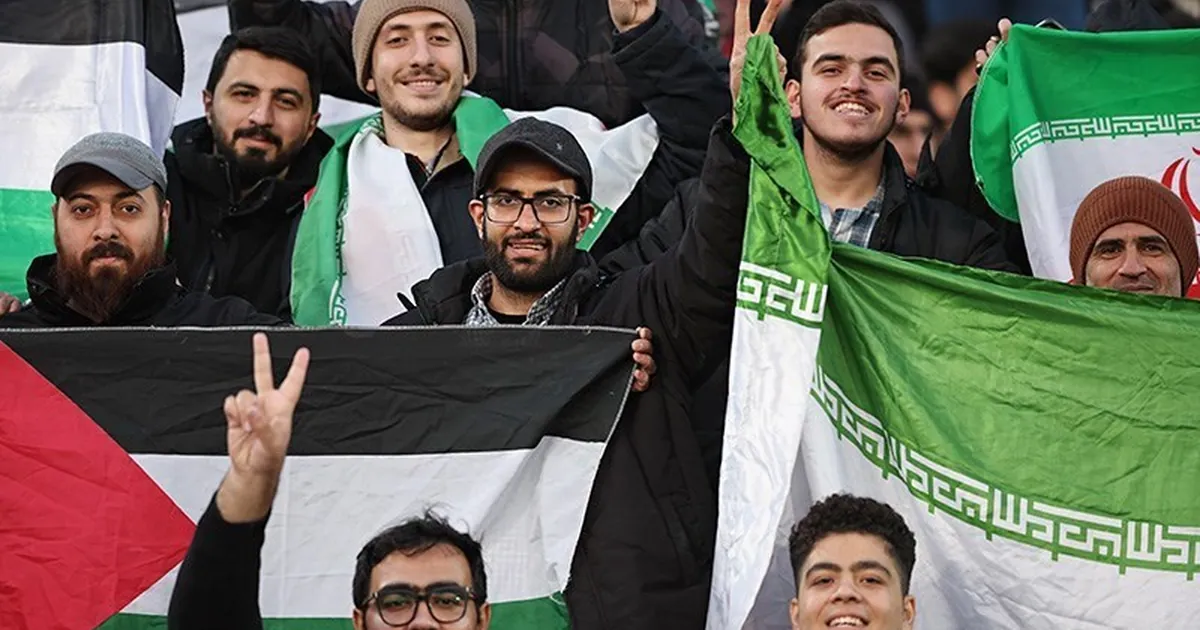
Iran in World Cup 2026 qualifying action. Photo: Meghdad Madadi / Wikimedia Commons, CC BY 4.0
5 min read · 1,084 words
Iran’s squad arrived in the United States carrying more baggage than any team at this World Cup. Visa delays. Restricted training sessions. A formal FIFA complaint filed on June 19 after Amir Ghalenoei’s squad found that credential approvals and entry permits were not the same thing. They navigated all of it, played three Group G matches at Seattle’s Lumen Field, and finished third with enough points to be a legitimate contender for one of the eight best-third-place spots that the 48-team format uses to fill out its round of 32.
Their final group match was on June 26. Egypt beat them. Their World Cup fate was then settled the following evening in Kansas City, in a match between Algeria and Austria, in a group Iran had never been part of.
Iran went home. They lost a match they weren’t in.
How the 48-Team Third-Place Race Actually Works
The format is simple on paper. Forty-eight nations, 12 groups of four. Top two from each group advance automatically, giving 24 of the 32 available knockout spots. To build a round of 32, FIFA needs eight more. It takes the eight best-ranked third-placed teams from across all 12 groups. The bottom four third-placed sides go home.
FIFA ranks those 12 third-placed teams by points, then goal difference, then goals scored. The problem: these figures don’t exist in a neutral environment. Iran’s goal difference was shaped by which three opponents they drew and what the specific scorelines were. Algeria’s goal difference was shaped by a completely different set of opponents in a completely different group. Ranking them against each other on those metrics and calling it a meaningful comparison is a stretch.
Still, the arithmetic ran. Iran had the points and goal difference they had. Algeria, finishing third in Group J, entered the calculation after their June 27 result with four points and a goal difference that cleared Iran’s. Algeria took a spot in the eight. Iran didn’t.
The Gijón Script, Revisited
FootyGazette published a structural analysis on June 24 of the draw incentive in the Algeria-Austria match. The 1982 Disgrace of Gijón: West Germany beat Algeria 1-0 in a suspiciously quiet match that advanced both West Germany and Austria at Algeria’s expense. It established what happens when two sides know going in that a draw is enough for both of them. FIFA’s standard response has been simultaneous final-group kickoffs, which removes the information asymmetry: Austria and Algeria couldn’t watch Jordan’s score and adjust accordingly.
What simultaneous kickoffs can’t fix is the incentive. Austria and Algeria both knew, before kick-off, that a draw would advance them both. What actually happened was a 3-3 result — two late equalisers, genuine six-goal drama, nothing resembling a quiet settlement. BBC Sport reported that both squads had to publicly defend the draw against widespread conspiracy theories, which suggests suspicion ran deep enough that the players addressed it in post-match interviews. The suspicion makes sense structurally, even if the match itself didn’t deliver the fix anyone assumed.
The conspiracy theories are wrong. The structural logic behind them isn’t.
Two Design Failures, Not One
The Gijón incentive is one format failure: when a group’s standings create a scenario where two teams benefit equally from drawing, you’ve built a collusion window. FIFA’s simultaneous-kickoff rule addresses it partially.
The best-thirds race is a different design failure, and it’s the one that actually ended Iran’s campaign. In a 12-group format where eight of 12 third-placed teams advance to the knockout stage, a team’s qualification is partly determined by results in groups they’ve never been part of. Iran’s goal-difference ceiling was fixed the moment Egypt’s final group match ended on June 26. The margin separating them from Algeria’s third-place record was settled by goals in Kansas City between teams Iran had never faced.
This is structural, not incidental. The 48-team format distributes 32 knockout spots partly through a mechanism that introduces cross-group arithmetic dependencies. Under the old 32-team format, your group-stage fate was determined entirely by your own six points of results. Under the 48-team format, four of those 32 spots are assigned by ranking 12 third-placed teams against each other, comparing teams that played different opponents in different conditions across three weeks of group football. It is not a meaningful comparison. It’s a tiebreaker that decides who goes home.
The analogy that fits: finishing a domestic league season in third place, then being told your European spot depends on how you compare to the third-placed finishers of 11 other leagues, each of which played their final matches at different times, against different opposition. You had no influence on those results. Their outcomes shaped yours anyway.
Iran’s Exit, in Full
Iran played their three matches. They finished third in Group G behind Belgium and Egypt. Their last result, a loss to Egypt on June 26, was their final competitive act at this tournament. The Guardian reported that Iran and South Korea both missed out on the last 32 in what it called a “dramatic third-place race,” with Iran’s elimination not confirmed until the following day, once Group J’s final fixtures resolved.
The tournament arc is an uncomfortable one to summarise. Iran spent weeks battling to get their players into the country. The federation’s June 19 FIFA complaint (documented in our June 27 piece) outlined credentialing restrictions, halved training allocations, and a formal challenge to how FIFA’s political-neutrality pledges interact with host-nation entry law. They navigated that and still played their group stage. They went home the next evening after watching a match in Missouri.
There was no elimination match, no penalty shootout, no loss to rage against. Their exit came via cross-group arithmetic. From a sporting standpoint, that doesn’t process neatly.
What It Means Going Forward
The 48-team World Cup has produced the most competitive group stage in the tournament’s history. More nations, more stories, more legitimate upsets from teams that wouldn’t have qualified under the previous format. The 2026 World Cup guide tracks all of it.
None of that changes the structural problem the best-thirds mechanism carries. Four teams per tournament will exit knowing their elimination was partly determined by events in groups they never played in, couldn’t influence, and in some cases found out about only after their own group’s matches were already finished.
Algeria beat the conspiracy theories with a genuine six-goal match. The format’s deeper problem — the cross-group elimination lottery that nobody quite talks about — wasn’t solved by anything that happened on the pitch in Kansas City.
That problem produced its clearest victim at this World Cup. Iran didn’t lose in a match they played. They lost in one they were never allowed to enter.
