
9 min read · 1,795 words
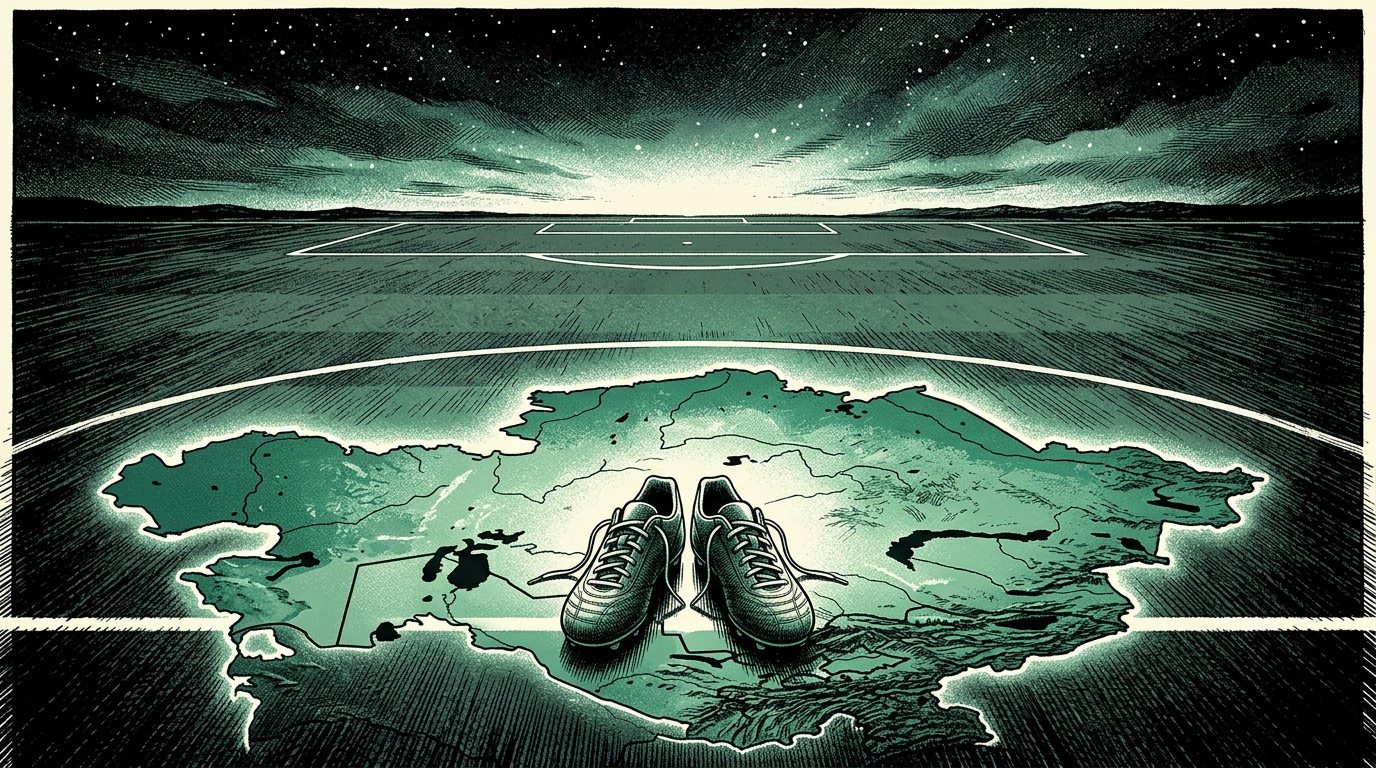
When Uzbekistan’s players lined up against Colombia in their opening World Cup fixture, they were not simply representing a football team. They were carrying the weight of a region that has never before stood on the sport’s grandest stage. Central Asia, for so long a blank space on the world football map, finally had a flag planted in North America. That moment deserves more than a footnote.
The result, a defeat to Colombia, was perhaps predictable on paper. Yet the significance of Uzbekistan’s presence at this tournament stretches far beyond a single scoreline. BBC Sport has rightly labelled them the “nearly men of Asian football”, a tag that captures years of close calls and heartbreak before this breakthrough. Understanding how they finally crossed the threshold tells us something important about the shifting geography of the global game.
A Region Finally Heard
Why has Central Asia taken so long to qualify?
The AFC qualification process has historically funnelled resources and attention towards East Asia and the Gulf states. Nations like Japan, South Korea, Saudi Arabia and Iran have dominated the continent’s World Cup berths for decades, leaving Central Asian sides to compete fiercely for scraps. Uzbekistan, despite a population of nearly 37 million and a genuine football culture rooted in the Soviet sporting tradition, kept falling just short. They reached the third round of AFC qualification multiple times without converting those campaigns into a ticket to the finals.
Part of the problem was structural. Uzbek football suffered from the same post-Soviet institutional fragility that affected much of the region: underfunded academies, administrative instability and a domestic league that struggled to retain its best talent. Players who showed promise often left for Russia or other post-Soviet leagues, sometimes losing the thread of their international development in the process.
What changed to make qualification possible?
The shift began with a deliberate investment in youth infrastructure roughly a decade ago. The Uzbekistan Football Association, with backing from the state, began building a proper pyramid of age-group football. The results showed quickly at junior level: Uzbekistan’s under-23 side became a genuine force in Asian football, winning the AFC U-23 Asian Cup in 2022. That generation, players now in their mid-twenties, formed the spine of the senior squad that eventually made it to North America.
Equally important was the appointment of a coaching setup willing to impose tactical discipline without sacrificing the technical flair that Uzbek football has always possessed. The team that qualified played a compact, organised style with genuine attacking ambition, capable of pressing high and transitioning quickly. These are not the hallmarks of a side simply hoping to survive; they are the hallmarks of a team built to compete.
The expanded 48-team World Cup format also played a role. With eight AFC berths available rather than the previous four or four-and-a-half, the ceiling for Asian football was raised considerably. Uzbekistan benefited from that expansion, but it would be reductive to suggest they simply walked through an open door. They still had to navigate a brutal qualification campaign against quality opposition.
The Colombia Defeat in Context
What did the opening match reveal about Uzbekistan?
BBC Sport’s match report confirmed that Luis Diaz scored as Colombia made a winning return to the World Cup, defeating the debutants. The result was not a shock, but the manner of Uzbekistan’s performance will matter more to their supporters than the final score. Colombia are a side with genuine quality and considerable World Cup experience. Facing them in a first-ever finals appearance, in front of a global audience, is an examination that would test any emerging nation.
What the match revealed, according to early assessments, is that Uzbekistan are not here merely to make up the numbers. They pressed when they could, they organised defensively with purpose, and they showed the kind of collective spirit that suggests a group of players who believe in what they are doing. Defeat was the outcome, but embarrassment was not.
How does this compare to other debutant performances?
History tells us that World Cup debutants rarely win their opening fixture. The psychological weight of the occasion, combined with the physical demands of facing a side already accustomed to this environment, tends to tell. What matters for Uzbekistan is how they respond in subsequent group matches. The nations that have used debut tournaments as genuine springboards, rather than one-off appearances, are those that treated every minute of every game as learning material.
The broader talking points from the first week of the tournament suggest this World Cup has already produced its share of surprises and upsets. Uzbekistan’s presence is itself part of that narrative of disruption, a reminder that the old hierarchies of world football are not as fixed as they once seemed.
What This Means for Asian Football
From my perspective, having covered Spanish and Latin American football for years before turning my attention more broadly to the global game, the Uzbekistan story resonates because it mirrors patterns I have seen elsewhere. The nations that break through at World Cups are rarely those with the most money or the most famous names. They are the ones that build patiently, invest in the right infrastructure, and find a generation of players who arrive at the right moment with the right mentality.
Spain’s own golden generation in the late 2000s was the product of a decade of La Masia investment and a philosophical commitment to a particular style of play. Uzbekistan’s journey is obviously on a different scale, but the underlying logic is similar. You build the foundation, you wait for the generation, and then, if everything aligns, you get your moment.
For the AFC as a whole, Uzbekistan’s qualification is significant because it diversifies the continent’s representation. Asian football at the World Cup has tended to mean the same handful of nations. A Central Asian side reaching the finals opens a conversation about which other nations in the region might follow. Kazakhstan, Tajikistan and Kyrgyzstan all have growing football programmes. They will have watched this qualification campaign closely.
The World Cup has always been football’s most powerful advertisement for the game itself. Uzbekistan’s players, competing on this stage, will inspire a generation of children in Tashkent and Samarkand who previously had no template for what was possible. That is not a small thing.
The Players Carrying the Dream
Uzbekistan’s squad is built around a core of players who have spent the past several years developing in Asian club football and, increasingly, in European leagues. The AFC U-23 generation that won continental honours has matured into senior internationals with genuine technical quality. Several key players ply their trade in leagues that give them exposure to high-level tactical demands week in, week out.
The captain’s role in this squad carries particular cultural weight. In Uzbek sporting culture, as in much of Central Asia, the senior figure in a group carries a responsibility that goes beyond the purely tactical. The captain is expected to be a bridge between the coaching staff and the dressing room, a communicator of values as much as a football leader. The players who have taken on that role in this squad have done so understanding the historical nature of what they are attempting.
It is also worth noting the diaspora dimension. A number of players in the Uzbek setup have connections to the post-Soviet diaspora in Russia and other countries. The question of identity and representation in Central Asian football is genuinely complex, and Uzbekistan’s federation has navigated it with more sophistication than some outsiders might expect. The squad that reached North America is a genuinely cohesive unit, not a collection of individuals pulled together by geography alone.
Looking Ahead: Can Uzbekistan Surprise Anyone?
The honest answer is that progressing from the group stage would represent an extraordinary achievement. The expanded format does mean that third-place finishers can advance, which gives every team in every group a mathematical lifeline. Uzbekistan will need to perform well in their remaining fixtures and hope that results elsewhere align in their favour.
But the more interesting question, from a long-term perspective, is what comes after this tournament regardless of the result. The nations that have used World Cup appearances as genuine catalysts for growth are those that treated the experience as an investment rather than a destination. If Uzbekistan’s federation is serious about building on this moment, they will be studying every aspect of their preparation and performance with a view to returning in 2030.
For anyone wanting to follow Uzbekistan’s remaining matches and the broader tournament, our guide to watching football online in 2026 covers the options available. You can also check FootyGazette’s watch page for coverage details.
Central Asia has arrived at the World Cup. The “nearly men” tag, as BBC Sport framed it, is now history. What Uzbekistan do with this moment is the story that the next few weeks will write.
FAQ
Is Uzbekistan really the first Central Asian nation at a World Cup?
Yes. No other nation from Central Asia, which includes Kazakhstan, Kyrgyzstan, Tajikistan, Turkmenistan and Uzbekistan, has ever qualified for the FIFA World Cup finals before this tournament. Uzbekistan’s qualification is a genuine first for the region.
How did Uzbekistan qualify for the 2026 World Cup?
Uzbekistan navigated the AFC qualification rounds, benefiting in part from the expanded 48-team format that gave Asia eight guaranteed berths. Their qualification was built on a decade of youth development investment and a tactically organised senior squad drawn largely from the generation that won the AFC U-23 Asian Cup in 2022.
Who did Uzbekistan play in their opening World Cup match?
Uzbekistan faced Colombia in their opening group fixture. Colombia won the match, with Luis Diaz among the scorers, as the South Americans made a winning return to the World Cup stage.
What is the standard of football in Uzbekistan?
The Uzbek Super League is the country’s top domestic competition and has grown in quality and organisation over the past decade. Several Uzbek internationals also play abroad, including in Asian leagues and, increasingly, in European football, which has raised the overall standard of the national team pool.
Could Uzbekistan qualify for future World Cups?
The infrastructure investment and the young age profile of the current squad suggest Uzbekistan are not a one-tournament story. If the federation maintains its development pathway and the current generation continues to improve, further World Cup appearances are a realistic ambition rather than a distant hope.
Where does Uzbekistan’s World Cup story fit in the broader context of Asian football?
It represents a genuine diversification of Asian football’s global presence. For years, the AFC’s World Cup representatives came from a narrow group of nations. Uzbekistan’s arrival signals that the continent’s football power is spreading, with implications for how the AFC allocates resources and attention across its member associations going forward.
