7 min read · 1,426 words
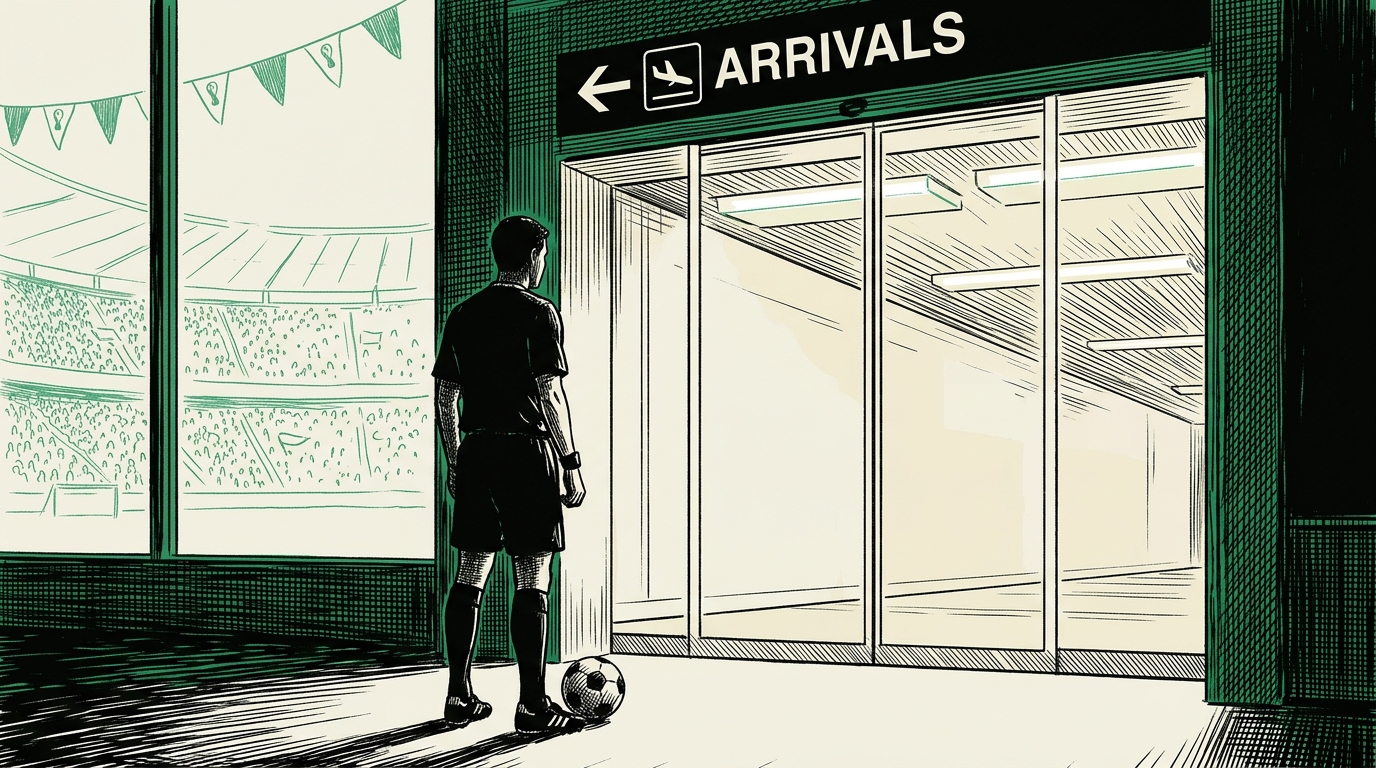
Two days before the opening whistle of the 2026 World Cup, the tournament’s most pressing story had nothing to do with a 4-3-3, a press trigger, or an expected-goals model. It concerned a man with a valid visa, a boarding pass, and a career’s worth of credibility being turned away at Miami International Airport.
Omar Artan, Africa’s Referee of the Year for 2025, a Somali official on the cusp of becoming the first referee from his nation to officiate at a men’s World Cup, was denied entry to the United States last Saturday. The Trump administration has since confirmed the decision, citing what it describes as links to suspects associated with a “terror organisation.” Artan and FIFA have not publicly accepted that characterisation. The tournament hasn’t kicked off yet and already the host nation is the story, and not in the way any organising committee would have scripted.
What We Know, and What Remains Contested
The verified facts, per reporting from The Independent are these: Artan held a valid US visa. He arrived at Miami International Airport on Saturday. He was refused entry on grounds described officially as “vetting concerns.” The Trump administration subsequently elaborated, claiming the denial was connected to suspected associations with individuals linked to a terror organisation, a claim that is, at this point, unverified and disputed.
What is not in dispute is the significance of what Artan stood to achieve. As The Independent’s World Cup desk reported he was on the verge of making history, the first Somali referee at a men’s World Cup. That context matters. This was not a peripheral figure. Africa’s Referee of the Year is not an honorary title handed out at a regional dinner. It reflects peer assessment, FIFA evaluation, and sustained performance across continental competition.
The disagreement sits in the gap between the administration’s stated justification and the absence of any corroborating public evidence. Governments are not obliged to disclose intelligence reasoning at a press conference, of course. But when the individual in question is a FIFA-credentialed official with a valid visa, operating in a role that requires extensive background vetting from football’s own governing body, the burden of plausibility rests heavily on those making the accusation.
A Pattern, Not an Isolated Incident
Artan’s case would be troubling enough in isolation. It is not isolated. The Independent catalogued a growing list of individuals who have encountered US visa and entry difficulties in the build-up to the tournament, including Iranian supporters attempting to attend their nation’s matches. The list, the report noted, was still growing two days before the opening game.
This is the operational reality of hosting a 48-team World Cup, the expanded format that FIFA introduced precisely to broaden global participation, in a country whose immigration enforcement posture has tightened considerably. The tension between those two facts is not subtle. You cannot simultaneously market a tournament as a celebration of global football and operate border controls that prevent officials, supporters, and credentialed personnel from entering the country. The contradiction is structural, not incidental.
For a fuller picture of what the 2026 tournament involves logistically and politically, the FootyGazette World Cup guide covers the format, venues, and the broader context of a genuinely unprecedented edition of the competition.
Ian Wright and the Court of Public Opinion
Into this came Ian Wright, which is to say: into this came a significant amplifier. The Independent reported that the former Arsenal forward and television pundit posted an Instagram video in which he described the situation as a “World Cup of chaos,” cutting what the paper called a “forlorn figure.” Wright’s frustration was evident and, given the circumstances, understandable.
Whether or not you think Instagram videos constitute meaningful political commentary, and reasonable people disagree, the reach Wright commands means the story travelled well beyond football’s specialist press. That is not nothing. FIFA will be aware of it. Sponsors will be aware of it. The US Soccer Federation, which has invested considerable energy in positioning this tournament as a soft-power moment for American football, will certainly be aware of it.
The “World Cup of chaos” framing may be a touch theatrical for my taste, but the underlying frustration is legitimate. When a tournament’s pre-competition narrative is dominated by border denials rather than tactical previews, something has gone wrong in the organisation of the event, even if the specific immigration decisions are being made by an entity entirely outside FIFA’s jurisdiction.
FIFA’s Position and the Governance Question
This is where it gets genuinely complicated. FIFA awarded the 2026 World Cup to a United States, Canada, and Mexico bid in 2018. The host agreement, as with all such arrangements, involves commitments around visa facilitation and freedom of movement for accredited participants. Whether those commitments carry any enforceable weight against a sovereign government’s immigration decisions is, to put it charitably, unclear.
FIFA has not, at the time of writing, issued a statement that could be described as robust on the Artan situation. That reticence is itself informative. The governing body is in an awkward position: it needs the United States, its infrastructure, its commercial market, its television deals, and it simultaneously has a credentialed official being turned away at the border on grounds that have not been substantiated publicly. Saying nothing avoids a confrontation. It also looks, from the outside, rather like an abdication.
For context on how the tournament is being broadcast and distributed globally the commercial scale of this edition makes FIFA’s reluctance to antagonise the host nation entirely predictable, if not particularly admirable.
What Happens Next
Artan’s immediate future is uncertain. Whether FIFA can facilitate an alternative arrangement, a different point of entry, an expedited review, diplomatic intervention, is not yet clear. What is clear is that his absence from the tournament would represent a genuine loss: not symbolically, but practically. Referees at this level are selected on merit. Replacing a Referee of the Year at 48 hours’ notice is not a straightforward administrative exercise.
The broader question, whether the United States can host a tournament of this scale without its immigration apparatus creating further incidents, will presumably be answered across the next month. The early evidence is not encouraging. A valid visa, it turns out, is a necessary but not sufficient condition for entry. That is useful information for anyone planning to attend, and deeply problematic information for a tournament predicated on global participation.
The summer’s defining storylines were always going to be shaped by what happens on the pitch. But the opening chapter has been written off it, at an airport desk in Miami, where a man with every right to be there was told he could not come in.
Frequently Asked Questions
Who is Omar Artan and why was his World Cup appointment significant?
Omar Artan is a Somali football referee who was named Africa’s Referee of the Year for 2025. His selection for the 2026 World Cup would have made him the first Somali referee to officiate at a men’s World Cup, a historic milestone for both Somali football and African officiating more broadly.
Why was Omar Artan denied entry to the United States?
Artan was turned away at Miami International Airport on Saturday despite holding a valid US visa. The Trump administration subsequently stated that the denial was linked to “vetting concerns” and alleged associations with suspects connected to a terror organisation. Those claims have not been publicly substantiated, and neither Artan nor FIFA has accepted that characterisation.
Is Artan’s case the only World Cup border incident?
No. The Independent reported a growing list of individuals, including Iranian supporters, who have faced US visa and entry difficulties ahead of the tournament. The pattern suggests a systemic tension between the tournament’s global ambitions and the current US immigration enforcement posture.
What has FIFA said about the situation?
At the time of writing, FIFA has not issued a substantive public statement on Artan’s denial of entry. The governing body is in a structurally difficult position, given its commercial and logistical dependence on the United States as host nation.
Could this affect the World Cup’s legitimacy or organisation?
It raises serious questions about the host agreement’s practical enforceability and FIFA’s ability to guarantee freedom of movement for accredited officials and supporters. Whether further incidents occur across the tournament’s duration remains to be seen, but the pre-competition period has already generated significant reputational damage for the host nation and, by association, for the event itself.
Where can I watch the 2026 World Cup?
Coverage options vary by territory. For details on how to follow the tournament, visit the FootyGazette guide to watching football online in 2026 which covers the main broadcast arrangements across different regions.
