
9 min read · 1,943 words
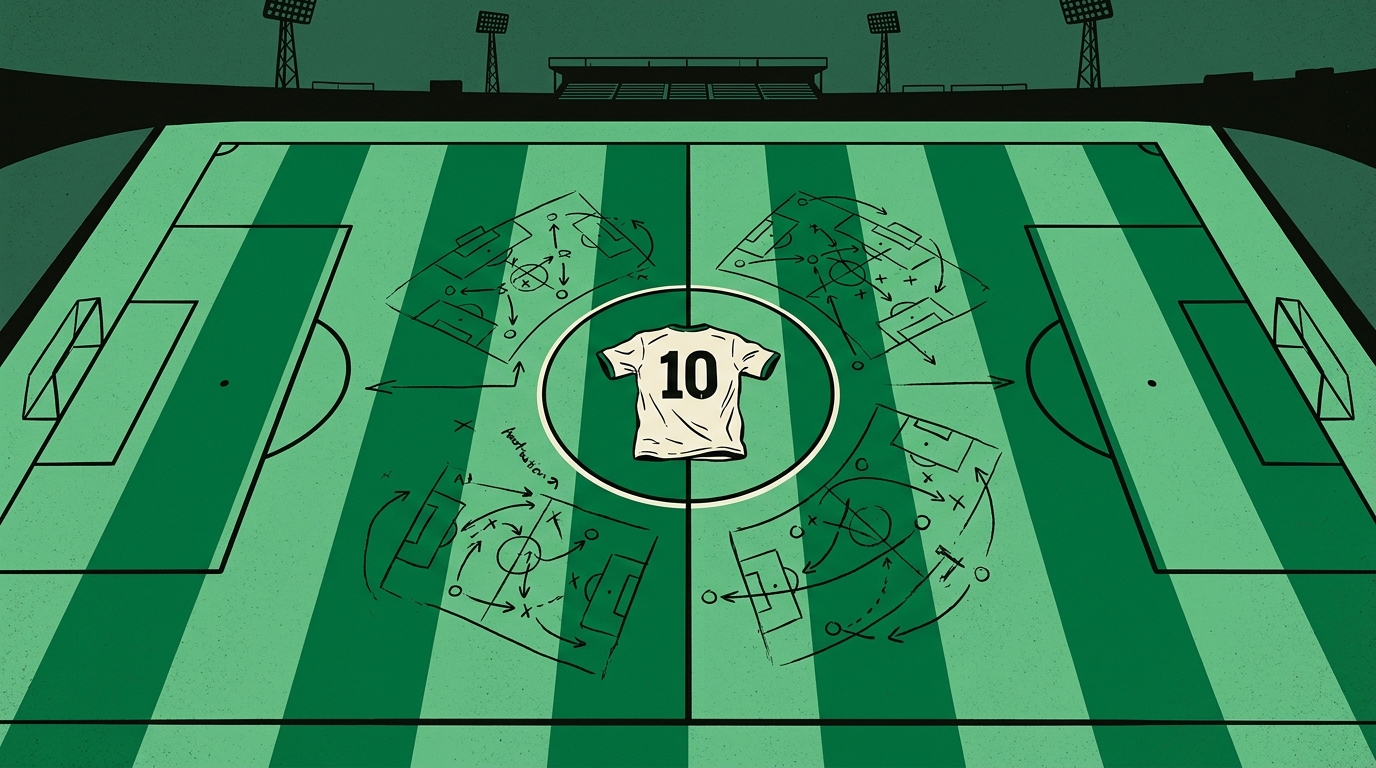
There is a particular kind of football decision that tells you more about the culture surrounding a national team than it does about the coach making it. Carlo Ancelotti selecting Neymar for Brazil’s 2026 World Cup squad is one of those decisions. It is not, on the available evidence of the past two years, a straightforwardly tactical choice. It is, as Jonathan Wilson argued in the Guardian an act of narrative management, and a revealing one at that.
Meanwhile, across the Americas, Mauricio Pochettino has been quietly finalising a USMNT squad that contains its own selection controversies, the Democratic Republic of Congo are preparing for Group K fixtures in Houston against a backdrop of genuine geopolitical concern, and the secondary ticket market is already telling us which nations have captured the imagination of the travelling public. The tournament has not kicked off, and already there is plenty to unpick.
The Neymar Problem: Narrative Versus Evidence
Neymar is 34. He has played a combined total of roughly 400 minutes of competitive football since rupturing his ACL in October 2023. That is not a hot streak being interrupted by injury; that is a player whose body has, with some persistence, been refusing the demands placed upon it. Ancelotti is not a naive man, he is, by Champions League titles alone, the most decorated club manager in the history of the competition, which makes the selection all the more instructive about the pressures operating around the Seleção.
The Guardian’s Wilson draws the obvious comparison with Lionel Messi at Qatar 2022, and it is worth examining precisely because it illuminates the gap rather than the similarity. Messi arrived in Qatar having won the Copa América with Argentina in 2021, having finished the previous club season with 21 goals and 20 assists for PSG, and having spent the preceding decade as arguably the best player on the planet. His body was ageing; his football brain and technical execution remained elite. Neymar’s situation is categorically different. The ACL injury, followed by a second significant setback, has robbed him of the explosive directness that made him dangerous. At 34, with that mileage on the clock, recovery to genuine international level is possible but not probable.
What the selection does confirm is something Brazilian football has wrestled with since the mid-2000s: the search for a figure who can carry the emotional weight of the Seleção the way Diego Maradona once did for Argentina, and the way Messi eventually did. Brazil have extraordinary squad depth, Vinícius Júnior, Rodrygo, Endrick, but none of them yet carries the totemic status the Brazilian public appears to require. Neymar, creaking or otherwise, still fills that role in the popular imagination. Ancelotti, it seems, has decided that managing expectations around a 34-year-old’s fitness is a more tractable problem than managing a nation’s existential anxiety about its footballing identity.
Whether Neymar features meaningfully in the tournament remains genuinely uncertain. A squad inclusion is not a guarantee of minutes, and Ancelotti is pragmatic enough to manage his deployment carefully. The more interesting question is what happens to Brazil’s tactical shape if Neymar does play. Ancelotti has generally preferred a back-three structure when his wide forwards need licence to roam, but the specific demands of Neymar, who operates best in half-spaces with the ball at his feet and time to think, may require adjustments that compromise the balance Vinícius provides on the opposite flank. You cannot build a system around two players who both want the same pockets of space.
Pochettino’s USMNT Selections: The Choices That Define a Philosophy
Across the Atlantic, Mauricio Pochettino has been making his own statement selections. The Guardian’s report on the USMNT’s full 26-man roster confirms that Club América winger Alejandro Zendejas is included, while Lyon’s Tanner Tessmann, a defensive midfielder who had been in reasonable form in Ligue 1, has not made the cut.
The Tessmann omission is the one that will generate the most debate among the American football community. Pochettino has, throughout his managerial career, placed considerable value on midfielders who can control tempo and protect the defensive line, think of how he used Moussa Dembélé at Spurs, or the importance of Jorginho-type profiles in his tactical thinking. Tessmann, at 23, fits that profile reasonably well. His absence suggests either that Pochettino has concerns about his defensive positioning at international level, or that he simply prefers the players he has ahead of him in that role.
Gio Reyna’s inclusion is the more emotionally charged decision, given the circumstances of his Qatar 2022 experience. Reyna is genuinely talented, at his best, he is one of the more technically accomplished players available to the USMNT, and his form at Borussia Mönchengladbach this season has been sufficiently consistent to justify the call. Diego Luna’s omission, meanwhile, reflects a broader truth about Pochettino’s approach: he appears to value versatility and defensive contribution from his attacking midfielders, and Luna’s profile is more purely offensive.
The USMNT are, as hosts, one of the more intriguing propositions at this expanded 48-team tournament. Pochettino has had time to implement his ideas, the squad has genuine quality in the final third, and home advantage in a nation where football’s profile has risen considerably since 1994 is not nothing. Whether the squad selection reflects a coach backing his convictions or one managing political pressures of his own is a question that will only be answered once the group stage begins.
Congo in Houston: Context That Cannot Be Ignored
The Democratic Republic of Congo’s preparation for their World Cup campaign has attracted attention for reasons entirely unrelated to football. The Independent reports that the Congolese squad will be based in Houston for their Group K fixtures, and that their preparations remain unchanged despite a US government health advisory related to an Ebola outbreak. Congolese football officials have indicated that the situation is being monitored but that there is no intention to alter travel or preparation plans.
This is, to put it plainly, a situation that deserves more attention than it has received in the mainstream football press. Players and staff travelling from an affected region, operating under the scrutiny of US health authorities, preparing for a tournament in front of crowds of tens of thousands, the logistical and welfare considerations are not trivial. FIFA’s tournament operations team will presumably have protocols in place, but the specifics of those protocols have not been made public. It is the sort of story that tends to be treated as peripheral until it is not.
On the football itself, Congo’s qualification was a genuine achievement. Their squad contains players operating at a reasonable European level, and Group K will be competitive. But the circumstances surrounding their preparation are a reminder that the 2026 World Cup is a genuinely global event in ways that create complications the organisers are still working through.
What the Ticket Market Tells Us
There is a reliable, if imprecise, way of measuring which nations have captured the tournament’s emotional centre of gravity before a ball is kicked: look at the secondary ticket market. The Independent’s report on resale pricing notes that tickets for Colombia’s matches are commanding prices in excess of $2,000 on the secondary market, even as some resale tickets for other nations have dropped to a few hundred dollars.
Colombia’s fanbase in North America is substantial, particularly in cities like Miami, New York, and Los Angeles, all of which are hosting matches. The demand reflects both the quality of the Colombian squad, James Rodríguez, Luís Díaz, and a generation of genuinely exciting players, and the geographic reality of the host nations. For Colombian supporters in the United States, this is the closest thing to a home tournament they are likely to experience, and the pricing reflects that.
The broader picture the ticket market paints is one of uneven enthusiasm. Some matches will be played in front of partisan, atmospherically intense crowds; others, particularly in the expanded group stage where mismatches are more likely under the 48-team format, may feel rather more like pre-season friendlies. That is one of the structural challenges of the new format that organisers have not fully addressed.
The Bigger Picture Heading Into the Tournament
What connects these disparate stories, Neymar’s recall, Pochettino’s selections, Congo’s circumstances, the ticket market, is that they all illuminate the gap between the World Cup as a sporting event and the World Cup as a cultural, political, and commercial phenomenon. Ancelotti is not just picking a football squad; he is managing a nation’s relationship with its own mythology. Pochettino is not just selecting 26 players; he is making an argument about what American football can be. Congo’s officials are not just preparing a team; they are navigating a set of circumstances that most football administrators never have to consider.
The football itself, when it arrives, will be the thing that matters most. Brazil have the squad to be genuine contenders regardless of what Neymar contributes. The USMNT have the tools to progress from their group and cause problems in the knockout rounds. And the tournament’s expanded format, for all its structural awkwardness, will produce moments that justify the whole enterprise.
For a fuller look at how the summer’s major storylines are shaping up before a ball is kicked, the FootyGazette summer 2026 storylines guide is worth your time. And for those trying to work out how to follow the action across three host nations and a schedule that will test even the most committed viewer, our World Cup 2026 how-to-watch guide covers the broadcast landscape in detail. If you are looking for a single place to follow matches, our watch page has the relevant information.
The tournament starts in a matter of weeks. The squad selections, the ticket prices, the health advisories, and the tactical debates will all fade into background noise once the first whistle blows. Until then, they tell us rather a lot about what football means to the people who follow it.
FAQ
Why has Carlo Ancelotti selected Neymar for Brazil’s World Cup squad?
Ancelotti’s decision appears to reflect both the political and cultural pressures surrounding the Seleção and a calculated gamble on Neymar’s fitness. Despite limited competitive minutes since his ACL injury in 2023, Neymar retains a totemic status in Brazil that no younger player has yet matched. Whether he features meaningfully in the tournament remains to be seen.
Who are the most notable inclusions and omissions in the USMNT World Cup roster?
Club América winger Alejandro Zendejas and Borussia Mönchengladbach’s Gio Reyna are included, while Lyon midfielder Tanner Tessmann and Real Salt Lake’s Diego Luna have been left out. Pochettino’s selections suggest a preference for players who contribute defensively as well as in attack.
How does the 2026 World Cup’s 48-team format affect the group stage?
The expanded format means 16 groups of three teams, with the top two from each group and eight best third-placed sides progressing. It increases the number of matches but also raises the likelihood of mismatches in the group stage. Our 48-team format explainer covers the structure in full.
What is the situation regarding Congo’s World Cup preparations and the Ebola warning?
Congolese football officials have confirmed that preparations remain on schedule despite a US government advisory related to an Ebola outbreak. The squad is set to be based in Houston for their Group K matches. FIFA’s protocols for the situation have not been publicly detailed.
Why are Colombia match tickets so expensive on the resale market?
Colombia’s large fanbase in the United States, combined with a talented squad and the proximity of host cities to major Colombian-American communities, has driven secondary market prices above $2,000 for their fixtures. Demand for other nations’ matches has been considerably more modest.
