
7 min read · 1,462 words
Group H, Mercedes-Benz Stadium, Atlanta, Spain 0–0 Cape Verde
There are results that feel significant and results that feel seismic. Spain failing to beat a debutant nation at a World Cup, with Lamine Yamal introduced as a late trump card and still unable to find a way through, belongs firmly in the second category. At 1.57pm Atlanta time on 15 June, Cape Verde, an Atlantic archipelago of 600,000 people, completed ninety minutes against the reigning European champions and walked off the pitch with a point. The scoreline read 0-0. The story it told was considerably louder than that.
What Actually Happened on the Pitch
Spain, as you would expect from Luis de la Fuente’s side, controlled the ball. They always control the ball. That is not in dispute. The Guardian’s match report noted the introduction of Yamal as Spain’s attempted solution, the teenage icon cast as saviour, and still Cape Verde held firm. What the possession statistics will not tell you is how thoroughly Cape Verde’s defensive structure neutralised Spain’s attacking patterns for the majority of the ninety minutes.
Bubista set his side up in a low, compact block, likely a 4-4-2 or 4-5-1 defensive shape depending on the phase, with clear instructions to deny space in behind and force Spain’s build-up play wide and backwards. The xG figures from this fixture will make uncomfortable reading for La Roja’s analysts. A side of Spain’s quality, with their level of possession, should be generating north of 2.0 xG against a first-time World Cup participant. That they did not suggests Cape Verde’s defensive organisation was not merely brave; it was tactically coherent.
Vozinha: The Forty-Year-Old Goalkeeper Who Stopped Spain
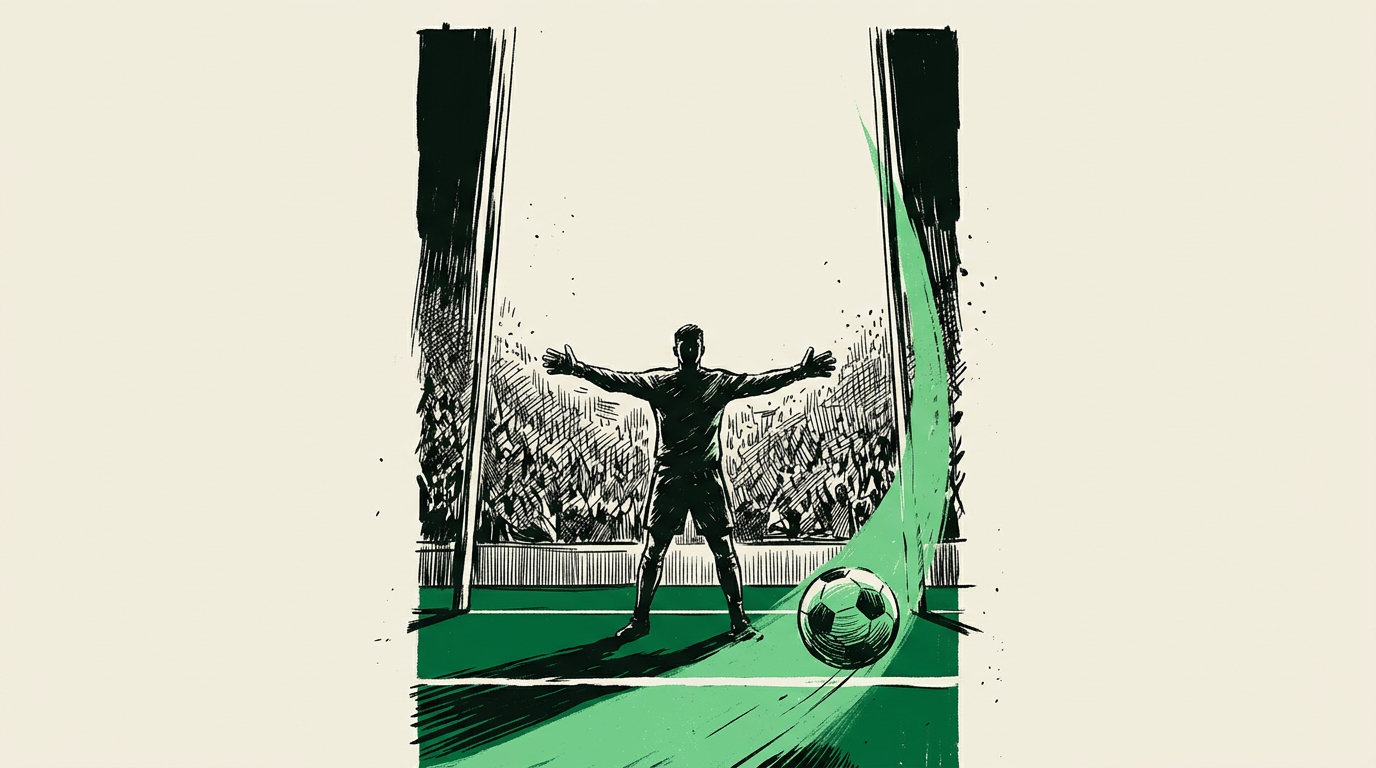
The individual story of the afternoon belonged, unambiguously, to Vozinha. The Cape Verde goalkeeper, forty years old, operating out of Portugal’s second division, produced what BBC Sport described as a standout performance and what the wider football world will likely be discussing for some time. There is a certain historical resonance here: the Guardian’s report drew a comparison to Josimar, that other unlikely name etched into World Cup folklore, and it is not entirely fanciful.
Vozinha’s positioning, his command of his area, and his shot-stopping on the occasions Spain did carve out genuine chances were the difference between a historic draw and a heavy defeat. At forty, playing his football in the Portuguese second tier, he has now faced the European champions at a World Cup and come out the other side unbeaten. That is not a sentence that writes itself often. BBC Sport’s post-match coverage was blunt about it: “He’s the story.” Hard to argue.
Spain’s Structural Problems and What They Mean for Group H
This is where the analysis has to be honest about what we do not yet know. Spain’s performance raised questions that a single match cannot definitively answer. Were they flat because of the occasion, the heat, the altitude of expectation? Or is there a genuine structural issue with how de la Fuente’s side approach opponents who refuse to engage them in a high-tempo, open game?
The Independent’s report framed it as Spain being “stunned”, which is accurate in terms of outcome but perhaps underplays the degree to which Cape Verde actively constructed their defensive performance rather than simply absorbing pressure and hoping. There is a difference between a team that gets lucky and a team that executes a plan. Cape Verde, on the evidence of ninety minutes in Atlanta, did the latter.
What is clear is that Spain’s creative output through central areas was consistently disrupted. The width they sought through their full-backs, a cornerstone of their build-up since the Luis Enrique era, was met with disciplined tracking from Cape Verde’s midfield line. When Yamal came on, he offered directness and unpredictability, but by that point Cape Verde’s defensive shape had been holding for sixty-plus minutes and the legs and the organisation were still there. That is a coaching achievement worth acknowledging.
The Cape Verde Story: Context Matters
It would be easy to reduce this to a feel-good narrative and leave the tactical analysis to one side. That would be a disservice to what Bubista has built. The Guardian’s report mentioned a centre-back from Shamrock Rovers, found, apparently, via LinkedIn, and a goalkeeper from Portugal’s second division. These are not the biographical details of a side that stumbles into a result. These are the details of a squad assembled from the diaspora, from the lower reaches of European football, and moulded into something coherent enough to frustrate a side ranked among the best on the planet.
Cape Verde’s qualification for this 2026 World Cup was itself a significant achievement. The expanded 48-team format has opened the door to nations who would not previously have been present, and there will be those who argue that dilutes the competition. The counter-argument walked off a pitch in Atlanta on Sunday afternoon. If the expanded format produces moments like this, a nation of 600,000 people holding the European champions on the grandest stage, then the argument for inclusion becomes considerably harder to dismiss.
What Comes Next for Both Sides
Spain will regroup. They have the squad depth and the tactical intelligence to adjust, and a single dropped point in the opening game of a group stage is not a crisis, it is a data point. De la Fuente will have watched the footage by now, identified where the pressing triggers were avoided, where the half-spaces were ceded, and where Yamal needs better service. Spain will be fine. Probably.
For Cape Verde, the calculus is more interesting. A point from their opening fixture against the group favourites changes the mathematics of their tournament entirely. Depending on the other results in Group H, a draw in the second game could put them in genuine contention for the knockout rounds. Bubista’s side will not have come to the United States simply to make up the numbers, the performance against Spain demonstrated that, and the belief generated by ninety minutes of organised, disciplined, occasionally brilliant defending will not dissipate quickly.
The goalkeeper who plays his club football in the Portuguese second division has now kept a World Cup clean sheet against Spain. The centre-back from Crumlin has played at a World Cup. These are not small things. They are the kind of things that change what a football culture believes is possible, and that matters well beyond the immediate group-stage standings.
For those wanting to follow Cape Verde’s remaining fixtures and Spain’s response in Group H, you can find out how to watch football online in 2026 and check our watching options at FootyGazette for full tournament coverage. The full tactical picture across all groups is being tracked in our World Cup section and the broader summer storylines feeding into this tournament are covered in our summer 2026 storylines hub.
One final thought. Bubista said before the tournament that getting here was more than football, it was music, it was culture, it was everything. After ninety minutes in Atlanta against the European champions, it is also a point in Group H. Sometimes the poetic and the practical arrive at exactly the same moment.
FAQ
What was the final score between Spain and Cape Verde at the 2026 World Cup?
Spain and Cape Verde drew 0-0 in their Group H opener at the 2026 World Cup, played at Mercedes-Benz Stadium in Atlanta on 15 June 2026.
Who is Vozinha and why is he significant for Cape Verde?
Vozinha is Cape Verde’s forty-year-old goalkeeper who plays his club football in Portugal’s second division. He produced a heroic performance to keep Spain at bay in Cape Verde’s historic World Cup debut, drawing widespread praise from BBC Sport and other outlets covering the match.
Was this Cape Verde’s first ever World Cup appearance?
Yes. The 2026 World Cup represents Cape Verde’s debut at the tournament. The Atlantic island nation has a population of approximately 600,000 people, making their achievement in holding European champions Spain all the more remarkable.
Did Lamine Yamal play in the Spain vs Cape Verde match?
Yamal was introduced as a substitute during the second half as Spain searched for a breakthrough, but Cape Verde’s defensive organisation held firm and he was unable to make the decisive impact his side needed.
What does the 0-0 draw mean for Spain’s World Cup campaign?
Spain dropped two points against a debutant nation in their opening group game, which complicates their path through Group H but does not eliminate them from contention. They will need to reassess their approach to low-block opponents in subsequent fixtures.
How does the 48-team World Cup format affect results like this?
The expanded 48-team format has brought nations like Cape Verde to the World Cup for the first time. Critics argue it dilutes quality; Cape Verde’s performance against Spain offers a compelling counter-argument about the value of inclusion.
