8 min read · 1,557 words
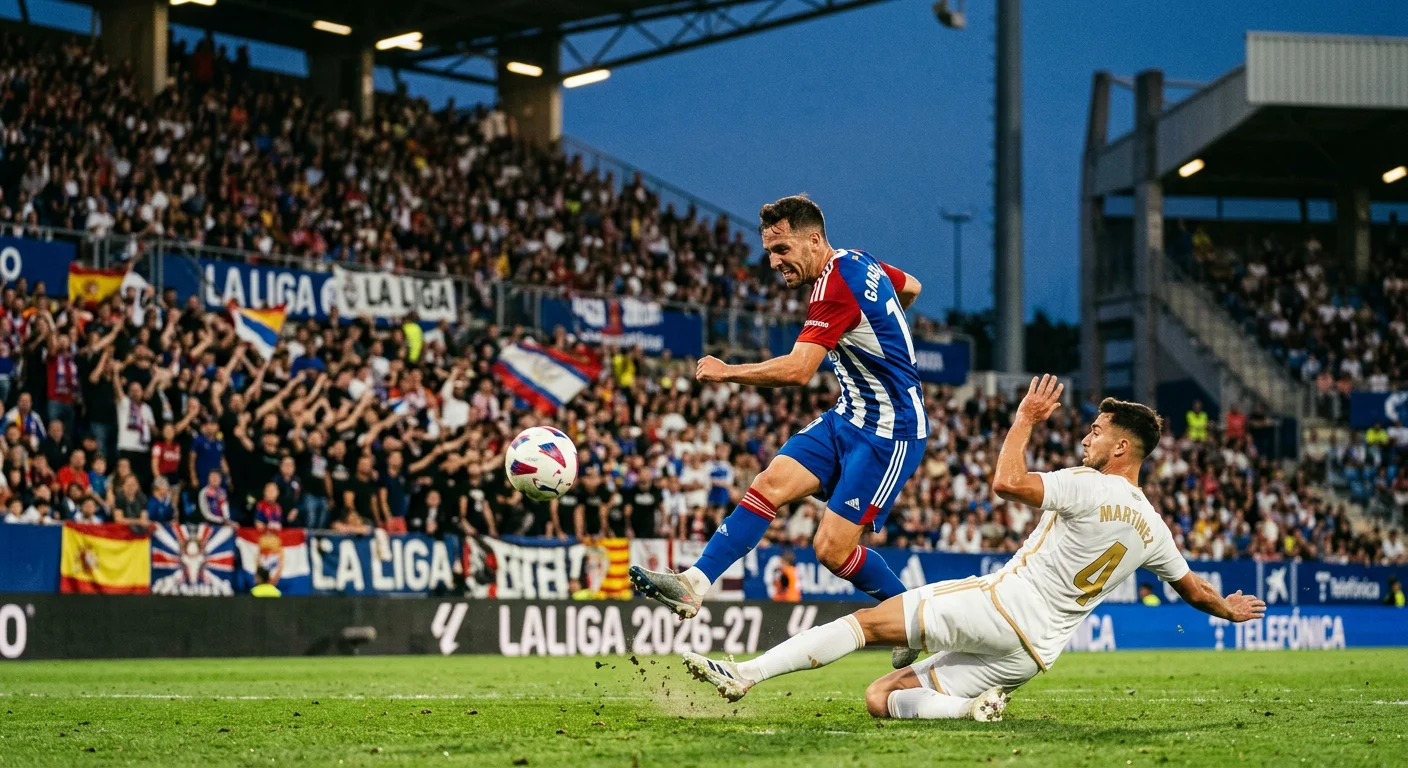
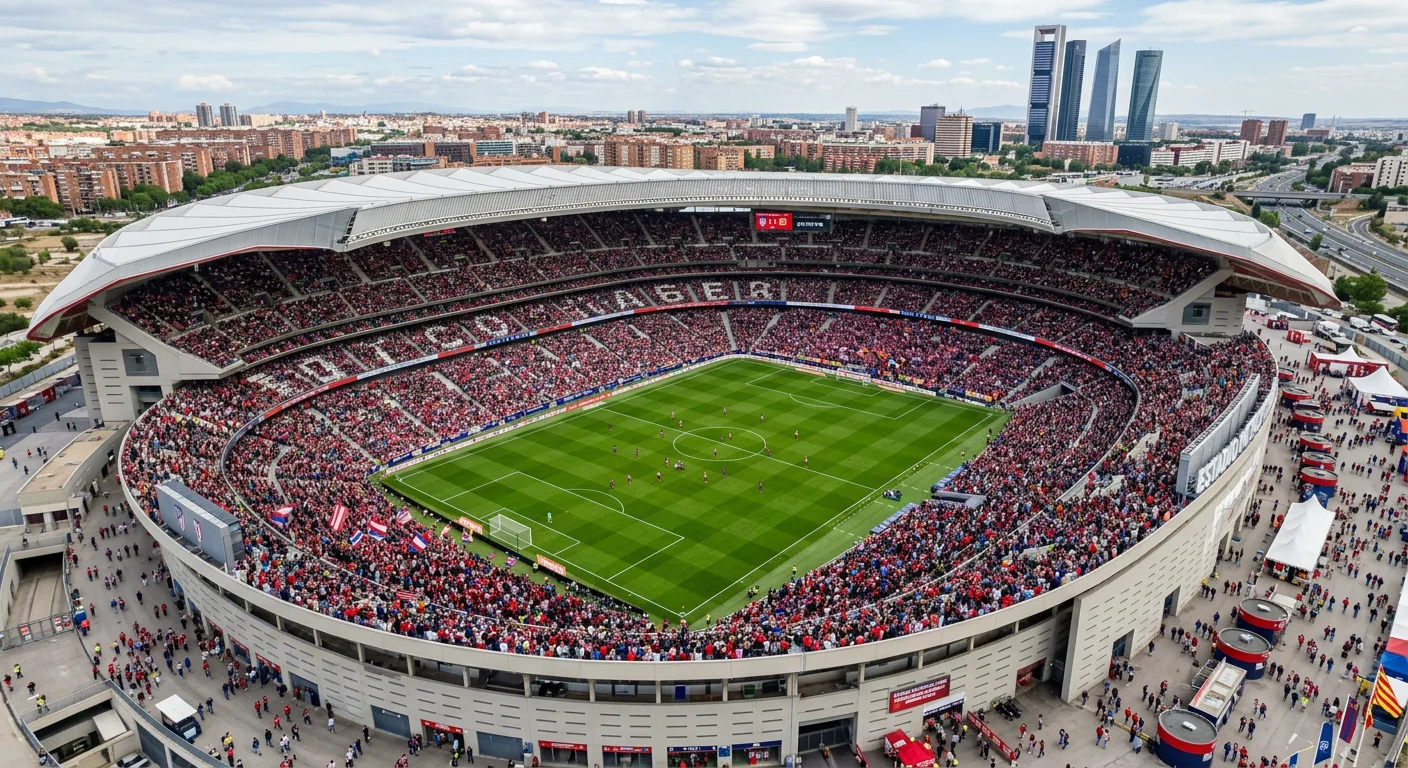
La Liga 2026/27 kicks off in mid-August, and the easy framing, the one that travels well in English-language headlines, is that it is a two-club competition with eighteen polite extras. Real Madrid defend the title. Barcelona are still mid-recovery, still publishing reassuring statements about the palanca economics and the wage bill. Atlético Madrid begin their final season under Diego Simeone before his contract expires in 2027. Predictable enough.
But to write about La Liga as if it ends at the Clásico is to miss the league entirely. The most contemporary stories this season are clustered in the middle: Athletic Club’s Basque-only model winning trophies again, Real Sociedad’s youth pipeline, Pellegrini’s Betis settling into something that looks almost European, Sevilla rebuilding from the wreckage of three bad cycles, Villarreal continuing to overachieve quietly in a way that English coverage rarely bothers to analyse. The promoted clubs arrive carrying the structural problem of Spanish football’s broadcast revenue distribution. The export economy keeps draining the league’s best mid-twenties players to England and the Gulf. La Liga’s coverage at FootyGazette will treat all of this as the actual story, not as background.
The title race
Real Madrid begin as champions, and the squad is now the one Florentino Pérez has been building towards for four windows. Mbappé and Vinicius on the flanks, Bellingham in the position the club has explicitly built around him, Endrick promoted to a fuller role, Arda Güler trusted with minutes that would have gone to a senior signing two seasons ago. The squad is younger than it looks on paper and the bench is unusually deep. The tactical question, as ever in Madrid, is whether the manager can convince Vinicius and Mbappé to defend the same flank without one of them sulking by November.
Barcelona‘s story is still a financial-recovery story dressed up as a footballing one. The wage ratio has improved, the Camp Nou return is finally complete, and the youth pipeline, Yamal, Pedri, Cubarsí, Gavi if his knee permits a full season, does the heavy lifting on the pitch. Joan Laporta has stopped promising silverware in interviews, which counts as institutional progress. They are the natural challenger; whether they have the squad depth to chase Madrid across thirty-eight matches plus Europe is the open question.
Atlético Madrid enter the penultimate Simeone year. The tactical question, and it is a tactical question, not a sentimental one, is whether the squad still believes in the 4-4-2 mid-block that defined the previous decade, or whether the dressing room has quietly moved on. Julián Álvarez and Antoine Griezmann are the spine. The midfield is the worry. Champions League qualification is the floor; a title push depends on whether Simeone can reinvent his own template one more time.
The mid-table, where La Liga is actually interesting
Anglo coverage tends to flatten everything below the top three into a single phrase: “the rest of La Liga.” This is structurally lazy, and it misses what makes the Spanish league different from the Premier League.
Athletic Club remain the only top-flight European club in 2026 still operating a regional-only signing policy, Basque-born or Basque-developed players exclusively. Their 2024 Copa del Rey, followed by a sustained European cycle since, has made the policy look prophetic rather than quaint. San Mamés is again one of the loudest stadiums in Europe. Ernesto Valverde’s structure is patient, physical, and built on a youth academy at Lezama that other clubs visit to study.
Real Sociedad have spent the last decade quietly running the most coherent developmental model in Spain. Zubieta produces midfielders the way Lezama produces wingers. The challenge for 2026/27 is whether they can hold Martín Zubimendi’s eventual replacement, Beñat Turrientes, before the Premier League gets to him.
Real Betis under Manuel Pellegrini have settled into something genuinely impressive. Pellegrini, in his sixth season at the Benito Villamarín, has built a side that won the Conference League in 2025 and now expects European football as a baseline. Isco’s late-career renaissance there is the kind of story Spanish journalism understands better than the English press.
Sevilla are mid-rebuild after three difficult cycles. The Europa League machine that won six titles between 2006 and 2023 has been dismantled. The sporting director question, who replaces Monchi’s institutional memory, remains unresolved.
Villarreal continue to overachieve from a city of fifty thousand people. Marcelino’s second tenure has stabilised the squad. Their model, buy young South American talent, develop, sell for profit, repeat, is the export economy in microcosm.
This layer is what makes La Liga structurally distinct. The Premier League’s mid-table is wealthier; La Liga’s mid-table is more institutionally interesting.
The promoted clubs and relegation reality
Three clubs arrive from Segunda for 2026/27. Levante return to the top flight after their financial reorganisation, Real Oviedo end their long exile with the Carlos Tartiere again hosting first-division football, and Elche complete the promoted trio. The Spanish football romantics will write columns about Oviedo. The statistical reality is harsher: six of the last eight clubs promoted to La Liga have gone straight back down at the first attempt.
The reason is structural rather than sporting. La Liga’s broadcast revenue distribution, while more equal than it was a decade ago, still leaves promoted clubs with budgets a fraction of the established sides. The relegation clause penalties built into most player contracts mean clubs cannot spend their full promoted-season allowance on the squad that got them up. The yo-yo is built into the financial architecture, not into the football.
The export economy
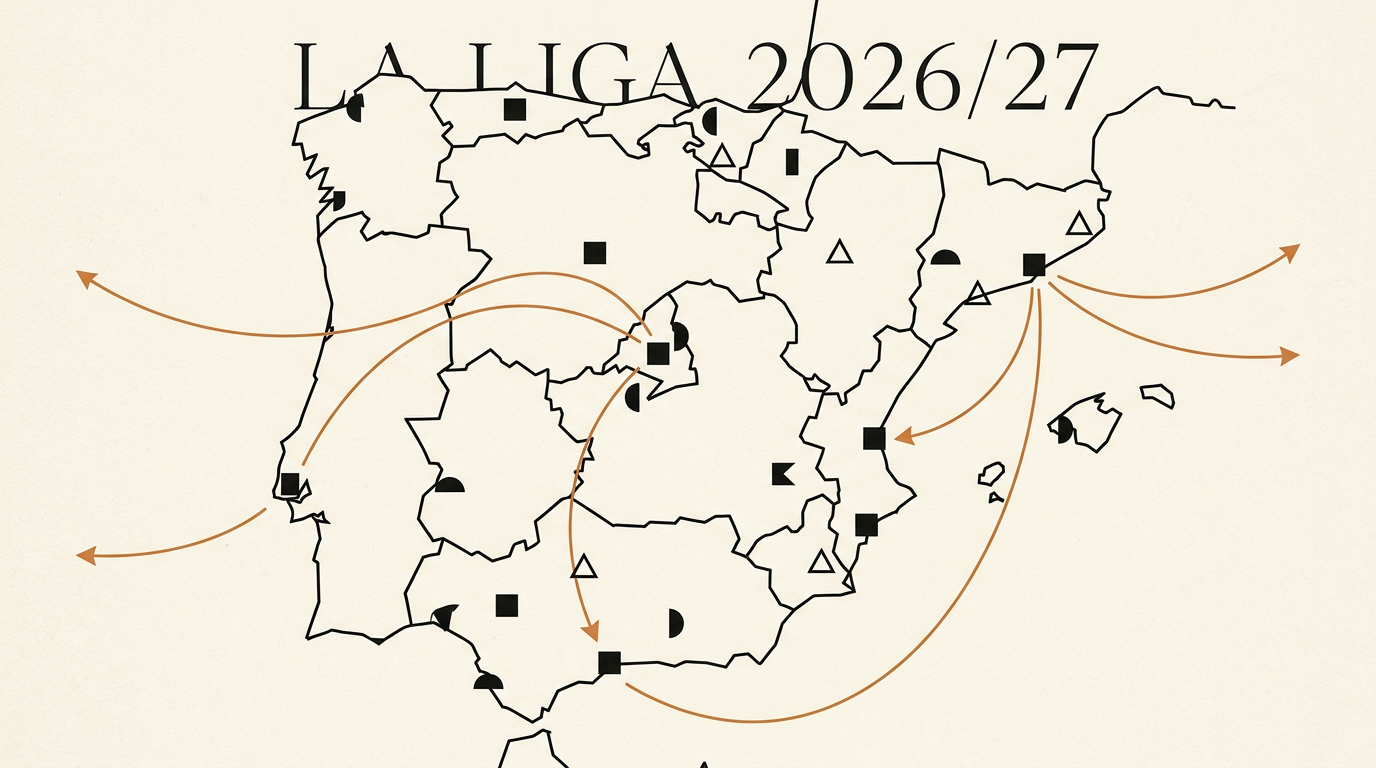
The most important structural shift in Spanish football across 2023 to 2026 is one the English-language press has consistently underplayed: La Liga has become, definitively, a player-export league. The buying power is in the Premier League and, increasingly, in the Saudi Pro League. La Liga’s role in the European market is to develop talent and then sell it, often before peak years.
The list across recent windows is unambiguous. Zubimendi to Arsenal. Nico Williams approached repeatedly. Pedri linked, denied, linked again. The Saudi clubs sweeping through Sevilla and Valencia’s wage bills with offers no Spanish club could match. Even the second-tier exports, Aleix García from Girona, Samu Omorodion’s loan economy, the steady drain of mid-twenties midfielders to the Bundesliga, all point the same direction.
This is why Lamine Yamal’s renewed contract at Barcelona is newsworthy in 2026. A generational Spanish talent staying in Spain past his twenty-first birthday is now structurally unusual. The Spanish sports press has been writing about this for two years; the English coverage caught up late and is still framing it as individual transfer stories rather than as a market pattern.
The English-language coverage of South American football too often treats players as products that arrive pre-translated. They do not. The same blind spot applies to Spanish football’s export economy: the transfers are the visible event, but the structural drain, and what it does to the league’s identity over a decade, is the actual story. This season’s coverage at FootyGazette will treat the export economy as a running thread, not as a series of one-off transfer pieces.
How to watch La Liga 2026/27
Broadcaster rights remain fragmented by territory. In Spain, Movistar Plus+ holds the bulk of domestic rights, with selected matches on DAZN España. In the United Kingdom, Premier Sports carries the league through its LaLigaTV channel, available as a standalone subscription or as part of the Premier Sports bundle. In the United States, ESPN holds the rights, with most matches on its streaming platform. Our how-to-watch guide covers legitimate options by territory.
Frequently asked questions
When does La Liga 2026/27 start?
La Liga 2026/27 begins in mid-August 2026. The full fixture list is published by LaLiga’s official site in early July, after the season-ending Assembly.
Who won La Liga in 2025/26?
Real Madrid won the 2025/26 La Liga title, their thirty-seventh league championship, and enter 2026/27 as defending champions.
How many teams play in La Liga?
Twenty teams compete in La Liga each season. Each side plays thirty-eight matches, home and away against every other club. The bottom three are relegated to Segunda División, replaced by the top two from Segunda plus the winner of the promotion play-off.
Who is the all-time top scorer in La Liga?
Lionel Messi remains the all-time top scorer in La Liga history with 474 goals, scored across his Barcelona career between 2004 and 2021. Cristiano Ronaldo is second on 311.
Where can I watch La Liga in the UK and US?
In the United Kingdom, La Liga matches are broadcast by Premier Sports through its LaLigaTV channel. In the United States, ESPN holds the domestic rights, with most matches available on its streaming service.
The season ahead
FootyGazette’s La Liga coverage for 2026/27 will run weekly: match analysis, the structural stories underneath the table, and the cultural reporting that English-language Spanish football coverage too often skips. The summer storylines hub tracks the transfer window through to the September deadline, and our World Cup 2026 guide follows the Spain squad and the La Liga players representing other federations across North America in June and July. The league is not a two-club competition. We will not write it as one.
Reference: for how the major leagues and UEFA competitions are structured this season, see our football league & competition format reference.