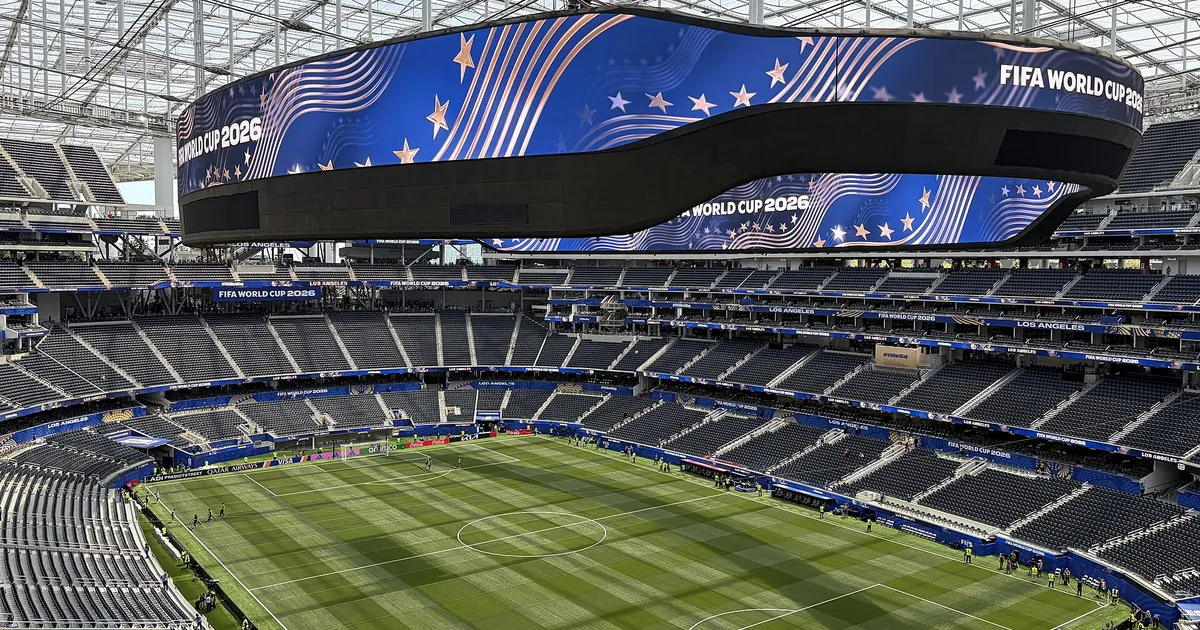
SoFi Stadium, Inglewood, before a World Cup 2026 match. Photo: Alexis Doine / Wikimedia Commons, CC0
5 min read · 991 words
When nearly 2,000 SoFi Stadium hospitality workers authorized a strike by 96 percent in early June, the timing looked like textbook leverage. The USA’s World Cup 2026 group stage matches were locked in at Inglewood. FIFA had no power to move them. A walkout at the host nation’s marquee venue would have been the most embarrassing story of the tournament. That leverage paid off this week — but the pay rise isn’t the headline.
SoFi workers and their union, UNITE HERE Local 11, reached a tentative contract deal before the USA’s Group D finale against Turkey, averting a strike. Per the union’s standard process, the agreement still requires a ratification vote by the full membership before it becomes binding. They won higher wages and improved working conditions. Most outlets ran with that. The other part — a clause giving workers the contractual right to stop work if ICE or Border Patrol appears at the worksite — is what legal scholars, speaking to NPR, described as having no clear precedent in modern American labor law.
That clause didn’t come from nowhere.
The trigger FIFA built into its own accreditation process
FIFA’s mandatory background-check regime for stadium workers requires extensive identity and employment verification — checks that, under the current federal enforcement climate, operate as a de facto immigration-status disclosure. UNITE HERE identified this as the structural thread connecting the separate strike authorizations at SoFi, Seattle’s Embassy Suites, and venues in Philadelphia and Houston: the concern that worker data submitted through FIFA’s accreditation pipeline could reach immigration enforcement.
FIFA never addressed the concern publicly. Its accreditation requirements stood. Workers at four cities authorized strikes over wages and working conditions, but the immigration question ran underneath all of it.
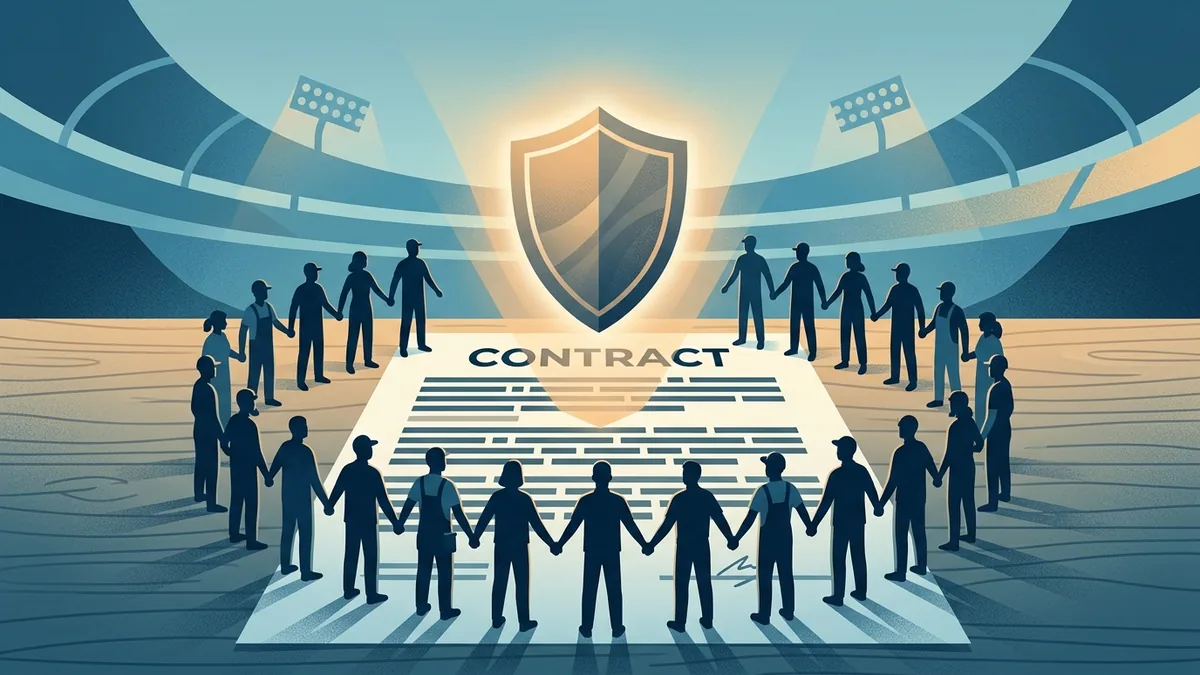
The SoFi deal is the first time a venue employer has committed — in writing — to a contractual response to that threat. If ICE or Customs and Border Protection officers appear at the worksite, workers can stop work without penalty or retaliation. NPR quoted labor law scholars describing the provision as having no clear precedent in modern US labor agreements.
That’s not routine contract language. A major sports venue employer, operating under FIFA’s event architecture, agreed to something no employer appears to have agreed to before.
Why the deadline economics made this possible
The union’s leverage was unusual in a specific structural way. An ordinary strike threat gives an employer time to negotiate, outlast, or find replacement workers. The World Cup doesn’t offer any of those options. If SoFi’s kitchen and concessions staff walk out the night Fox broadcasts the USA’s group stage finale — one of the largest soccer audiences in American television history — there is no delay, no rescheduling, and no recovery option. The revenue is perishable. The broadcast window can’t be retrieved.
FIFA locked the match schedule years before kickoff. The TV contracts followed. The only variable on match day was whether 2,000 workers showed up. ESPN reported the deal as a last-minute agreement reached in the days leading up to the USA-Turkey match, confirming the union timed its resolution to extract maximum terms before the leverage expired at kickoff. Workers held exactly the kind of concentrated, time-certain position that rarely exists in service-sector bargaining. They used it before it closed.

What a precedent actually means in practice
Labor law scholars will note, correctly, that a single tentative agreement at one venue isn’t binding on other employers or other events. But precedents don’t work only through legal compulsion. The SoFi clause now exists in a signed document. The 2028 Los Angeles Olympics, the next Super Bowl, the next FIFA event at a US venue — each of those will arrive with the fact already established that this was asked for, that workers framed it as a workplace safety issue, and that a major venue employer said yes.
The concern it codifies also doesn’t expire with the tournament. FIFA’s mandatory accreditation process — the one that created the immigration-disclosure risk in the first place — is still operating across every host city for every remaining match. The structural linkage between a federal event-compliance requirement and immigration enforcement at World Cup venues hasn’t been legislated away. What’s changed is that one employer has acknowledged the problem by agreeing to a contractual workaround. That acknowledgment will be cited.
FIFA’s architecture built the leverage workers needed
There’s a structural irony worth examining. FIFA’s event regime — which required immigration-status disclosure through its accreditation checks — is also what concentrated the union’s leverage to demand a remedy. Without FIFA’s event footprint (the locked venue contracts, the fixed broadcast schedule, the global visibility), SoFi’s hospitality workers are a dispersed group at a privately-operated stadium. With it, they became essential infrastructure at a federally-supported, internationally televised event that couldn’t be postponed.
FIFA’s compliance architecture created the risk. The economic structure of a FIFA event created the leverage to demand a remedy. The result is a contractual protection — at a FIFA-anchored venue, during a FIFA World Cup — that the employer is now obligated to honor. Yahoo Sports noted that workers retained the right to strike even after the deal, specifically if immigration enforcement activity occurs at the worksite. The provision doesn’t sunset when the tournament does.
What this means for the rest of the World Cup at SoFi
For fans attending remaining matches at Inglewood — the Round of 32, potentially knockout rounds deeper into the tournament — the deal changes nothing visible on the day. Concessions will be staffed, suites serviced.
The more durable outcome is the clause that doesn’t expire when the final whistle blows in July. That clause will enter the record of what US labor negotiations have produced at a major international event. It will be cited when the next mega-event lands in a city with a union workforce, a federal compliance mandate, and a broadcast contract that can’t be rescheduled.
At SoFi this week, workers won a pay rise. They also secured a sentence no employer had apparently agreed to write before. The sentence is the story.
