9 min read · 1,830 words
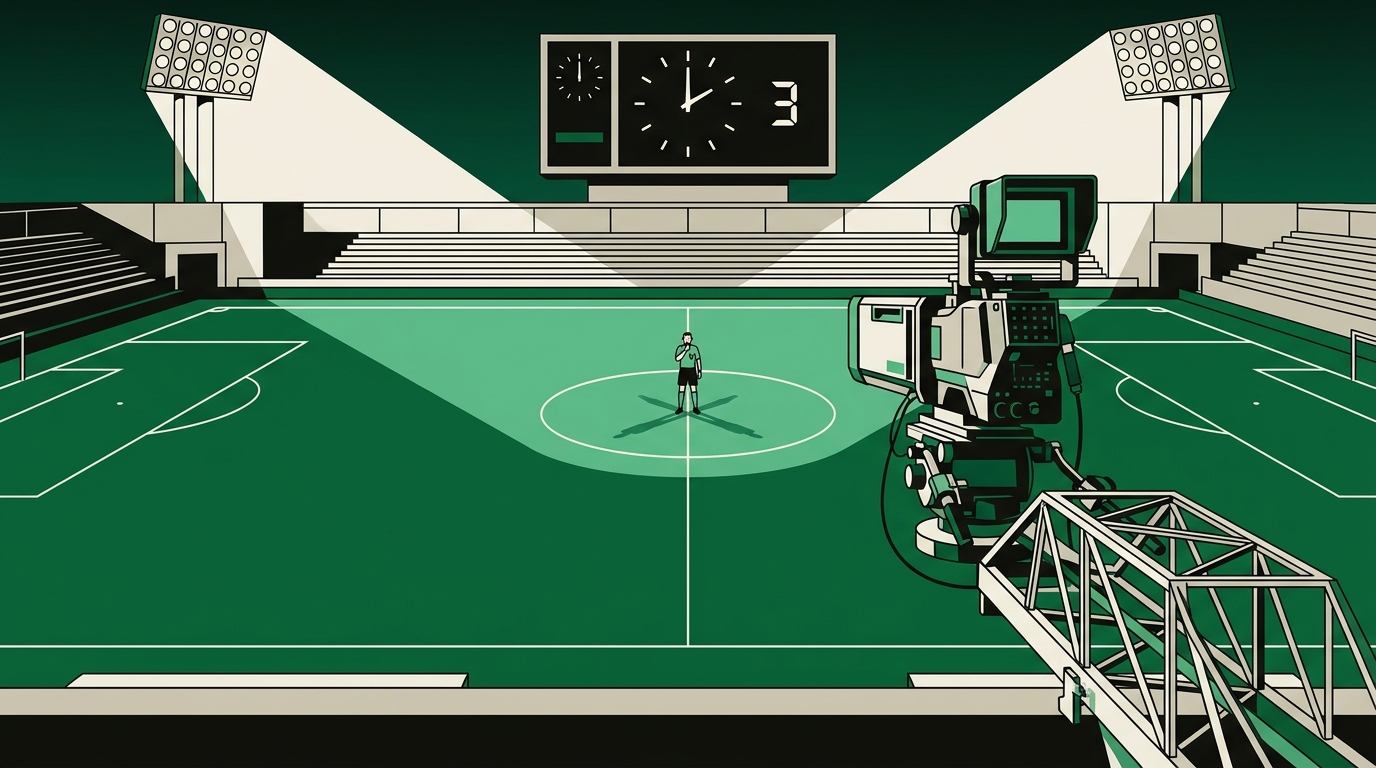
There is a moment, roughly twenty minutes into the first half of any given World Cup 2026 group-stage match, when the referee will blow his whistle, players will reach for water bottles, and television directors across a dozen broadcast territories will cut to commercial. FIFA calls it a welfare measure. Broadcasters call it inventory. The distinction, as ever, matters enormously depending on which side of the rights deal you are sitting on.
FIFA has confirmed that all 104 matches at the 2026 World Cup — spread across venues in the United States, Mexico, and Canada — will feature mandatory three-minute hydration breaks in each half, a first for the tournament at this scale. The policy, reported by The Independent, is framed around anticipated high temperatures at several host stadiums, particularly those in the southern United States and Mexico City, where altitude compounds heat stress. On the face of it, the science is sound. On closer inspection, the commercial architecture is equally compelling.
The Welfare Case: Legitimate, But Conveniently Timed
Let us be clear about the physiological argument first, because it deserves fair treatment before we start following the money. Summer temperatures in Dallas, Miami, and Los Angeles routinely exceed 35°C during the tournament window, and Mexico City’s altitude of 2,240 metres above sea level places additional cardiovascular demands on players regardless of the thermometer reading. Sports medicine research has long established that even two per cent dehydration can impair cognitive and physical performance — relevant for athletes covering an average of eleven kilometres per match.
FIFA’s welfare credentials on heat management have been tested before. The 2022 Qatar World Cup was shifted to November and December precisely because a June tournament in 40°C heat was deemed untenable, a decision that cost European leagues approximately £700 million in mid-season disruption according to estimates from the European Club Association at the time. Mandatory hydration breaks represent a cheaper, less disruptive intervention, and there is a reasonable case that they are the right call for a North American summer tournament.
The opening ceremony in Mexico City, which BBC Sport reported featured Shakira and a roster of performers drawn from the tournament’s official soundtrack, was itself a statement of commercial intent — this is a World Cup designed to generate maximum spectacle, and maximum spectacle generates maximum rights value. The hydration break sits neatly within that logic.
The Broadcaster Arithmetic: Six Minutes of Premium Inventory Per Match
Here is where the numbers become interesting. Two breaks per match, three minutes each, across 104 fixtures equals 624 minutes of guaranteed, mid-game commercial inventory that did not exist at previous World Cups. For context, FIFA sold the 2026 World Cup global media rights for a reported figure in excess of $2 billion, with US domestic rights alone commanding record sums from Fox Sports and Telemundo. Premium mid-game spots during a World Cup knockout match are among the most expensive thirty seconds of television on the planet — Super Bowl adjacency pricing, effectively.
The Independent’s reporting notes that broadcasters are already treating these windows as structured advertising slots rather than dead air. That framing is significant. A three-minute break is long enough for two standard thirty-second spots with production padding, or a single sixty-second premium placement — the kind of inventory that luxury goods brands, automotive manufacturers, and financial services firms pay extraordinary premiums to occupy. Multiply that across 104 matches and multiple broadcast territories, and the aggregate commercial value runs into nine figures conservatively.
FIFA, it should be noted, does not directly sell in-broadcast advertising — that is the rights holder’s domain. But FIFA does benefit indirectly: higher broadcaster revenues support higher rights fees at the next negotiation cycle. The governing body’s incentive to create commercially attractive broadcast windows is therefore structural, not incidental.
Political Atmosphere: The Context Broadcasters Cannot Sell Around
The commercial story does not exist in isolation. The opening match in Mexico City between Mexico and South Africa was accompanied by a notably hostile reception when the United States flag was paraded onto the pitch, with The Independent reporting sustained booing from sections of the Estadio Azteca crowd. This is a co-hosted tournament taking place against a backdrop of significant US-Mexico political tension, and the atmosphere in the stadium reflected that reality with uncomfortable clarity for FIFA’s carefully managed brand narrative.
For broadcasters selling premium inventory around a tournament marketed as a celebration of global unity, crowd hostility directed at one of the three host nations is an awkward backdrop. Sponsors pay for association with positive sentiment; they do not pay to have their thirty-second spot sandwiched between footage of a booed flag and a political protest. The hydration break, whatever its welfare merits, at least gives directors a clean cut point — a moment to go to commercial before returning to a pitch rather than a crowd.
There are other political undercurrents running through the tournament’s early days. The Independent has reported on the profound tension facing Iranian supporters abroad, many of whom must choose between cheering their national team and visibly opposing the regime that team nominally represents — a dilemma that has been present since the 2022 tournament but carries fresh weight given the regional conflict context of 2026. These are not stories that fit neatly into a sponsor’s brand safety framework, and they are a reminder that the World Cup is simultaneously a global sporting event and a geopolitical pressure cooker.
Squad Disruption: The Endo Precedent
Away from the commercial and political theatre, the tournament is already producing the kind of squad attrition that characterises major summer competitions. Liverpool midfielder Wataru Endo has withdrawn from Japan’s World Cup squad through injury and simultaneously retired from international football, as confirmed by BBC Sport. Endo, who captained Japan and was central to their tactical structure, is a significant absence — and his retirement from international duty means the loss is permanent rather than merely tournament-specific.
The Endo situation illustrates a tension that runs through the entire World Cup calendar debate. Players arrive at a summer tournament carrying the accumulated fatigue of a ten-month club season, and the injury risk is correspondingly elevated. If FIFA’s hydration breaks genuinely reduce the physiological load on players during matches — by preventing the dehydration-related muscle cramping and cognitive impairment that can contribute to injury — then the welfare argument has some empirical support. Whether three minutes of hydration twice per match meaningfully offsets the structural problem of a congested global calendar is, however, a different and considerably more difficult question.
For clubs like Liverpool, who have commercial interests in their players’ fitness and availability that are entirely separate from national team considerations, the calculus is straightforward: every injury sustained at a World Cup is a liability that the club bears without compensation. The Premier League’s collective bargaining position on international windows has hardened considerably over the past cycle, and tournaments that are perceived to increase injury risk will face growing institutional resistance from club ownership groups.
What Comes Next: Rights, Precedent, and the 2030 Question
The hydration break policy, if it generates the commercial returns that broadcasters are anticipating, will almost certainly become a permanent fixture of the World Cup format. FIFA has a well-documented tendency to institutionalise revenue-generating innovations once they have been tested — the expanded 48-team format that defines this tournament, detailed in our guide to the 2026 format, was itself driven partly by the additional match inventory it creates. Six minutes of premium commercial time per game is not something any governing body voluntarily surrenders once it has been established.
The more interesting question is whether other competitions follow. The Champions League, which plays its group stages and knockout rounds across a similarly wide range of climatic conditions, has so far resisted mandatory hydration breaks. UEFA’s rights structure is different from FIFA’s — club competitions carry different sponsor relationships and broadcast dynamics — but the commercial logic is transferable. If Fox Sports and their equivalents demonstrate that mid-game breaks drive measurable uplift in advertising revenue without significant viewer drop-off, expect UEFA’s commercial team to be paying close attention.
For the Premier League, the precedent is more complicated. Domestic English football already permits referee-discretionary hydration breaks in extreme heat under FA guidelines, but these are not structured commercial windows. Any move toward mandatory, timed breaks in the Premier League would require negotiation with broadcast partners whose existing rights agreements are built around a specific match-time structure. That is a conversation worth watching as the 2026-27 season approaches — our season preview covers the broader commercial landscape in detail.
The World Cup 2026 hydration break is, in summary, a policy that does exactly what good commercial innovation is supposed to do: it solves a real problem while simultaneously creating a new revenue stream. Whether the welfare rationale or the broadcaster arithmetic came first in FIFA’s internal deliberations is a question that will never be answered honestly. What is certain is that both will be cited in the post-tournament review, and both will be used to justify keeping the breaks in place for Morocco, Portugal, and Spain in 2030. Follow the money. It usually leads somewhere sensible, even when the stated destination is somewhere else entirely.
Want to know how to watch every World Cup 2026 match? Visit our watch guide for broadcast options, or read our full World Cup 2026 guide for fixtures, groups, and analysis.
FAQ
Why are there hydration breaks at the 2026 World Cup?
FIFA has mandated three-minute hydration breaks in each half of all 104 matches at World Cup 2026, citing anticipated high temperatures at host venues across the United States, Mexico, and Canada. The policy is framed as a player welfare measure, though it also creates structured commercial inventory for broadcast rights holders.
How many hydration breaks will there be per match at World Cup 2026?
Two breaks per match — one in each half — each lasting three minutes, for a total of six minutes of additional stoppage time per game. Across the full 104-match tournament, this amounts to 624 minutes of guaranteed mid-game broadcast time.
Do hydration breaks benefit broadcasters commercially?
Yes, materially. Three-minute mid-game windows during a World Cup match represent premium advertising inventory. Rights holders in the United States and other major markets are treating these breaks as structured commercial slots, with pricing comparable to other high-value live sport placements.
Will hydration breaks become permanent in football?
If the commercial and welfare data from World Cup 2026 is positive — as FIFA and broadcasters expect — the breaks are likely to be retained for future tournaments. Whether UEFA and domestic leagues adopt similar policies will depend on rights negotiations and broadcast partner appetite.
What happened with Wataru Endo at World Cup 2026?
Liverpool midfielder Wataru Endo withdrew from Japan’s World Cup 2026 squad due to injury and simultaneously announced his retirement from international football, ending his tenure as Japan captain before the tournament began.
Why was the US flag booed at the World Cup opening match?
The United States flag was met with sustained booing from sections of the crowd at the Estadio Azteca in Mexico City during the opening ceremony, reflecting underlying political tensions between the US and Mexico that have intensified in the period leading up to the tournament.
