8 min read · 1,693 words
TL;DR: Pep Guardiola departs Manchester City after ten years, citing need for fresh energy, leaving a legacy of six league titles and one Champions League that redefined English football's tactical possibilities.
It was always going to end. Every managerial era does, even the ones that feel structurally permanent, like load-bearing walls you’d never dare remove. But Pep Guardiola’s decade at Manchester City felt different, not just in duration, but in the sheer density of what it contained. Six Premier League titles. One Champions League. A domestic Treble. A European Treble. And, somewhere in the middle of all that, a wholesale reimagining of what an English football club could look like. On Friday, Guardiola confirmed he will leave City at the end of the current season, citing the club’s need for “new energy”, a phrase that, from most managers, would sound like spin, but from him lands with the weight of genuine self-awareness.
What the Sources Agree On
Across all four sources, the facts are consistent and unambiguous. Guardiola is departing. The decision is his own. He has been at the club for ten years, an extraordinary tenure by any measure, and particularly so in the context of modern elite management, where three seasons without a trophy tends to prompt a quiet conversation in a hotel lobby. The Independent frames the departure in the context of his legacy: six league titles, one European Cup, and a body of work that places him among the most decorated managers in the history of the game. BBC Sport carries Guardiola’s own explanation, that the club needs a new manager and fresh impetus, which suggests this is a considered exit rather than a forced one. There is no suggestion of a falling-out with the board, no transfer dispute leaking through back channels. This appears to be a man who has decided, rationally, that his work is done.
That framing matters. Guardiola has never been a manager who outstays his welcome through inertia. He left Barcelona after four years. He left Bayern after three. The City tenure, at a decade, is by far his longest, which either speaks to the unique environment Sheikh Mansour’s ownership created, or to the fact that English football, with its competitive density and tactical variety, simply kept him more engaged than anywhere else. Probably both.
The Rivalries That Defined the Era
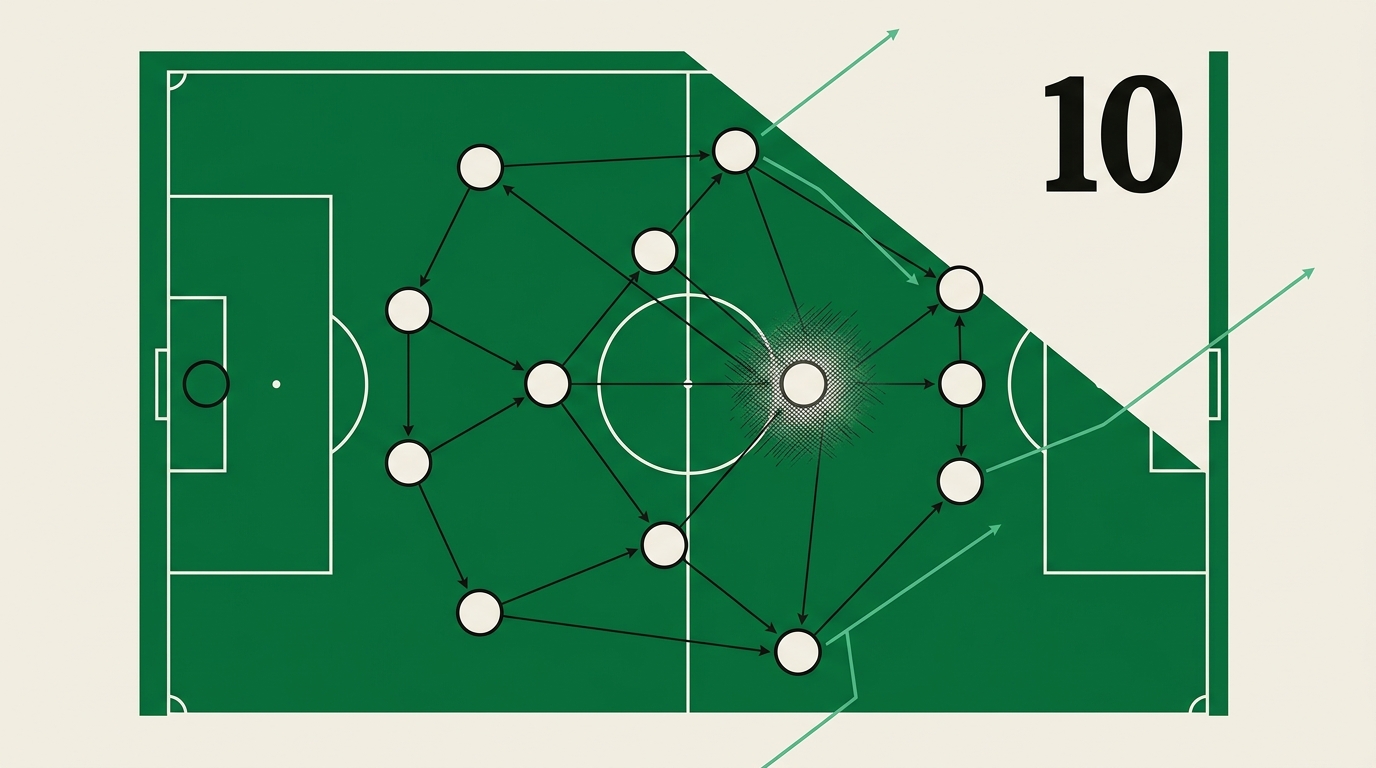
BBC Sport makes the astute point that Guardiola’s City reign was shaped not just by what his side did, but by who they were doing it against. The Klopp years at Liverpool roughly 2016 to 2024, produced a rivalry of genuine tactical substance. Two high-pressing, positionally sophisticated sides repeatedly forcing each other to evolve. City’s 4-3-3 gave way to the false-nine experiment, then the inverted full-back structure, then the increasingly fluid positional play that made the 2020-21 and 2022-23 sides so difficult to model. Liverpool’s gegenpressing pushed City into building a back line capable of playing out under sustained pressure. Both clubs improved because of each other, which is a rare thing in elite sport.
The Arteta chapter at Arsenal was shorter but arguably more urgent. Arsenal’s 2022-23 title challenge, ultimately unsuccessful, but compelling, forced City into a late-season acceleration that tested their squad depth. Arteta’s high defensive line and aggressive pressing structure was recognisably Guardiola-influenced, which gave those encounters a strange, hall-of-mirrors quality. A manager testing his former assistant’s ideas against the originator. City won the league that year, but only just, and the margin told a story about the narrowing gap between the very best sides in England.
What Remains Unclear: The Succession Question
Here is where the sources diverge, or more accurately, where they stop. None of the primary reporting names a confirmed successor at City. That is not a criticism, it reflects the reality that the club has not announced one, but it is the most consequential open question in English football right now. City’s structure, built around Guardiola’s specific tactical preferences and his relationship with the recruitment team, will require careful recalibration regardless of who comes in. The squad is ageing in key positions. Kevin De Bruyne’s future remains uncertain. The financial fair play proceedings, though not directly referenced in these sources, hang over the club’s medium-term planning.
Separately, The Independent reports that Álvaro Arbeloa is set to leave his role at Real Madrid ahead of a reported return for José Mourinho, thirteen years after his first spell at the Bernabéu ended. That story is tangential to Guardiola’s departure, but it is worth noting the broader context: the summer of 2026 is shaping up as one of the most significant periods of managerial movement in recent memory. Guardiola available. Mourinho potentially returning to Madrid. The chess board is being reset at the top of the game simultaneously.
The England Subplot and the Wider Week
The Guardian’s live blog captures the broader noise of a chaotic news day: Thomas Tuchel’s England squad for the World Cup was announced simultaneously, with Djed Spence earning a call-up and Trent Alexander-Arnold, in what will be a significant talking point, left out entirely. Ivan Toney is in. Harry Maguire is not. The squad announcement would ordinarily dominate the football conversation; instead it was sharing the front page with Guardiola’s exit, which tells you something about the gravitational pull of this particular story.
For City supporters heading into the final match-day of the Premier League season, the emotional register is complicated. There is the immediate business of the fixture itself, and then there is the longer, stranger business of processing what ten years under one manager actually means. Most clubs never get a decade of this. Most clubs never get a single season of it.
What This Actually Means, and What Comes Next
The honest editorial position here is that Manchester City are entering a period of genuine uncertainty, and they should be. Not crisis, the infrastructure, the ownership model, the recruitment networks are all still in place, but uncertainty, which is different and arguably healthy. The club has not had to think seriously about managerial identity since 2016. They will have to think about it now. Whoever comes in will inherit a squad built around principles of positional play and high defensive lines that are deeply embedded in the club’s DNA. Trying to play a different way would be like buying a Steinway and deciding you prefer the drums.
The likeliest outcome, and this is editorial speculation, clearly flagged as such, is that City move for a manager with a recognisable positional play background. The names will circulate over the coming weeks. Some will be credible. Many will not. What matters more than the name is the philosophy, and whether the board has the patience to allow a successor to build at the pace Guardiola was given when he arrived in 2016. If they do, City remain a dominant force. If they reach for short-term results at the expense of structural continuity, the drop-off could be sharper than the fanbase expects.
For the broader landscape of English and European football, Guardiola’s availability is the story of the summer. He is 55. He has won everything there is to win at club level. The international management question, perennially raised and perennially dismissed, will resurface. So will links to the biggest clubs on the continent. Whatever he does next, it will be watched with the same forensic attention that has followed every tactical decision he has made since he turned up at the Etihad with a squad full of expensive footballers and a very specific idea about where the full-backs should stand.
For a deeper look at how the tactical landscape has shifted across his tenure, our back-three tactical analysis traces some of the structural trends his City sides helped accelerate. And for everything building towards this summer’s tournament, the World Cup 2026 guide has the full picture, including England’s newly announced squad and the format changes that will shape the competition. The summer 2026 storylines piece will be updated as the managerial dominoes continue to fall.
Frequently Asked Questions
Why is Pep Guardiola leaving Manchester City?
Guardiola has stated that the club needs a new manager and fresh energy after his ten-year tenure. The decision appears to be his own rather than the result of any external pressure or falling-out with the board. He has a history of leaving clubs at the point where he feels his influence has run its natural course.
How many trophies did Guardiola win at Man City?
Guardiola won six Premier League titles and one Champions League during his time at City, along with multiple domestic cups. His most celebrated achievement was the 2022-23 Treble, Premier League, FA Cup, and Champions League, which placed City among the most decorated sides in English football history.
Who might replace Guardiola at Manchester City?
No successor has been officially confirmed or named by the club. Speculation will intensify over the coming weeks, but City’s preference is likely to be a manager with a positional play background compatible with the squad’s existing structure and the club’s recruitment philosophy.
How did Guardiola’s rivalries with Klopp and Arteta shape his City reign?
The sustained competition with Jürgen Klopp’s Liverpool forced both clubs to evolve tactically across nearly a decade. Mikel Arteta’s Arsenal, meanwhile, presented a more recent and philosophically familiar challenge, Arteta having worked under Guardiola at City. Both rivalries pushed City to develop greater squad depth and tactical flexibility.
Does Guardiola’s departure affect England’s World Cup preparations?
Not directly. Thomas Tuchel’s England squad for the 2026 World Cup was announced on the same day as Guardiola’s exit, and City’s domestic players remain eligible regardless of who manages the club. The timing of both announcements on the same news day made for an unusually dense Friday in English football.
What happens to Manchester City’s Premier League status after Guardiola leaves?
City remain one of the best-resourced clubs in world football. The ownership structure, scouting networks, and squad depth do not disappear with a manager. However, the transition period will be significant, and the club’s ability to attract and integrate a successor of comparable tactical sophistication will determine how quickly they re-establish themselves at the top of the Premier League.
