
7 min read · 1,499 words
There are moments in football that remind you why the sport exists beyond tactics boards and xG models. Day 13 of the 2026 World Cup produced several of them, from Lionel Messi rewriting the record books in Dallas to a Cape Verde supporter losing all composure on live BBC News in the most joyful manner imaginable. The tournament’s expanded 48-team format has been questioned in some quarters, but the scenes on 23 June offered a fairly persuasive counter-argument.
The Moment That Stopped a Broadcast
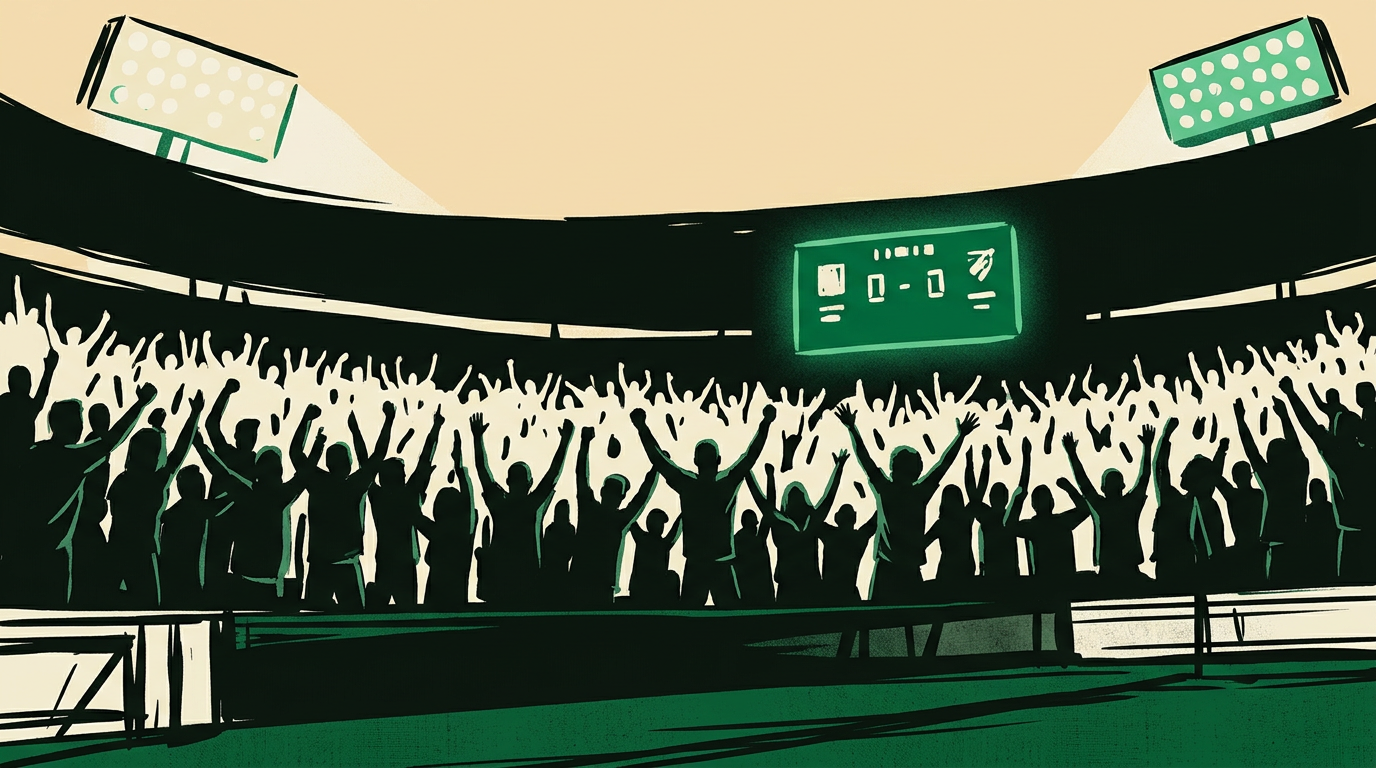
BBC News reporter Paul Njie was conducting a routine pitch-side interview with a Cape Verde supporter when the Blue Sharks scored against Uruguay, marking the country’s first ever goal at a World Cup finals. What followed was not routine. The fan’s reaction, broadcast live and unfiltered, became the image of the day: arms aloft, voice gone, the kind of unbridled joy that no punditry panel can manufacture. BBC Sport captured the moment in full, and it spread quickly for obvious reasons.
Cape Verde’s presence at this tournament is itself a product of the expansion that CAF lobbied hard to achieve. As the Guardian noted in its Jordan vs Algeria live coverage, African nations now occupy ten of the 48 slots after CAF secured nine automatic berths plus DR Congo’s place through an inter-confederation playoff. In Qatar in 2022, the continent had five of 32 slots, roughly 16 per cent of the field. The argument that African football was structurally underrepresented relative to its size and quality has, by any reasonable measure, been vindicated.
Whether Cape Verde can progress from their group remains to be seen. But a first World Cup goal, scored against South American opposition, is the kind of landmark that a football culture carries for generations. The fan on BBC News understood that instinctively, even if he was temporarily unable to articulate it.
Messi, Records, and the Dallas Occasion
If Cape Verde provided the tournament’s emotional highlight on Day 13, Lionel Messi provided the historical one. Argentina faced Austria in Dallas in Group J, and Messi scored twice to move clear as the all-time leading goalscorer in World Cup history. The Guardian’s live coverage described it plainly: a clinical left-footed finish that had the cinematic quality these occasions tend to demand when Messi is involved.
Argentina head coach Lionel Scaloni, not a man given to theatrical statements, offered a telling assessment: “I have no words to talk about Leo. When Leo becomes active, everyone activates.” Messi himself was characteristically understated, noting that the penalty was not particularly comfortable but that the team found a way through. Argentina’s xG in these group games has reportedly been uneven, suggesting the side has leaned on individual quality more than systemic dominance, which is a pattern worth monitoring as the knockout rounds approach.
Messi turns 39 on Wednesday. The timing of this record, at this tournament, in this city, has the quality of something scripted. It almost certainly was not, which makes it more interesting. Argentina are through to the last 32, and the question now is whether the squad around Messi has the depth to sustain a deep run without asking him to carry every decisive moment.
Mbappé and Haaland: The Presumptive Heirs Deliver
While Messi was making history, the two players most frequently positioned as his successors were also busy. Kylian Mbappé scored a brace for France against Iraq, with Ousmane Dembélé adding a third in what the Independent described as Dembélé ending a notable tournament drought. France’s attacking output has been considerable, though Iraq represent the kind of opposition that flatters statistics. The more instructive test of Mbappé’s tournament form will come in the knockout rounds, where the margins tighten and the spaces he thrives in become harder to find.
Erling Haaland, meanwhile, scored for Norway as they joined Argentina and France in securing knockout qualification. The Independent’s live coverage confirmed Norway’s progression, with Haaland’s contribution central to their group-stage campaign. Norway’s route to this tournament was itself one of the more compelling qualifying stories, and their presence in the last 32 of a World Cup is not something that would have seemed straightforward even four years ago.
The Golden Boot race, with Messi, Mbappé and Haaland all in contention, has the shape of a narrative that tournament organisers would have designed if they could. The reality is more complicated: knockout football distributes goals differently to group stages, and the player who peaks at the right moment in the right fixture tends to win individual awards regardless of earlier accumulation.
England, Ghana, and the Business End Approaching
England were also in action on Day 13, facing Ghana in what the Guardian’s live blog flagged as part of the day’s broader slate. Details on the result were still emerging at the time of the primary sources being compiled, but the fixture carries obvious weight for England in terms of group positioning. Ghana, who qualified through CAF’s expanded allocation, have shown in previous tournaments that they are not straightforward opposition regardless of the paper gap in squad depth.
England’s tactical setup under their current management has drawn scrutiny throughout the group stage. The question of how they line up in a potential knockout tie, and whether the midfield structure can support both defensive solidity and the kind of forward movement that creates genuine chances, remains genuinely open. For a more detailed breakdown of England’s shape and the broader tactical context, the Premier League season preview offers relevant background on the club form feeding into international selections.
The Bigger Picture: What the Expanded Format Is Producing
Day 13 crystallised something about this tournament that has been building since the opening fixtures. The 48-team format, which attracted predictable scepticism about diluted quality and bloated group stages, has generated a volume of genuinely significant moments that a 32-team edition would not have accommodated. Cape Verde scoring their first World Cup goal is not a marginal footnote. It is the kind of moment that expands the sport’s geography in a meaningful way.
The structural argument is worth stating clearly: CAF’s ten slots mean that African nations with legitimate footballing traditions, Cape Verde among them, are present at the tournament rather than eliminated in qualifying. The counter-argument, that some of those sides are outclassed and inflate the group stage, has less force when one of them is scoring against Uruguay and sending a man into raptures on live television.
For a full breakdown of how the expanded format works and what it means for the knockout structure, the 48-team format explainer covers the bracket mechanics in detail. The short version is that the last 32 round, new to this edition, creates an additional knockout fixture for every surviving team, which changes how managers approach squad rotation and fitness management in the group stage.
Forward Look
The knockout rounds will begin to define which of the tournament’s early narratives have substance. Messi’s record is set; the question is whether Argentina can win the thing, which would be a different kind of history. France and Norway have the attacking quality to go deep, but both have shown defensive vulnerabilities that better-organised knockout opponents will target. England’s trajectory depends heavily on the draw and on whether they can find a consistent identity before the margin for tactical adjustment disappears.
Cape Verde’s tournament may or may not extend beyond the group stage. But the goal has been scored, the record is in the books, and somewhere a BBC reporter is still recovering from the best live interview interruption of the year. The World Cup 2026 watching guide has the broadcast details for the upcoming knockout fixtures if you need them.
Frequently Asked Questions
What was Cape Verde’s first World Cup goal and who scored it?
Cape Verde scored their first ever goal at a World Cup finals during their 2026 group-stage match against Uruguay. The moment was captured live on BBC News when reporter Paul Njie was interviewing a Cape Verde supporter at the precise moment the goal went in. The specific scorer was not confirmed across all sources reviewed for this piece.
What record did Messi break at the 2026 World Cup?
Lionel Messi scored twice against Austria in Dallas on Day 13 to become the outright all-time leading goalscorer in World Cup history, moving clear of the previous record. He turns 39 on 24 June 2026, making the timing of the achievement particularly notable.
Have France and Norway qualified for the knockout rounds?
Yes. Both France and Norway secured their places in the last 32 on Day 13, with Kylian Mbappé contributing a brace against Iraq and Erling Haaland scoring for Norway. Argentina also confirmed their qualification on the same day.
How many African teams are at the 2026 World Cup?
Ten African nations qualified for the 2026 World Cup. CAF received nine automatic berths under the expanded 48-team allocation, with DR Congo securing a tenth place through an inter-confederation playoff against Jamaica in March 2026.
Where can I watch the remaining 2026 World Cup matches?
Broadcast arrangements vary by territory. FootyGazette’s watching guide has details on how to follow the knockout rounds depending on your location.
