15 min read · 3,277 words
The story so far. The 2026 FIFA World Cup runs 11 June to 19 July across the USA, Canada and Mexico, the first 48-team tournament, the first three-host edition, and the largest single sporting event ever staged. 104 matches across 39 days, opening at Estadio Azteca and finishing at MetLife Stadium. This is the comprehensive guide to the format, contenders, host cities, key storylines and what makes 2026 the most consequential World Cup since 1994.
Twenty days from now, in Mexico City’s Estadio Azteca, the 23rd FIFA World Cup will begin. It will be unlike any that came before. Forty-eight teams instead of thirty-two. Three host nations instead of one. One hundred and four matches across thirty-nine days, spread across a continent that stretches from Vancouver to Guadalajara. The 2026 tournament is the largest single sporting event in human history, and the question is whether it will also be the best.
The case for it is generational. Lionel Messi will turn 39 the day before the final and is almost certainly playing his last World Cup. Cristiano Ronaldo, at 41, the same. Kylian Mbappé arrives at 27 in the absolute prime of a career that has spent five years circling the trophy he already owns. Lamine Yamal will be 18 on opening night. Jude Bellingham, 22. Pedri, 23. The handover from one football era to another is happening live on the pitch, in real time, between June and July.
The case against it is structural. Players are arriving off a domestic season that ended in late May. The Club World Cup, played last summer in these same stadiums, gave FIFA a logistical rehearsal but also confirmed what managers had warned about: the bodies are not built for this calendar. Eight matches to win it now, not seven. Travel that would exhaust a touring rock band.
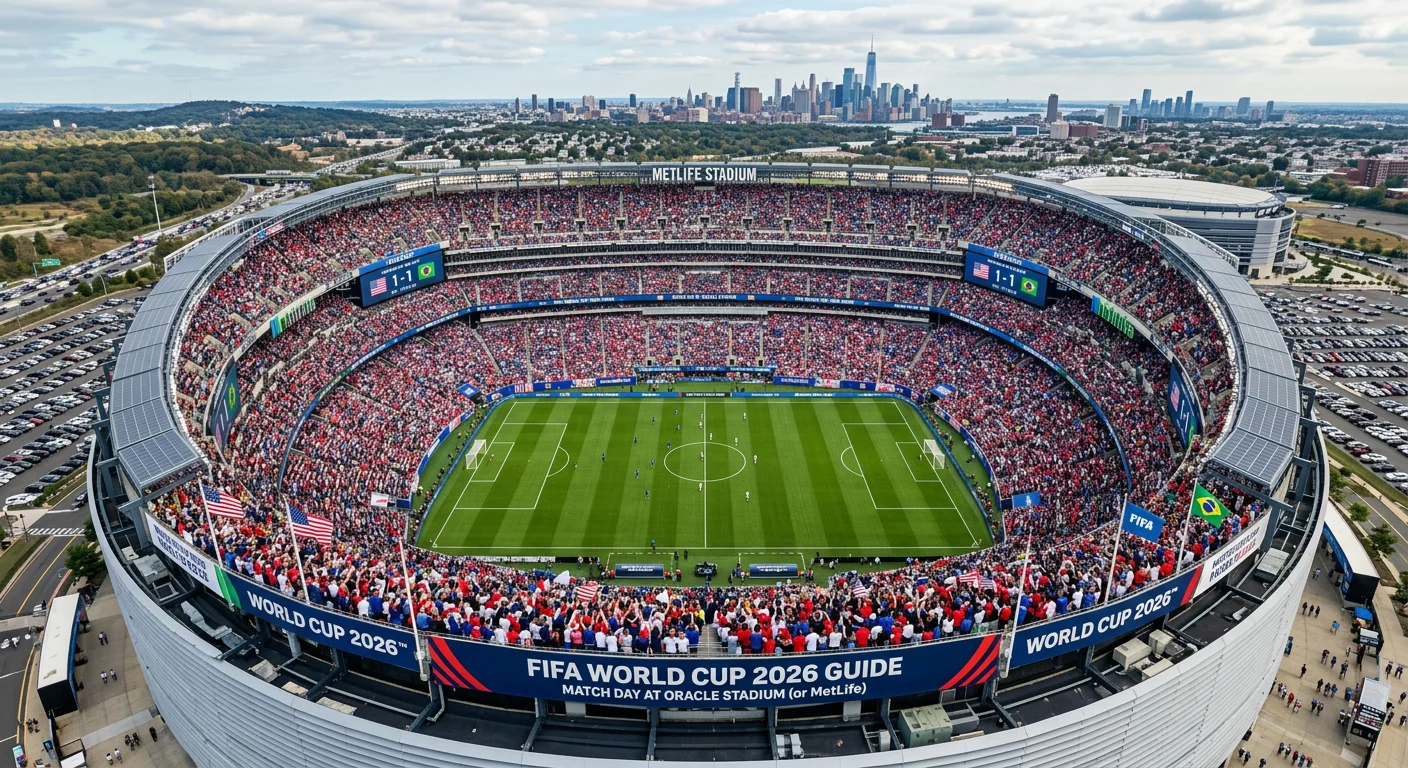
And yet the venues will fill. MetLife Stadium in New Jersey hosts a World Cup final for the first time. Atlanta, Dallas, and Los Angeles each get a semi-final-shaped match. Toronto sees its first men’s World Cup fixture in Canadian history. The Azteca, which hosted in 1970 and 1986, becomes the first stadium to host matches at three World Cups. That alone is a piece of football history worth witnessing.
The new format
The structural change is the headline. FIFA’s twelve groups of four replace the eight groups of four that defined the tournament from 1998 to 2022. The top two from each group advance automatically. The eight best third-placed teams across all twelve groups also advance. That produces a 32-team Round of 32, which is new.
From there the bracket runs as football fans recognise it. Round of 32, Round of 16, quarter-finals, semi-finals, third-place play-off, final. Seventy-two group matches plus thirty-two knockout matches equals 104 fixtures in total. Compare that to the 64 played in Qatar in 2022.
The expansion was confirmed by the FIFA Council in January 2017, six months into Gianni Infantino’s presidency. The vote was contentious then and remains so now. Critics argued the tournament’s competitive quality would suffer. Defenders pointed to the revenue calculation: more federations qualifying means more sponsor reach, more broadcast markets engaged, more emerging-football nations brought into the financial system that supports youth development globally.
Both sides have a point. Whether the format works on the pitch is what the next thirty-nine days will decide. For a full walk-through of the mechanics, see our 48-team format explainer.
Group by group: for our verdict on all twelve groups, who qualifies, each group’s dark horse, and the one match that decides it, read the World Cup 2026 group-by-group preview.
The contenders
Argentina
The holders arrive in a peculiar position. Lionel Scaloni’s squad is the same generation that lifted the trophy in Lusail, three and a half years older. Messi captains a side that still has Julián Álvarez, Lautaro Martínez, Enzo Fernández, and Alexis Mac Allister in their prime. The question is the legs. The 2022 squad averaged 28.7 years on the pitch in the final; this one will average closer to 31.
Scaloni’s tactical identity is intact. The compact midfield triangle, the willingness to absorb pressure and break, the goalkeeper Emiliano Martínez who has become a tournament specialist. They will not be favourites. They do not need to be.
France
The most balanced squad in the tournament. Mbappé at 27, Aurélien Tchouaméni anchoring midfield, Eduardo Camavinga and Warren Zaïre-Emery alongside. William Saliba and Dayot Upamecano at centre-back. Mike Maignan in goal. Didier Deschamps, in his fourth and final World Cup as manager, has had eight months since Euro 2024 to integrate the Real Madrid contingent properly.
France lost the 2022 final on penalties having played most of the tournament without their first-choice midfield. Mbappé has spoken openly about wanting to win this one differently. The system is built for it.
Brazil
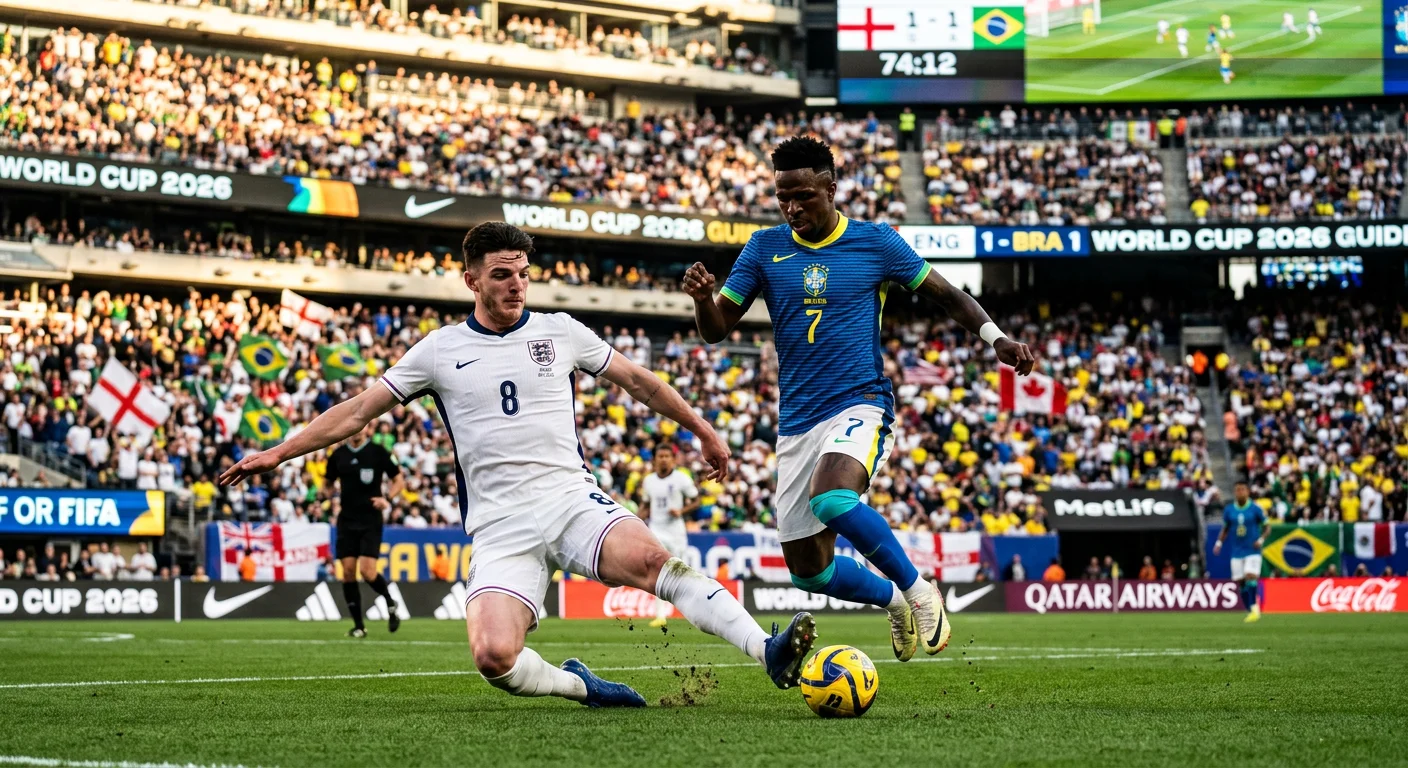
The rebuild has been slower than promised. Since Tite resigned in December 2022, Brazil have cycled through three permanent managers and the squad has not settled. Vinicius Júnior and Rodrygo carry the attacking burden; Endrick is the third forward; the midfield has improved with Bruno Guimarães and André as the spine.
The defensive question is real. Marquinhos is 32, Thiago Silva has retired from international football, and the partnership behind them is unproven at this level. Brazil score goals. The question is whether they concede fewer.
England
England’s first 48-team World Cup, and the first under Thomas Tuchel since his appointment in autumn 2024. The squad is in transition. Bellingham at 22 is the central creator. Harry Kane at 32 will play his third and probably final World Cup. Bukayo Saka, Phil Foden, and Cole Palmer give Tuchel three forward options on either flank. The defence, with Marc Guéhi and Levi Colwill, has stabilised.
Tuchel’s tactical clarity is the upgrade on Southgate. Whether it produces a tournament is the question every England side asks and most have answered no.
Spain
The European champions arrive as the most coherent side in the field. Luis de la Fuente’s tactical identity, built around Rodri at the base and Pedri above him, has survived the eighteen months since Berlin. Lamine Yamal, who turns 19 the day after the final, is the youngest player in the tournament who could reasonably win the Golden Ball.
Spain’s depth at full-back and central midfield is unmatched. The forward question, with Álvaro Morata at 33 leading the line, is the only weakness on a teamsheet that otherwise reads like a champion’s.
Germany
The rebuild that began under Julian Nagelsmann before Euro 2024 has produced a young side with genuine technical authority. Jamal Musiala at 23 and Florian Wirtz at 22 are the most exciting two-player axis at the tournament. Joshua Kimmich anchors the midfield. Antonio Rüdiger marshals the back four.
Germany hosted Euro 2024 and went out to Spain in the quarter-finals. The pressure of home soil is gone. The pressure of a forty-year-old footballing tradition is not.
Portugal
Ronaldo’s farewell. He turned 41 in February and Roberto Martínez has confirmed his place in the squad. The football, though, runs through Bernardo Silva, Bruno Fernandes, Rafael Leão, and a midfield that includes Vitinha and João Neves. Portugal’s depth is genuine. The question is whether the team plays for Ronaldo or around him.
Martínez, who guided Belgium’s golden generation to two semi-final disappointments, knows how to manage senior egos. Portugal will be competitive. Whether they are champions depends on the draw.
Dark horses
Three teams worth taking seriously beyond the favourites. Morocco, who reached the semi-final in Qatar, have kept the core of that side and added Eliesse Ben Seghir at attacking midfield. Walid Regragui’s defensive structure remains the template no other African side has matched.
Uruguay under Marcelo Bielsa are the tactical outlier. Bielsa took over in 2023 and has rebuilt the squad around Federico Valverde, Darwin Núñez, and a teenage generation including Maximiliano Araújo. They press with a coherence Uruguay have not shown since the early 2010s.
The United States are the home story. Christian Pulisic at 27, Weston McKennie at 28, Tyler Adams at 27, Folarin Balogun at 24, Gio Reyna at 23, this is the generation American football has been waiting for. Mauricio Pochettino, appointed in September 2024, has installed a structure they did not have under Gregg Berhalter. Home advantage in eleven cities is real.
The host cities
Atlanta. Mercedes-Benz Stadium hosts eight matches including a semi-final. The retractable roof and downtown location make it the most logistically straightforward US venue.
Boston. Gillette Stadium in Foxborough, technically outside Boston. Seven matches.
Dallas. AT&T Stadium in Arlington hosts nine matches, the most of any venue, including a semi-final.
Houston. NRG Stadium, retractable roof, seven matches.
Kansas City. Arrowhead Stadium, six matches.
Los Angeles. SoFi Stadium in Inglewood, eight matches including a semi-final.
Miami. Hard Rock Stadium, seven matches. Messi’s home ground with Inter Miami.
New York / New Jersey. MetLife Stadium hosts eight matches including the final on 19 July.
Philadelphia. Lincoln Financial Field, six matches.
San Francisco Bay Area. Levi’s Stadium in Santa Clara, six matches.
Seattle. Lumen Field, six matches.
Toronto. BMO Field, six matches, expanded to 45,000 for the tournament. Canada’s first men’s World Cup fixtures.
Vancouver. BC Place, seven matches.
Mexico City. Estadio Azteca hosts the opening match on 11 June. First stadium to host matches at three World Cups.
Guadalajara. Estadio Akron, four matches.
Monterrey. Estadio BBVA, four matches.
The storylines
Messi vs Mbappé, one last time
The Lusail final in 2022 produced what is widely regarded as the greatest World Cup final ever played. Mbappé scored a hat-trick in defeat. Messi lifted the trophy on penalties. The likelihood of an Argentina-France knockout fixture is real; the draw places them in opposite halves of the bracket only if both top their groups. If they meet, it is the football match of the decade.
Ronaldo’s farewell
Cristiano Ronaldo has won five Ballons d’Or, five Champions Leagues, and a European Championship. He has not won a World Cup and will not now. What he plays for in 2026 is the closing chapter, the goal record he extended to 138 international strikes by April, and the chance to leave the international game on his own terms.
Can Morocco do it again?
Walid Regragui’s side were the story of Qatar 2022. Achraf Hakimi, Hakim Ziyech, Yassine Bounou, Sofyan Amrabat, the core remains intact and three years more experienced. African sides have reached one men’s World Cup semi-final ever. Morocco want to reach the second.
USA’s home advantage
Eleven of sixteen host cities are American. Pochettino’s squad has been preparing for this tournament since his appointment. The 1994 World Cup in the US produced a knockout exit for the hosts in the Round of 16. The 2026 ceiling is higher and the federation knows it.
The expanded calendar
Premier League players finished domestic competition on 24 May. Champions League final was 30 May. World Cup opens 11 June. That is the shortest gap between the end of the European season and the start of a major international tournament in modern history. Managers from Pep Guardiola to Mikel Arteta have warned publicly about player welfare. The tactical response to physical stress will define the late stages, see our analysis of how elite teams compensate for fatigue with structural changes.
The schedule
Opening match: 11 June 2026, Estadio Azteca, Mexico City. Group stage: 11 June to 27 June, seventy-two matches across all sixteen host venues.
Round of 32: 28 June to 3 July, sixteen matches.
Round of 16: 4 July to 7 July, eight matches. Quarter-finals: 9 July to 11 July, four matches. Semi-finals: 14 and 15 July.
Third-place play-off: 18 July, Hard Rock Stadium, Miami. Final: 19 July, MetLife Stadium, New Jersey. Kick-off 3pm Eastern.
Where to watch
Rights are fragmented but every major market has a legitimate route. UK: BBC and ITV share all 104 matches free-to-air. US: Fox (English) and Telemundo (Spanish), with Peacock the streaming home for the latter. Canada: TSN and CTV share coverage. Full country-by-country detail in our dedicated viewing guide.
Why this World Cup matters
Three generational figures end their World Cup careers this summer. Messi, Ronaldo, and almost certainly Luka Modrić. Three more begin theirs: Yamal, Bellingham, Wirtz. That overlap is unusual at any tournament and unique at this one.
The structural change is the second reason. The 48-team format will be the model for at least the next two World Cups. How it works in 2026 sets the template for 2030 and 2034.
The geographic ambition is the third. No men’s World Cup has been hosted by three nations before. The logistical, broadcast, and cultural integration of three countries with three different football traditions is the test of whether FIFA’s globalisation-through-hosting model can scale.
The 1994 World Cup in the United States changed American football forever. 2026 is a generation later. The question is what cultural infrastructure this tournament builds, not just for the US, but for Canada and Mexico, and for every federation that will qualify because of the expanded format.
The Fan’s Survival Series
A 48-team World Cup spread across a continent is, before it is anything else, the largest logistical operation in the sport’s history. Tickets, transit, visas, broadcast deals, heat: every one of them is a story FIFA’s apps and the official channels would rather you didn’t read too closely. Our ongoing Fan’s Survival Series answers the questions the incumbents won’t, reported, not regurgitated. We add to it through the tournament; bookmark this hub.
- Inside the World Cup 2026 ticket & merch scam waveHow FIFA’s 19.7m lottery losers became the target of a 4,300-domain fraud industry.
- World Cup 2026 security: the surveillance fans walk intoCCTV, 2km perimeters and passport ID checks, the city-by-city rulebook nobody bought a ticket for.
- When the World Cup 2026 Fan Festival sells outWhy “free” vanishes in hours, and the per-city alternatives.
- Can you drive between World Cup 2026 cities?The distances fans underestimate, 2026 is not a European tournament.
- Ranked: the best World Cup 2026 host cities for fansWhy Vancouver and Seattle beat the glamour names on the metrics that matter.
- World Cup 2026 visa re-entry and the single-entry trapNo single North-America visa: cross a border on a single-entry stamp and you may not get back in.
- FIFA’s World Cup app problems at the stadium gateA dynamic QR with no paper fallback, on networks that collapse, the tournament’s single point of failure.
- World Cup 2026 accessible seating and the companion-seat trapDisabled fans charged up to 38x Qatar prices, and not guaranteed a seat beside their companion.
- Where to watch the World Cup in WashingtonHow the city’s diaspora communities are quietly hosting their own tournament.
- World Cup 2026 Category 1 vs Category 2 seats, the bait explainedWhy FIFA’s redrawn categories mean a Category 1 ticket no longer guarantees a good view.
- Can you walk to MetLife Stadium for the World Cup?No, and the last-mile home, not the $105 train, is the problem nobody has solved.
- How to watch the World Cup 2026, and the broadcast-rights blackoutWhy up to a billion fans, including all of India and China, may have no legal way to watch.
- World Cup 2026 ticket prices and the dynamic-pricing rowFIFA’s floating prices, the $300 resale fees, and the attorneys-general investigation.
- Which host cities are getting fan costs rightThe price-gouging map, and the cities quietly bucking the trend.
- The logistics, squads and politics of a three-nation tournamentWhy 2026 is not a European tournament, and what that means for fans following a team.
- When a visa won’t let you follow your team across the borderThe re-entry problem that will catch out fans crossing between host nations.
- How the heat could decide who lifts the trophyMidday kick-offs, humidity and the tactical toll on players and travelling fans.
- How the new 48-team format actually worksGroups of three, best third-placed sides, and the schedule maths that follows.
- Where and how to watch all 104 matchesThe country-by-country viewing picture, without the upsell.
- Why every stadium drops its name for the World CupFIFA’s clean-venue rule scrubs the sponsors, and the one venue too expensive to fix.
FAQ
When does the 2026 World Cup start and end?
The tournament opens on 11 June 2026 at the Estadio Azteca in Mexico City and ends with the final on 19 July 2026 at MetLife Stadium in New Jersey. Thirty-nine days, 104 matches.
Why 48 teams instead of 32?
FIFA voted in January 2017 to expand the World Cup. The stated reasons were broader global participation, more revenue from additional federations and sponsors, and accommodating three host nations. Critics argued the change would dilute competitive quality and lengthen an already heavy international calendar.
How does the new format work?
Twelve groups of four play three matches each. Top two from every group advance (24 teams) plus the eight best third-placed teams across all groups, producing a Round of 32. Knockout from there to the final.
Where can I watch the World Cup 2026?
Coverage varies by country. UK: BBC and ITV free-to-air. US: Fox and Telemundo / Peacock. Canada: TSN and CTV. Australia: SBS free-to-air. Full country-by-country detail in our how-to-watch guide.
Who is the favourite to win?
France and Spain head most bookmakers’ lists in late May 2026, with Argentina and Brazil closely behind. Morocco, Uruguay, and the United States are the credible dark-horse picks.
What’s the prize money?
FIFA confirmed a total prize pool of $896 million for the 2026 tournament, up from $440 million in 2022. The winning federation receives approximately $80 million.
Primary source: FIFA, 2026 World Cup official. See also our format explainer and country-by-country viewing guide.
Latest World Cup 2026 coverage
Fresh reporting and analysis from across the tournament build-up:
- Vancouver’s World Cup Report Card Depends on Who You Ask
- World Cup 2026 Worker Strikes: FIFA Built the Trigger Itself
- How to Get to Arrowhead for the World Cup 2026: Kansas City’s Disappearing Transit System
- Iran’s World Cup Visas Granted: What It Means for 2026
- Infantino, Trump and the World Cup 2026 Power Game
- Cape Verde, New Zealand & the World Cup 2026 Underdogs Worth Watching
- Iran at World Cup 2026: Football Under the Shadow of Geopolitics
- Guadalajara World Cup 2026: The People Being Moved Out
- Iran at World Cup 2026: War, Water Bans and Preparation Under Pressure
- World Cup 2026 VAR Rule Change: More Goals to Be Ruled Out
- World Cup 2026 Stadium Names: The Clean-Venue Rule
- Iran Drop Azmoun and Six Rule Changes Shaping World Cup 2026
- Iraq at the 2026 World Cup: 40 Years, Wars and a New Generation
- World Cup 2026: Logistics, Squads and the Politics Off the Pitch
- Heat, Humidity and the 2026 World Cup: Who Survives?
- Neymar’s Brazil Recall and the World Cup’s Defining Storylines
- Socceroos 2026 World Cup Squad: Who Makes the Cut?
- DRC Ebola Isolation Order Casts Shadow Over World Cup 2026
- Football Tactical Analysis 2026: Themes, Managers, Data
- Women’s Football 2026 Guide: WSL, Liga F & NWSL
- La Liga 2026/27 Guide: Clubs, Champions, Coverage
- England World Cup 2026 Squad: Tuchel’s Bold Calls and the Stars Left Behind
- The 48-Team World Cup, Explained: How the New Format Actually Works
- How to Watch the 2026 World Cup: Country-by-Country Guide
- State of the Transfer Window: Summer 2026 Storylines
- How to Watch Football Online in 2026: Country-by-Country Guide
- How to Get to Levi’s Stadium for the World Cup 2026 (the Honest Version)
- How to Get to MetLife Stadium for the World Cup 2026: The Closed-Loop PlanEvery sanctioned way in needs a match ticket and advance purchase, and Penn Station shuts to 64,000 commuters.
- The US World Cup Opener Hasn’t Sold Out, and FIFA’s Pricing Knows It
- World Cup 2026 Human Trafficking Crackdown: Panic vs the Evidence
- How to Get to Estadio Ciudad de México for the World Cup 2026 OpenerThe one host venue where rail reaches the door, so the risk is crush, not the last mile.
- Toronto Is Reselling Its Own World Cup Tickets, and the Math Explains WhyThe host city flips its FIFA allocation to corporates while fans are capped at face value.