
11 min read · 2,300 words
The story so far. Arsenal enter 2026/27 as defending Premier League champions, hunted by a Manchester City rebuild under a new shape and a Liverpool side embedding Slot’s quieter revolution. Newcastle, Spurs and Chelsea round out the top-six contenders. Coventry and Ipswich return promoted. Season opens 22 August 2026. This is the full club-by-club ranking, with the tactical and transfer reasons each side will or won’t deliver on the season.
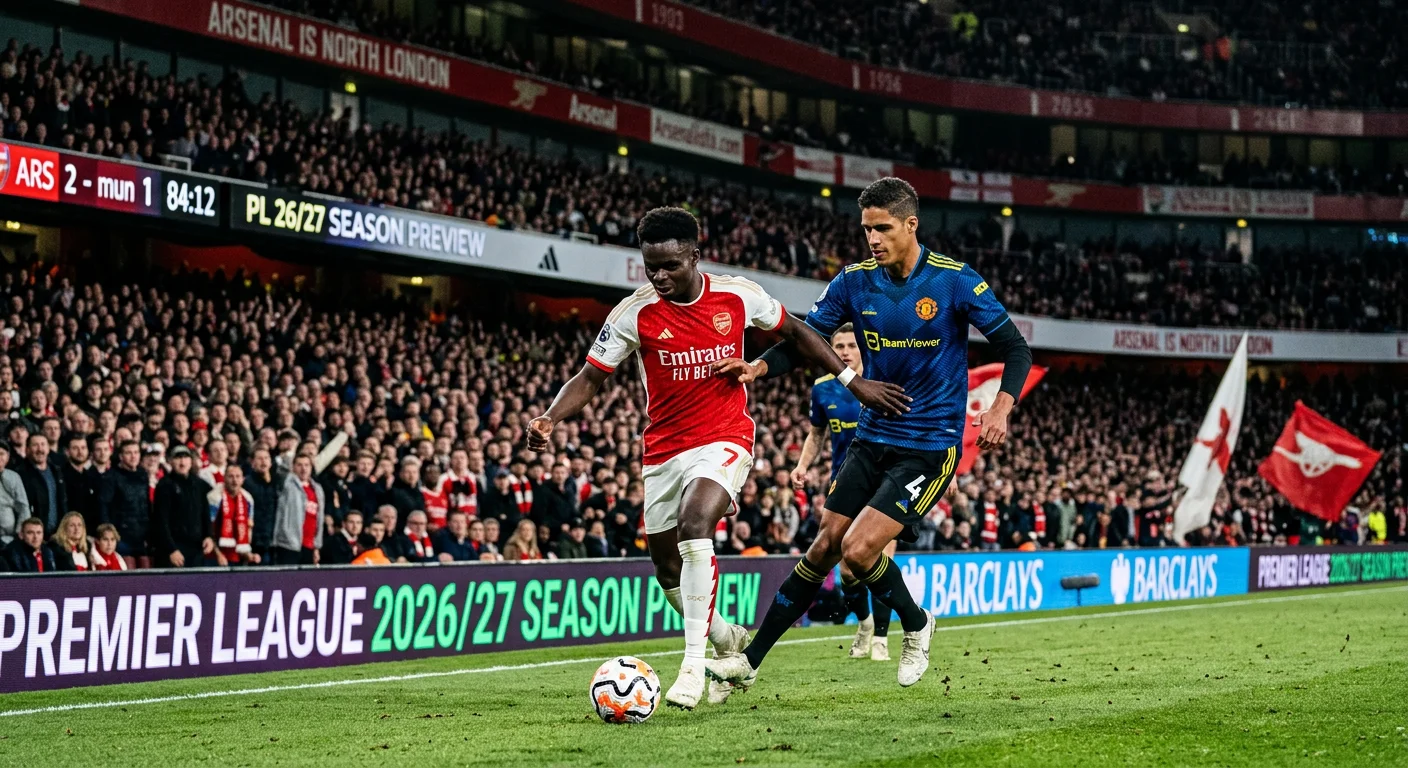
The 2026/27 Premier League starts on 15 August with the title race already redrawn. Liverpool defend a championship won under Arne Slot in his second full season, but the chasing pack has teeth Manchester City lacked in May. Mikel Arteta’s Arsenal have spent again. Pep Guardiola’s City have rebuilt the midfield around Florian Wirtz’s arrival. Enzo Maresca’s Chelsea spent two transfer windows weaponising a squad that finished fourth and now look ready to bite.
Below that top four, the gap to Newcastle, Tottenham and Manchester United has compressed to a fingernail. Eddie Howe nearly walked in March; he stayed, and the Saudi PIF backed him with two centre-halves. Thomas Frank’s first full season at Spurs is the most-watched managerial experiment in the league. Ruben Amorius enters year three at Old Trafford with patience finally thinning at INEOS.
At the bottom, three promoted sides, Burnley, Leeds, Sunderland, arrive with stronger Championship pedigree than any promoted trio since 2017. One will survive comfortably. One will go straight back down. The third is the season’s most interesting bet.
This is every club, ranked, with the signings that matter, the manager who’ll define the year, and what counts as a successful campaign by May.
1. Liverpool
Champions, and favourites again. Slot’s positional press, three or four pressers, not seven, kept Liverpool fresher in March and April than any title-winning Klopp side. The squad lost Mohamed Salah’s emergency-mode dribbling but absorbed it; Cody Gakpo’s centre-forward conversion is permanent, and Hugo Ekitike provides the rotation Diogo Jota’s injuries never allowed. Dominik Szoboszlai’s evolution into a deep-lying creator is the tactical headline nobody outside Anfield is talking about loudly enough.
The summer signing that matters is not the forward FSG flirted with but Marc Guehi, finally prised from Crystal Palace for a fee that closed at £52m. He partners Virgil van Dijk in a back four that conceded 27 league goals last season. Ceiling: retain the title with games to spare. Floor: second, with a deep Champions League run.
2. Arsenal
Five years of Arteta, four top-four finishes, two second-place finishes, and still no league title. The patience inside the boardroom is real but not infinite. Arsenal spent £180m gross this summer, Nicolas Jackson from Chelsea, Joao Neves from PSG, and a third centre-back in Castello Lukeba, and the squad looks deeper than at any point in the Arteta era.
The question is the same one it’s been for three seasons: do Arsenal score enough when the press doesn’t generate the chance? Bukayo Saka carried 31 goal contributions in 2025/26. He cannot carry that load again without breaking. Ceiling: a first title since 2004. Floor: third, and the conversation in N5 turns awkward.
3. Manchester City
Guardiola’s rebuild is two windows deep and starting to look coherent. Florian Wirtz, finally lifted from Leverkusen for £109m, is the No. 10 City have wanted since David Silva left. Rodri’s full season back from the ACL changes the floor of every other team’s plans.
The defence is older than it should be. Ruben Dias is 29 and the contract talks are stalling. John Stones is 32 and missed half of last season. If Guardiola gets through August without a centre-half injury, City win the league. If he doesn’t, City finish third. Ceiling: title. Floor: fourth.
4. Chelsea
Maresca’s project has finally stopped being a punchline. Chelsea finished fourth last season, won the Conference League, and have spent the summer trimming rather than hoarding. The squad is down to 24 senior players, the youngest average age in the top six, and Cole Palmer’s contract extension to 2033 is the most important piece of paper Stamford Bridge has signed since Eden Hazard’s.
The forward line is the concern. Nicolas Jackson left for Arsenal; the replacement, Viktor Gyokeres from Sporting, costs £75m and arrives with one Premier League proof point: none. Ceiling: third. Floor: sixth.
5. Newcastle
Howe is still there, and that alone is worth a place in the top six. The PIF backed him after the March wobble with two signings the squad genuinely needed: Milos Kerkez (£35m from Bournemouth), and Dean Huijsen from Real Madrid (£50m). The midfield three of Bruno Guimaraes, Sandro Tonali and Joelinton is the best in the league outside Manchester.
Alexander Isak’s contract runs to 2028 and the noise from Madrid is constant. If he stays, Newcastle finish fifth. If he goes mid-season, they finish eighth and Howe is fired by Christmas. Ceiling: fourth. Floor: ninth.
6. Tottenham
Frank’s first full season. The pre-season produced one moment of clarity, a 4-1 win over Bayern in Seoul, played in a back four with Mohammed Kudus as a No. 10, and a lot of questions. Tottenham still don’t have a midfield-controller in the Rodri mould.
The signing of the summer is Xavi Simons from RB Leipzig for £60m. He is the player Daniel Levy has been chasing in spirit for a decade. Ceiling: fifth and a Europa League trophy. Floor: tenth.
7. Manchester United
Year three of Amorim. The 3-4-3 has bedded in. Bruno Fernandes is now playing as the left-eight in a system that finally suits him, and Kobbie Mainoo’s return from hamstring problems is the season’s most important non-signing. The defence, Leny Yoro, Matthijs de Ligt, Lisandro Martinez, is solid for the first time since Ferguson.
The forward line is still wrong. Rasmus Hojlund has been sold to Napoli. The replacement is Omar Marmoush from City, a £40m bet that he can be a No. 9. Ceiling: sixth. Floor: eleventh, and Amorim is gone.
8. Aston Villa
Unai Emery’s fifth season at Villa Park. Villa finished seventh last season after losing Morgan Rogers to Liverpool in January; the rebuild centred on a 4-2-3-1 with Boubacar Kamara and Amadou Onana as the double pivot, and it works. Ollie Watkins, at 30, scored 18 league goals last season.
The summer added Andre Onana on a free from United and Eberechi Eze from Crystal Palace for £55m. Eze is the player Emery has wanted for two years. Ceiling: fifth. Floor: tenth.
9. Brighton
Fabian Hurzeler’s second season. The squad is, again, the youngest in the league. Brighton sold Joao Pedro to Chelsea in 2024, Evan Ferguson to Newcastle in 2025, and Carlos Baleba to Manchester United this summer for £75m. The model continues.
Hurzeler’s tactical clarity is real. Brighton press in a 4-2-2-2 with the full-backs as the width and the wide forwards inverted. Ceiling: seventh. Floor: twelfth.
10. West Ham
Graham Potter’s first full season at the London Stadium. The summer was quiet by West Ham standards, Mohammed Kudus stayed, Jarrod Bowen signed a new contract, and the only major arrival was a centre-half in Goncalo Inacio from Sporting for £40m. Potter wants stability, and David Sullivan has, for once, given it to him.
The midfield is the problem. Edson Alvarez plays every game, James Ward-Prowse takes every set-piece, and neither of them can dribble out of a press. Ceiling: ninth. Floor: fifteenth.
11. Crystal Palace
Oliver Glasner’s fourth season. Eze gone to Villa, Guehi gone to Liverpool, and the squad that won the FA Cup in 2025 is now a different team. Palace replaced Eze with Adam Wharton’s full promotion to the No. 10 role and the signing of Billy Gilmour on a free.
The defence is the question. Without Guehi, Palace start the season with Maxence Lacroix and Chadi Riad as the centre-half pair. Ceiling: eighth. Floor: fourteenth.
12. Bournemouth
Andoni Iraola’s fourth season. The squad has been gutted, Kerkez to Newcastle, Huijsen to Madrid, Antoine Semenyo to Liverpool. Iraola has, again, rebuilt around academy graduates and Spanish La Liga 2 bargains.
The press is still the best-organised in the bottom half. Bournemouth’s PPDA was 9.4 last season, the third-lowest in the league. Ceiling: tenth. Floor: sixteenth.
13. Brentford
Thomas Frank to Tottenham, Keith Andrews promoted to head coach, and the Brentford that finished tenth last season has been quietly dismantled. Bryan Mbeumo to United, Yoane Wissa to Saudi Arabia, Christian Norgaard to Arsenal.
Andrews is a coach in the Frank mould, set-piece-obsessed, transition-first, 4-3-3 with a low block. The signings are competent but not exciting. Ceiling: twelfth. Floor: seventeenth.
14. Fulham
Marco Silva’s fifth season is, in modern Premier League terms, a small miracle. Fulham finished eleventh last season and Silva has kept the squad together, including Antonee Robinson, who turned down both Liverpool and Newcastle to stay in west London.
The summer added Kiernan Dewsbury-Hall on a free from Chelsea. The squad is older than it should be but the spine is intact. Ceiling: tenth. Floor: sixteenth.
15. Wolves
Vitor Pereira’s first full season. Wolves stayed up by three points last season and have sold Matheus Cunha to Manchester United for £62m. The replacement is Andre from Fluminense, a defensive midfielder, not a forward. The hierarchy at Molineux is, again, prioritising the wrong end of the pitch.
The defence is decent. Yerson Mosquera and Toti Gomes are a Premier League-level pair. The problem is the goals. Ceiling: thirteenth. Floor: relegated.
16. Everton
David Moyes’s second stint, second full season. Everton move into Bramley-Moore Dock in August, and the atmosphere will be worth six points. The squad, however, is the second-oldest in the league after Fulham.
The signings are sensible: Carlos Soler on a free from PSG, Vitor Roque on loan from Real Betis. Moyes is, as ever, the floor. Ceiling: twelfth. Floor: relegated, with Moyes safe regardless.
17. Nottingham Forest
Nuno Espirito Santo’s third full season. Forest finished sixth last season, the club’s best finish since 1995, and have, predictably, lost the spine. Murillo to United for £70m. Anthony Elanga to Newcastle for £45m.
Evangelos Marinakis has spent the money. Igor Julio from Brighton for £30m, and a 22-year-old Brazilian named Igor Jesus from Botafogo (£28m). Ceiling: eleventh. Floor: relegated. The variance on Forest is the widest of any side outside the bottom three.
18. Sunderland
Regis Le Bris’s first Premier League season. Sunderland came up via the play-off. The squad that won promotion is mostly gone. Jobe Bellingham sold to Borussia Dortmund for £35m.
The replacements are interesting. Granit Xhaka, free from Leverkusen at 33. Habib Diarra from Strasbourg for £30m. The Black Cats will be more watchable than their position suggests. Ceiling: fifteenth. Floor: bottom.
19. Leeds
Daniel Farke’s third Premier League promotion, second with Leeds. The first ended in immediate relegation in 2024. The summer additions are senior players, not Championship pluggers.
Lukas Nmecha on a free from Wolfsburg. Robert Renan from Zenit on loan. The squad is the second-strongest of the three promoted sides. Ceiling: sixteenth. Floor: relegated.
20. Burnley
Scott Parker’s first Premier League season as head coach since his Bournemouth sacking in 2022. Burnley came up as Championship champions with 100 points. The squad has been raided. James Trafford to Manchester City for £30m. Maxime Esteve to Tottenham for £35m.
Parker’s tactical approach, high line, possession-based, 4-3-3, is the opposite of what got Burnley promoted. The transition will hurt. Ceiling: seventeenth. Floor: bottom, with 20 points or fewer.
What We’ll Be Watching
The title race is the obvious story, but the more interesting tactical question sits in mid-table: how many sides now play a back three? Last season’s count was nine. The pre-season suggests it could be twelve. Maresca at Chelsea has flirted with it. Howe has used it in big games for two years. Even Iraola at Bournemouth has hinted at a 3-4-2-1.
The promoted sides will define the season’s narrative arc. Sunderland and Leeds both have squads strong enough to survive; Burnley does not. If two of three stay up, the Championship’s prestige resets after a decade of yo-yo clubs.
And then there’s Slot. Champions defend differently. Anfield will know by November whether the second title is in the building. For the full transfer-window movement tracker the tactical analysis archive and where to watch every Premier League fixture this season follow the linked sections.
FAQ
Who are the title favourites for 2026/27?
Liverpool, as defending champions and the most settled squad in the top six. Arsenal are the most credible challenger, with Joao Neves and Castello Lukeba addressing the two squad weaknesses of last season. Manchester City sit third in the betting, contingent on Rodri staying fit.
Which side will struggle most?
Burnley. The squad that won the Championship has been sold off and Scott Parker’s possession-based 4-3-3 is the opposite of the direct, transitional football that produced 100 points last season. Expect a sub-25-point return.
When does the season start?
The opening weekend is 15 August 2026, with the traditional Friday-night curtain-raiser at Anfield. The season runs to 24 May 2027.
How is the season structure changing?
The structure is unchanged from 2025/26: 38 matches, three-point wins, goal-difference tiebreaker. The one new wrinkle is the expanded VAR semi-automated offside system, which has cut average decision-time from 74 seconds to 31.
Will any of the promoted clubs survive?
Two of the three. Sunderland and Leeds both arrive with senior reinforcements and squad depth above the average for promoted sides. Burnley do not.
Where can I watch every match, see our country-by-country streaming guide for the full breakdown?
UK rights split as before: Sky Sports holds 215 matches, TNT Sports 52, Amazon Prime Video 20. See our match-viewing guide for the full breakdown.
Primary source: Premier League, 2026/27 season dates.
Reference: for how the major leagues and UEFA competitions are structured this season, see our football league & competition format reference.