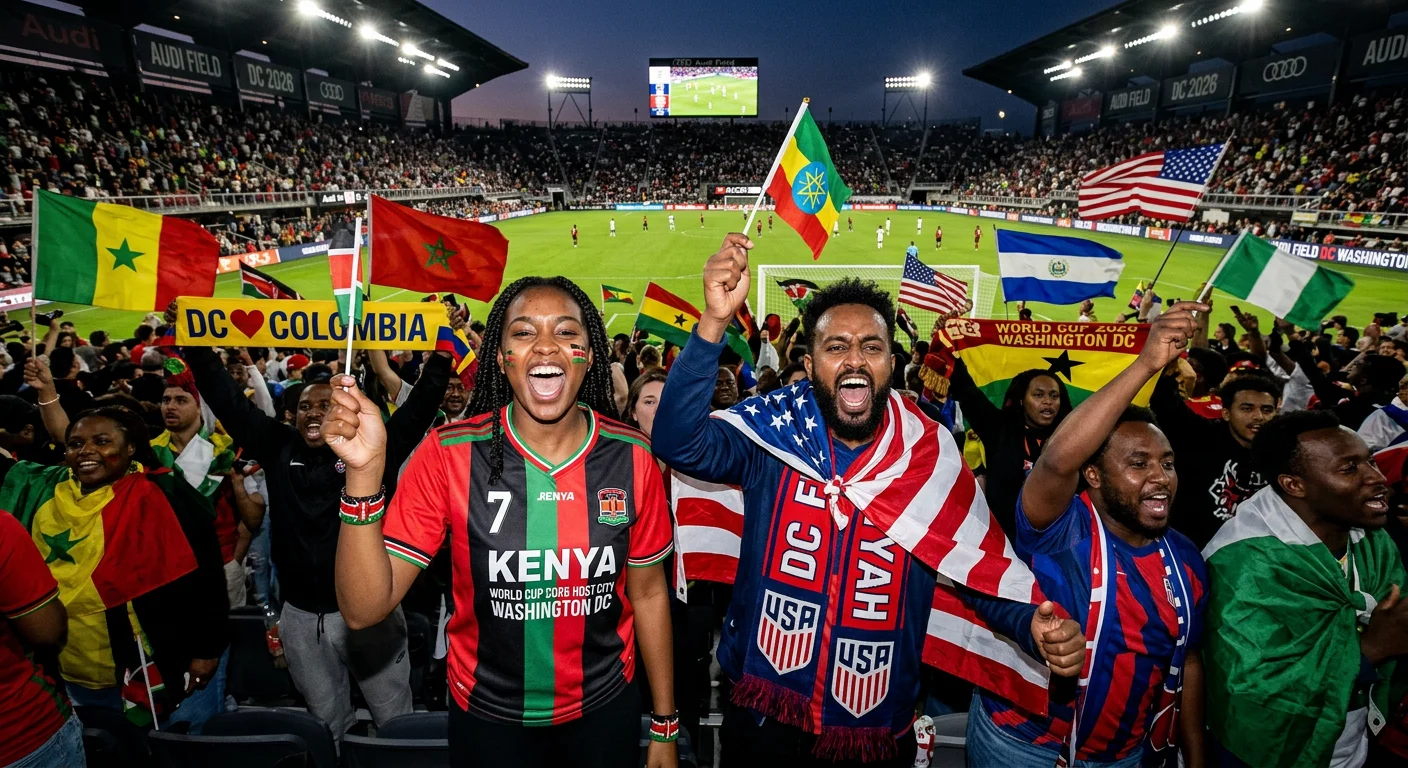
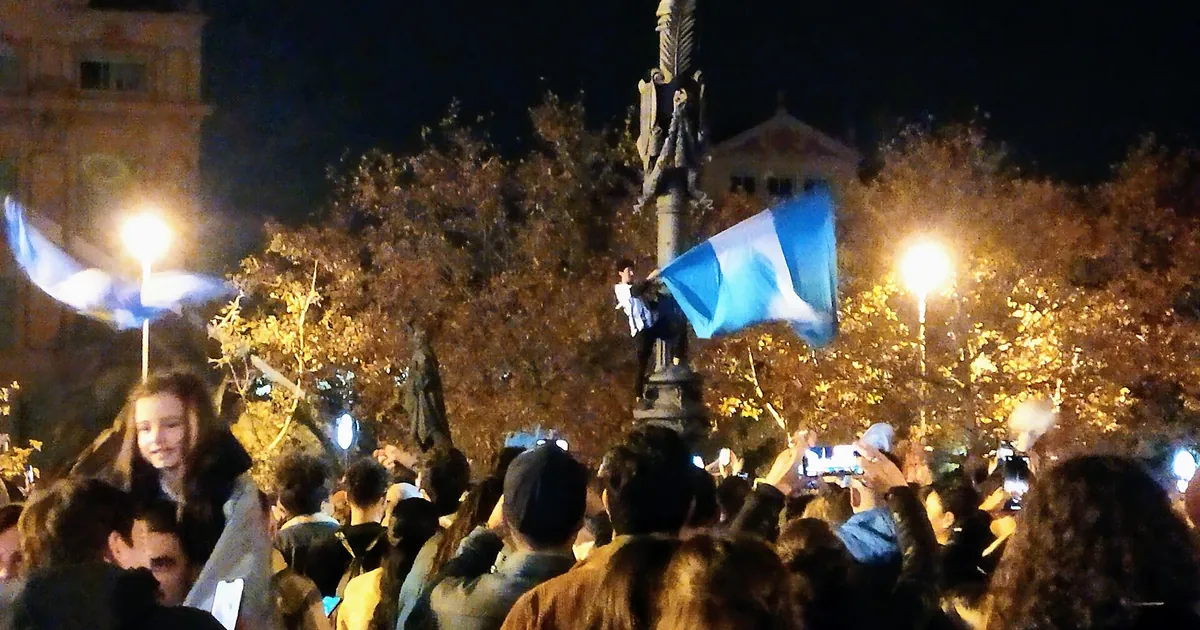
Diaspora football fans celebrate with national flags. Photo: Manuel C. / Wikimedia Commons, CC BY-SA 4.0
9 min read · 1,890 words
For a city built around embassies, motorcades and the slow churn of policy, the 2026 World Cup is less a scheduling question than a homecoming. Washington holds one of the densest concentrations of foreign-born residents anywhere in the United States, and for a month every four years those communities stop being a demographic line on a map and become something you can hear from the sidewalk. The question of where to watch the World Cup in Washington has an official answer and a truer one, and the gap between them is where the city’s real character lives.
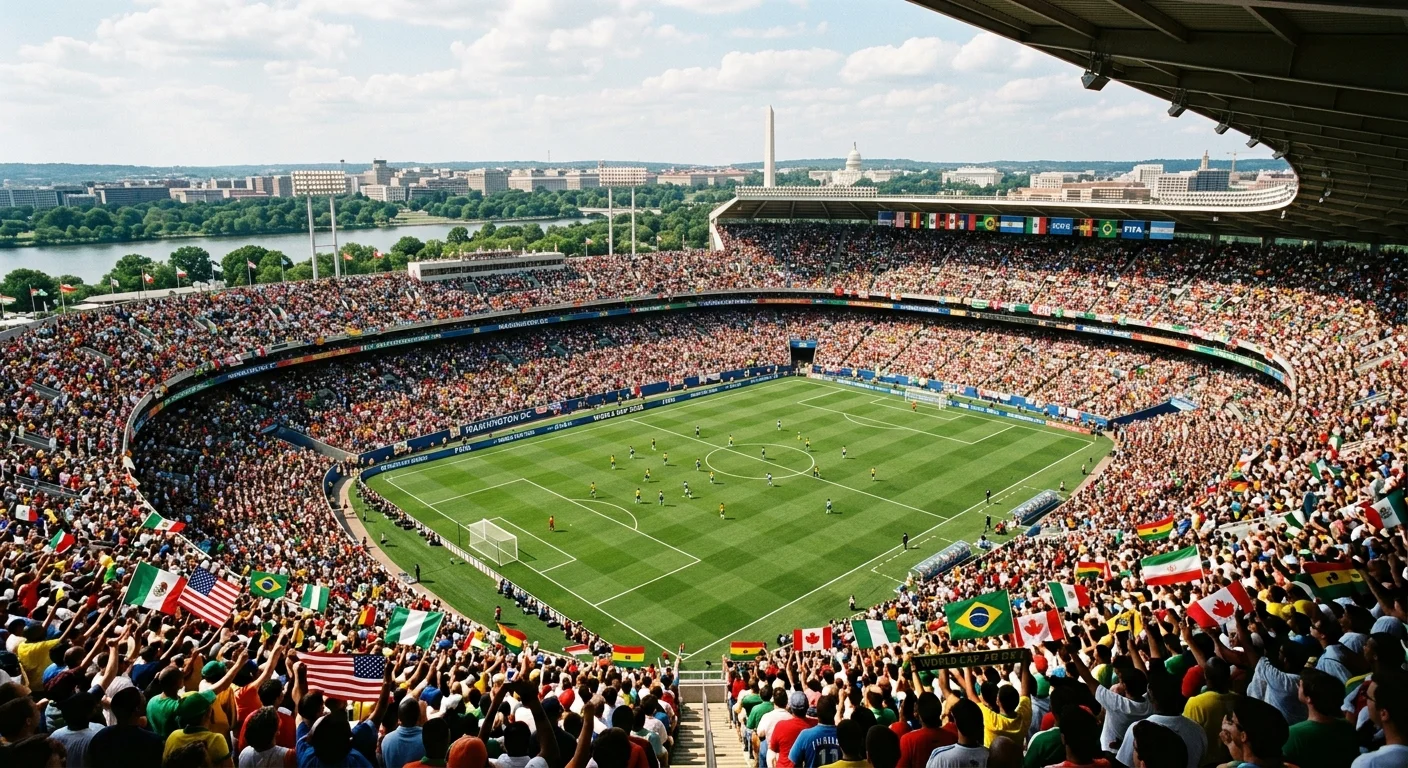
The official answer starts on the National Mall. A free FIFA Fan Zone will run from 11 June to 19 July 2026, with live match screenings, cultural programming and the kind of open public space that the capital does better than almost anywhere. The truer answer scatters outward from there, into restaurant back rooms, Arlington strip malls, embassy courtyards and WhatsApp threads that nobody outside the group will ever see. Both versions matter. One gives you a screen and a crowd. The other gives you a reason to care who is sitting next to you.
The National Mall Fan Zone: a shared front lawn
There’s a reason the Mall works for this. It is the one stretch of Washington that belongs to nobody and everybody at once, a national front lawn that doesn’t ask where you were born before it lets you in. Put a giant screen there and the usual sorting falls away. It is where a Senegalese family and a Mexican one might end up cheering metres apart, then swapping snacks at half time. That collision is the point, not a side effect.
You can read the practical details in the NBC4 Washington Fan Fest coverage, and the city’s own official Washington.org guide lays out the wider watch-party landscape. What those listings can’t quite capture is the texture of a public viewing in a city this international. The Fan Zone is a starting point, a place to feel the scale of the thing before you go looking for the version that feels like home. For most diaspora fans, the Mall is where you take the kids on a sunny afternoon, and the neighbourhood spot is where you go when the match actually decides something.
The free-and-central model also solves a problem that quietly shapes who gets to be a fan. Bars cost money, require a certain comfort with the room, and often assume you already know the etiquette. A public lawn assumes none of that. A grandmother who has never set foot in a sports bar can sit on a folding chair and watch her country play, and nobody will treat her presence as unusual. That accessibility is easy to overlook and hard to overstate.
The Salvadoran and Latin American corridors
If you want to understand Washington’s football pulse, start with its Salvadoran community, which numbers more than 300,000 people across the DMV region. This is one of the largest Salvadoran populations of any American metro area, and it is not a recent or fragile presence. It has roots that run back decades, through Adams Morgan, Mount Pleasant, the Columbia Pike corridor in Arlington, and out into the Maryland and Virginia suburbs where so many families eventually settled.
Columbia Pike is a good example of how this works on the ground. It is a long, unglamorous stretch of Arlington lined with pupuserías, Central American groceries and family restaurants, and it functions as a kind of nervous system for the community. When El Salvador or another Central American side plays, you don’t need a press release to find the action. A watch party here travels by word of mouth, by WhatsApp group, by the certainty that a particular restaurant always shows the match. The venue rarely advertises. It doesn’t have to. Everyone who needs to know already does.
That informality is a feature, not a gap in the listings. Latin American football culture in Washington runs on relationships rather than reservations. A cousin texts a cousin. A restaurant owner who grew up watching the same league turns the volume up without being asked. The crowd assembles because the network already exists and the match simply activates it. You will find similar gravity along 14th Street NW and through Adams Morgan, where the Latin American presence has shaped the streetscape for generations and where the food, the music and the football all belong to the same continuous tradition.
What gives these gatherings their charge is generational mix. The teenager scrolling a phone and the elder who left home long ago are watching the same screen, and for ninety minutes the distance between their two versions of the country collapses. It is a once-in-four-years act of collective belonging, the rare month when a Salvadoran teenager born on Columbia Pike and a grandmother who left San Salvador decades ago watch the same ninety minutes and mean the same thing by it. That shared meaning is the thing no app can manufacture and no listing can promise.
The African and Caribbean communities
Washington’s African and Caribbean fans bring their own map, and it overlaps with the Latin American one without ever quite copying it. The Ethiopian community here is one of the largest outside Addis Ababa, anchored around the U Street Corridor and Silver Spring, with restaurants and cafés that have served as community hubs for years before anyone thought of them as watch-party venues. Columbia Heights and U Street carry a similar weight for a broad range of African and Caribbean populations, neighbourhoods where the diaspora has built institutions that long predate any tournament.
This matters for how the football gets watched. When a venue already serves as a meeting place, a place where people see each other, eat together and pass along news, it slips naturally into the role of match-day headquarters. The shift from café to fan zone is almost invisible, because the social infrastructure was already there. A coffee house that hosts the same regulars every week doesn’t have to reinvent itself to host a Nigeria match or a Senegal match. It just turns on the screen and the room fills with people who already trust the space.
The Caribbean dimension adds another texture again, music and food and a particular celebratory style that turns a tense knockout tie into something closer to a block party. Across these communities, the through line is that football is woven into a wider cultural life rather than treated as a standalone night out. You don’t go to watch the game and leave. You go to be among people, and the game is the reason everyone happens to be there at once. The capital’s standing as one of the most popular destinations for African immigrants in the country means these scenes are deep, established and genuinely local, not a pop-up for a single summer.
Why no app can own “where to watch the World Cup in Washington”
Plenty of outlets have tried to map all of this. The guides are genuinely useful, and you should read them. Axios DC’s expat-bar and embassy guide breaks watch parties down by country, its broader DC guide covers bars and fan zones, and a community thread on country-specific bars shows how fans crowdsource and correct these lists in real time. They will point you to named places worth knowing: Clarendon Ballroom for Brazil supporters, Public Bar in Dupont Circle for Colombia fans, Elephant & Castle for the Dutch community.
But there is a structural reason no single app will ever own this terrain. The real network of diaspora watch parties lives in community organisations, WhatsApp groups and word of mouth, refreshing itself every tournament. A listing captures a snapshot. The network is a moving thing. The restaurant that hosted the big party four years ago may have closed, changed hands or simply lost its crowd to a newer spot down the street. The information that matters most is held by people, not platforms, and it is shared through trust rather than search.
This is why the best advice for finding the real thing is so analogue. Talk to people. Ask at the grocery, the café, the barbershop. Notice which restaurant has the flags up and the tables pushed together. The official guides get you to the right neighbourhood; the last hundred metres you walk by paying attention. That is not a flaw in Washington’s watch-party scene. It is the most honest expression of how diaspora communities actually organise themselves, and it is far more durable than any directory.
Planning your own tournament
If you are mapping a personal route through the month, a few principles travel well. Treat the National Mall Fan Zone as your anchor for the marquee matches and the big communal afternoons. Treat the neighbourhood corridors as your destination when a specific nation is playing and you want the atmosphere that only its own community can produce. And stay flexible, because the best night of your tournament will probably be one you didn’t plan, in a room you found because someone told you to go.
For the wider picture, our complete World Cup 2026 guide sets the tournament in context, and if you are weighing how to actually watch every match, the broadcast rights and blackout guide covers the streaming and television side. Fans budgeting a trip around the host cities will also want our host-city costs analysis before booking anything.
Washington rewards a certain kind of curiosity during a World Cup. The city that spends most of the year being formal and credentialed loosens its collar, and the communities that make it what it is step forward. You can watch the football on a national lawn or in a back room that smells of pupusas and injera, and both are correct. The only wrong move is to assume the official map is the whole map.
Frequently asked questions
When does the National Mall Fan Zone run?
The free FIFA Fan Zone on the National Mall runs from 11 June to 19 July 2026, with live match screenings and cultural programming throughout the tournament.
Where do Salvadoran and Latin American fans gather to watch?
The main corridors are Columbia Pike in Arlington, 14th Street NW and Adams Morgan, where restaurants and community spaces host matches that travel largely by word of mouth rather than formal listings.
Where can I find African and Caribbean diaspora watch parties?
Look to the U Street Corridor, Silver Spring and Columbia Heights, where established Ethiopian, African and Caribbean community venues double as match-day gathering points.
Are there country-specific bars in Washington?
Yes. Among the named spots, Brazil supporters have gathered at Clarendon Ballroom, Colombia fans at Public Bar in Dupont Circle, and the Dutch community at Elephant & Castle. Country-specific guides update these lists as the tournament unfolds.
How big is Washington’s Salvadoran community?
More than 300,000 people across the DMV region, one of the largest Salvadoran populations of any metro area in the United States.
What is the best way to find an authentic diaspora watch party?
Combine the official guides with on-the-ground curiosity. Ask at neighbourhood restaurants, groceries and cafés, and follow the flags. The most reliable information lives in community networks and WhatsApp groups rather than any single app.