
8 min read · 1,547 words
There is a particular kind of embarrassment reserved for institutions caught doing something grubby and then watching the paper trail emerge in instalments. Southampton Football Club are currently living through exactly that experience. New written reasons published by the EFL have added a fresh layer of detail to what has become known, with considerable tabloid relish, as Spygate, and the picture they paint is not flattering.
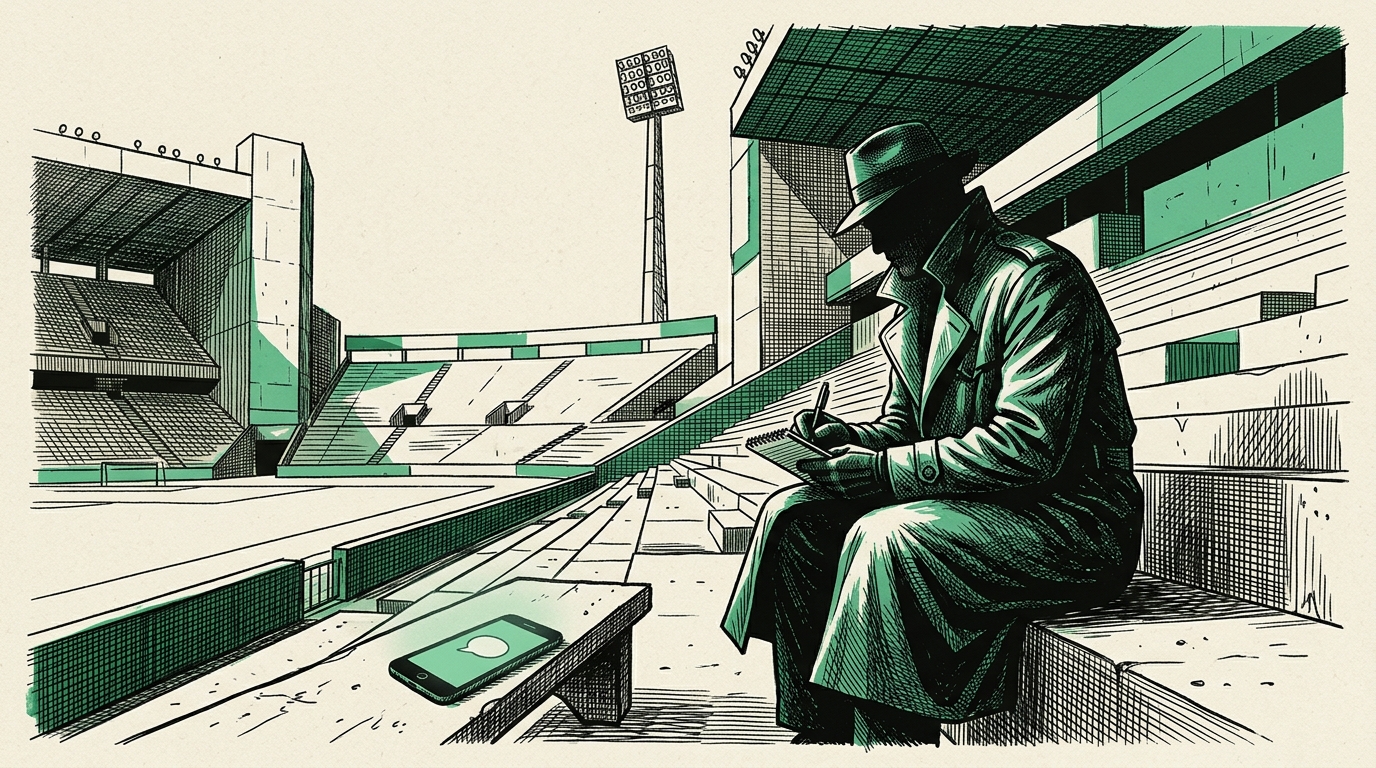
The headline finding, reported by both Sky Sports and BBC Sport is that Southampton manager Tonda Eckert received intelligence gathered by a junior analyst intern who had infiltrated an opponent’s pre-match preparation sessions, and, according to WhatsApp messages now entered into the public record, he loved it. The message cited reads: “You legend. Manager loved it.” It is the kind of line that writes its own punchline.
What the Written Reasons Actually Reveal
The EFL’s written reasons, which follow the original disciplinary verdict, provide the most granular account yet of how the operation unfolded. A junior analyst, described as an intern, attended sessions belonging to a Championship opponent under circumstances that were, to put it diplomatically, not entirely above board. The intelligence gathered was then communicated upward through the club’s analytical structure and, ultimately, reached Eckert himself.
The WhatsApp chain is where things become particularly uncomfortable for Southampton. The “you legend” message, directed at the intern, confirms not only that the information reached senior figures but that it was actively welcomed. This matters legally and reputationally: it shifts the narrative from a rogue junior employee acting unilaterally toward something that had, at minimum, enthusiastic reception at managerial level.
BBC Sport’s reporting adds further texture, noting that LinkedIn profiles were deleted in the aftermath, a detail that suggests some awareness, at some point, that the situation might attract scrutiny. Deleting a LinkedIn profile is not the behaviour of someone who believes they have done nothing wrong. It is, however, the behaviour of someone who has suddenly remembered that digital footprints exist.
The Tactical Logic, and Why It Matters
It is worth pausing on why a club would bother. Southampton, at the time of the incidents, were operating in the Championship, a division where the margins between promotion and mid-table are often decided by fine details. Opposition analysis has become an increasingly sophisticated discipline across professional football, and the line between legitimate intelligence-gathering and something more problematic is not always obvious to everyone involved.
Legitimate pre-match analysis typically involves video review, data modelling, and attendance at publicly accessible training sessions or press conferences. What is alleged here goes considerably further: placing an individual inside an opponent’s private preparation environment. For anyone with even a passing familiarity with football’s tactical culture, the kind of thing explored at length in books like Inverting the Pyramid the appeal is understandable in the abstract. Knowing an opponent’s set-piece routines or pressing triggers before they deploy them is genuinely valuable. The method of obtaining that knowledge is another matter entirely.
The Championship’s intensity makes the temptation real. With 46 league matches and the financial chasm between the second tier and the Premier League running into hundreds of millions of pounds, clubs do desperate things. That does not excuse them. It does explain the environment in which someone apparently thought this was a reasonable idea.
What Remains Disputed or Unclear
Several questions remain unanswered by the current reporting. First, the precise extent of Eckert’s prior knowledge, as opposed to his evident enthusiasm upon receiving the intelligence, has not been definitively established in the public record. The written reasons confirm he received and welcomed the information; whether he directed the operation or was simply a grateful recipient is a distinction that matters for any further disciplinary proceedings.
Second, the identity of the opponent or opponents targeted has not been confirmed across the sources reviewed. Sky Sports’ reporting refers to “one of his team’s opponents” in the singular, while the broader framing of BBC Sport’s piece implies the operation may have had a wider scope. These are not trivial details: the number of clubs affected would influence both the severity of any sanction and the potential for further complaints.
Third, the question of what, if any, sporting advantage was actually derived remains open. xG models and possession statistics can tell you a great deal about a team’s tendencies, but whether the specific intelligence gathered here translated into results on the pitch is something the written reasons do not appear to address directly. It is a distinction the club’s legal representatives will almost certainly lean on.
The Institutional Question
What makes this case genuinely interesting, beyond the obvious soap-opera qualities, is what it reveals about institutional culture. The intern at the centre of this did not act in a vacuum. They were presumably hired, briefed, and operating within a structure that either encouraged this kind of initiative or failed to establish clear boundaries against it. The “you legend” message suggests the former.
Southampton have had a turbulent few years by any measure, relegation from the Premier League, a chaotic managerial carousel, and now this. The club’s recent history is not short of drama. But Spygate carries a different kind of reputational weight because it speaks to how an organisation conducts itself when it thinks no one is watching. As it turns out, someone was keeping the WhatsApps.
The deleted LinkedIn profiles are, in their own small way, the most revealing detail. Video analysis can be explained away, attendance at public events can be contextualised, but the reflexive scrubbing of professional profiles suggests a moment of collective realisation that things had gone too far. By that point, of course, the messages already existed.
What Happens Next
The EFL’s written reasons are typically a precursor to either an appeal or the finalisation of sanctions, and Southampton’s position on next steps has not been confirmed at time of writing. Eckert remains in post, which will itself become a story if further disciplinary action names him directly in any finding of culpability beyond mere receipt of the intelligence.
For the Championship’s other clubs, particularly those who may have been targeted, the written reasons provide potential grounds for formal complaint. The EFL will be aware that its handling of this case is being watched carefully, not least because the integrity of competition is precisely the kind of issue that tends to resurface at the worst possible moments, usually during a promotion run-in.
It is also worth noting the broader context: football’s relationship with data and intelligence has evolved rapidly, and the regulatory frameworks governing it have not always kept pace. The Champions League and the elite end of the domestic game have invested heavily in legitimate analytical infrastructure. At Championship level, the resources are thinner and the temptations correspondingly greater. None of that changes what appears to have happened here, but it does suggest the EFL may need to think carefully about clearer guidance before the next ambitious analyst decides that attending a rival’s session is just another form of research.
For now, Southampton are left with a manager who, on the evidence of his own WhatsApp history, found the whole enterprise rather useful, and a club that is discovering, in real time, that the written reasons tend to be rather more thorough than anyone anticipates.
Frequently Asked Questions
What is the Southampton Spygate scandal?
Southampton Spygate refers to an EFL disciplinary case in which a junior analyst intern allegedly infiltrated a Championship opponent’s private preparation sessions to gather tactical intelligence, which was then passed to manager Tonda Eckert. WhatsApp messages cited in the written reasons confirm the information was received and welcomed at managerial level.
What do the WhatsApp messages reveal about Tonda Eckert’s involvement?
According to reporting by Sky Sports the messages include the phrase “You legend. Manager loved it,” indicating that Eckert received the intelligence and responded positively. Whether he directed the operation beforehand remains a matter of ongoing scrutiny.
Why were LinkedIn profiles deleted in connection with Spygate?
BBC Sport reported that LinkedIn profiles were deleted in the aftermath of the spying activity. The inference drawn by commentators is that those involved became aware the situation might attract formal investigation and sought to reduce their visible digital footprint, though no individual has publicly confirmed this as their motivation.
What sanctions could Southampton face as a result of Spygate?
The EFL’s written reasons set the stage for either an appeal by Southampton or the confirmation of sanctions. Points deductions, fines, and transfer embargoes are all instruments available to the EFL in cases involving breaches of competition integrity, though the specific outcome has not been confirmed at time of publication.
Could Spygate affect Southampton’s Championship season or promotion prospects?
Any points deduction, if applied retrospectively or to the current campaign, would have obvious implications for Southampton’s standing. Beyond the table, the reputational and managerial uncertainty created by ongoing disciplinary proceedings is itself a distraction that clubs in promotion contention can ill afford. For the full picture of how the Championship is shaping up, see our 2026-27 season preview.
Where can I follow football coverage and analysis online?
FootyGazette covers tactical analysis, news, and match coverage across the major leagues. For information on watching matches live, visit our watch page for details on available options. You can also explore our broader guide to watching football online in 2026.
