
8 min read · 1,716 words
Leipzig, Wednesday evening. Two clubs with absolutely nothing in common, except, perhaps, the conviction that they were never supposed to be here.
The Most Unlikely Final in European Memory
There is a phrase doing the rounds in Vallecas this week that captures something the English football press has largely failed to articulate. “Hemos pasado de ser el Rayito al puto Rayo.” We have gone from being little Rayo to Rayo fucking Vallecano. It was Óscar Valentín, the midfielder who will lead the side out at the Red Bull Arena, who said it, and he said it with the kind of quiet ferocity that only comes from years of being patronised. As the Guardian reported this is a club that has lived relegation, promotion, financial crisis and political identity, and has arrived at a UEFA final still wearing every scar with something approaching joy.
Crystal Palace, meanwhile, arrive in Leipzig carrying a different kind of wound, one inflicted not by opponents on a pitch but by the bureaucratic machinery of European football governance. Oliver Glasner’s side were demoted from the Europa League before a ball was kicked this season after UEFA ruled that John Textor’s ownership stake constituted a controlling interest in both Palace and Lyon, who had also qualified. The Guardian confirmed that a Conference League triumph would restore Palace to the Europa League for next season, meaning Wednesday night carries consequences that extend well beyond the trophy itself. It is also, poignantly, Glasner’s final match in charge of the club.
Rayo Vallecano: The Barrio Club That Refused to Stay Small
What does Rayo actually represent?
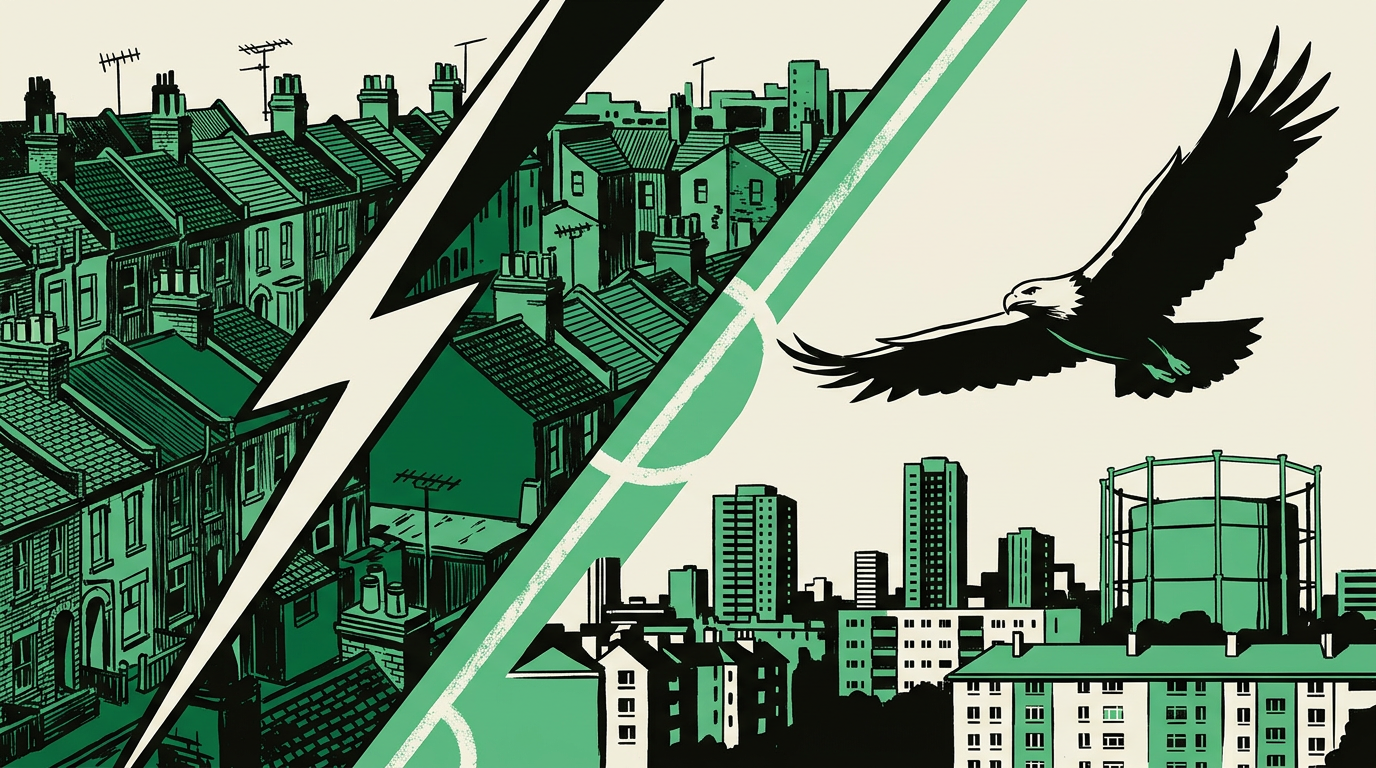
I have covered Spanish football for long enough to know that Rayo Vallecano occupy a space in the Madrid footballing imagination that is genuinely irreplaceable. They are the club of the working-class southern district of Vallecas, a neighbourhood that has historically been defined by its resistance to the kind of gentrification that has reshaped so much of the capital. The club’s identity is inseparable from that geography. Their shirt carries a diagonal red bolt, the lightning bolt, the rayo, and their football, at its best, carries the same quality: sudden, direct, a little dangerous.
The captain Óscar Trejo, who famously handed back the armband in solidarity with club workers during a labour dispute, described the club to the Guardian as “love, humility, toil”, three words that would sound like cliché at any other club but feel like an accurate constitutional document at Rayo. The striker Sergio Camello went further, calling them “the last team from another time, special for what they fight for and what they fight against.” These are not marketing lines. They are the kind of things players say when they actually believe them.
How did they get here tactically?
The tactical inheritance at Rayo runs directly through Andoni Iraola, the Basque coach who built his reputation in Vallecas before taking it to Bournemouth and beyond. His pressing system, high-tempo, positionally aggressive, relentless in transition, left such a deep imprint on the club’s DNA that successive managers have maintained its essential character. The Guardian noted that Rayo still play in the daring style Iraola established, which is a remarkable institutional continuity for a club of their size and financial limitations.
Álvaro García, the winger who stands 5ft 5in and moves like the bolt on the badge, is the emblem of that style. With 36 first division goals he is Rayo’s all-time top scorer in La Liga, a statistic that tells you something important about the club’s history of operating with limited resources and extracting maximum output from players others overlooked. García has seen relegation and promotion with Rayo. He has never seen anything like Leipzig. None of them have.
For more on the tactical principles underpinning Rayo’s European run, our breakdown of back-three systems and pressing structures offers useful context for how smaller clubs can compete at continental level.
Crystal Palace: Redemption, Glasner’s Farewell and the Europa League Carrot
Why does winning matter beyond the trophy?
Palace’s motivation is layered in a way that makes simple match previews inadequate. The UEFA multi-club ownership ruling that demoted them from the Europa League last summer was, by any reasonable measure, a significant injustice, or at least a deeply contentious application of regulations that remain inconsistently enforced across European football. Glasner has been careful in his public language about UEFA, but his message ahead of the final was unambiguous: win this, and take the Europa League place that should have been yours. As the Guardian reported Glasner framed the final explicitly in those terms, urging his players to claim what they were denied through the route still available to them.
The fact that this is also Glasner’s last game adds a sentimental dimension that Palace supporters will feel acutely. The Austrian coach arrived at Selhurst Park and immediately made the club feel like a coherent project rather than a collection of talented individuals. Last season’s FA Cup triumph was the high watermark. A Conference League medal in his final act would be a remarkable send-off, and would secure the club’s European future in the process.
What is the mood among Palace fans in Leipzig?
Not entirely serene, it must be said. BBC Sport reported that two arrests were made before the final and that local police ordered 60 Crystal Palace supporters classified as “known troublemakers” to leave Leipzig ahead of the match. The incidents appear to have been contained and the vast majority of travelling Palace fans will have had no involvement, but it is a shadow over what should be a celebratory occasion for a club in their first European campaign. UEFA and local authorities were monitoring the situation closely, though no further significant incidents had been confirmed at time of writing.
The contrast with the Rayo support is instructive. Vallecas has travelled to Leipzig with the kind of collective warmth that tends to accompany clubs who genuinely feel they have nothing to prove and everything to enjoy. When your club’s identity is built around community solidarity and the pride of a working-class barrio, a European final is not a pressure, it is a party that happened to come with a trophy attached.
The Tactical Contest: What Decides It
Where does the match actually get won?
Rayo’s pressing game is their primary weapon and their primary vulnerability. Against organised, physically superior opposition, the system demands extraordinary collective discipline to maintain, and in a one-off final, the psychological weight of the occasion can disrupt that discipline in ways that a league campaign, with its accumulated rhythms, does not. Palace have the quality in midfield to exploit the spaces that open up when a pressing team’s lines break, and Glasner’s tactical intelligence means he will have prepared specifically for the moments when Rayo’s structure stretches.
Equally, Palace must respect Rayo’s transition speed. García and the attacking players around him are devastating in the first three seconds after winning possession, the kind of counter-attacking threat that punishes any team that commits too many bodies forward. Palace have the defensive solidity to manage this, but it requires concentration over ninety minutes, and finals have a way of producing exactly the moment of lapsed focus that changes everything.
The Champions League has long provided the template for how Spanish clubs approach European knockout football, compact defensively, lethal in transition, technically composed under pressure. Rayo are not a Champions League club, but they have absorbed those lessons from the wider culture of Spanish football, and it shows in how they have navigated this competition.
Historical Weight and What Comes Next
Rayo Vallecano have never won a major trophy. Crystal Palace won the FA Cup last season. Wednesday night offers one of them a piece of European history and the other a continuation of a story that, whichever way it ends, has already exceeded every reasonable expectation.
For Rayo, the significance extends beyond football. A club that has historically operated as Madrid’s conscience, politically engaged, community-rooted, resistant to the commercialisation that has transformed the sport around them, would carry a UEFA trophy back to Vallecas as proof that the model works. That you do not have to sell your soul, your neighbourhood or your identity to compete at the highest level. Camello’s description of Rayo as “the last team from another time” is meant as a compliment, but it also carries an elegiac note: clubs like this are increasingly rare, and their survival in the modern game is never guaranteed.
For Palace, the stakes are more immediately practical. Europa League football next season means revenue, recruitment leverage and the continued development of a squad that Glasner built into genuine contenders. Whoever takes over from the Austrian will inherit either a Conference League winner with European ambitions intact, or a club that must rebuild its continental project from scratch. That is a significant inheritance either way.
You can follow all the action from Leipzig and track how both clubs’ European campaigns fit into the broader picture of the La Liga season and the Premier League campaign respectively. For those wanting to watch the final, visit our guide to watching football online for details on coverage options.
The summer transfer window that follows will be shaped significantly by the result. A Rayo victory opens doors, for players, for the club’s profile, for the barrio that made them. A Palace victory closes a chapter and opens another, with Glasner departing on the highest possible note and his successor inheriting a club with genuine continental credentials.
Either way, Leipzig on Wednesday night is the kind of football occasion that reminds you why the sport still matters. Two clubs, two completely different stories, one trophy. El puto Rayo against the FA Cup holders. The barrio against the south London suburb. The bolt of lightning against the Eagles.
I have been covering Spanish football for the best part of two decades, and I cannot tell you who wins this. What I can tell you is that Rayo Vallecano’s presence in a European final is one of the genuinely beautiful things the sport has produced in recent memory, and that Crystal Palace, for all their own compelling narrative, will need to be at their absolute best to stop a club that has decided, collectively and irrevocably, that it is no longer small.
